© 2026 Roger Fontaine, Designed by Bison Software

Metalman9
M
E
T
A
L
M
A
N
9


M
E
T
A
L
M
A
N
9


Ph: 204-223-7809
METALMAN9
Ph: 204-223-7809
METALMAN9
Click the date link, then a photo to start larger photo gallery & see descriptions

October 10, 2026 - It’s All Gone…

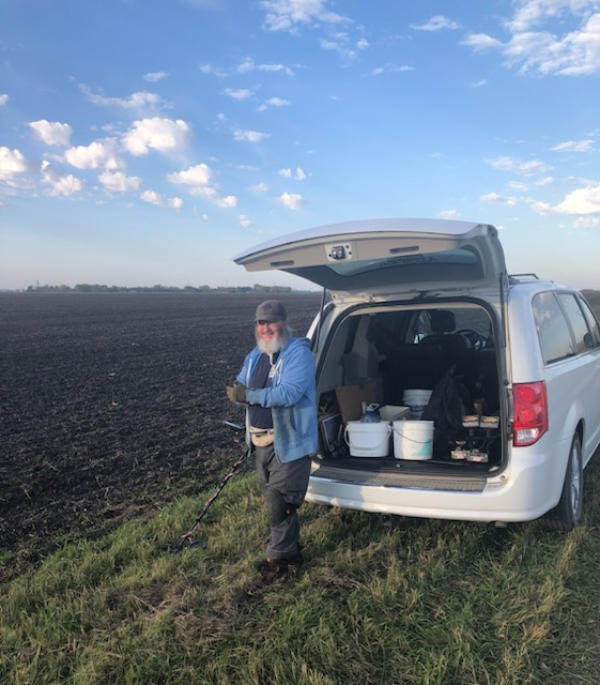
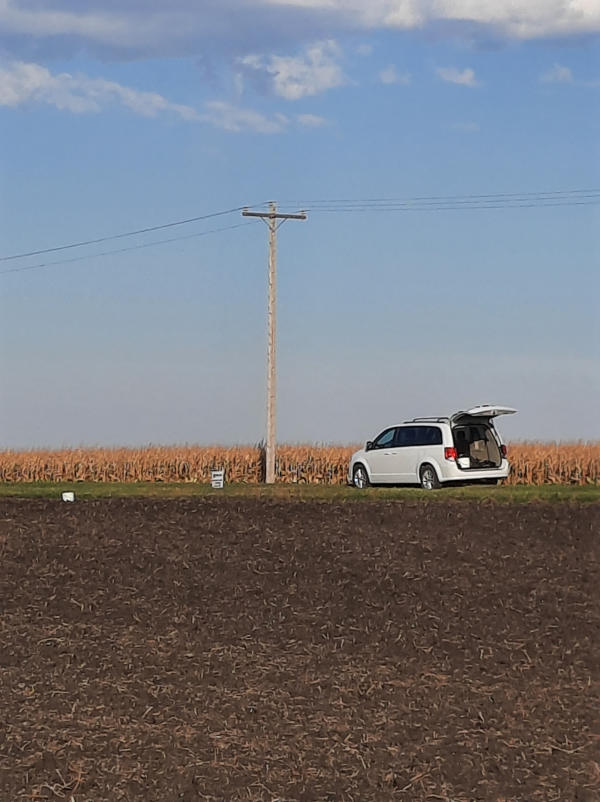
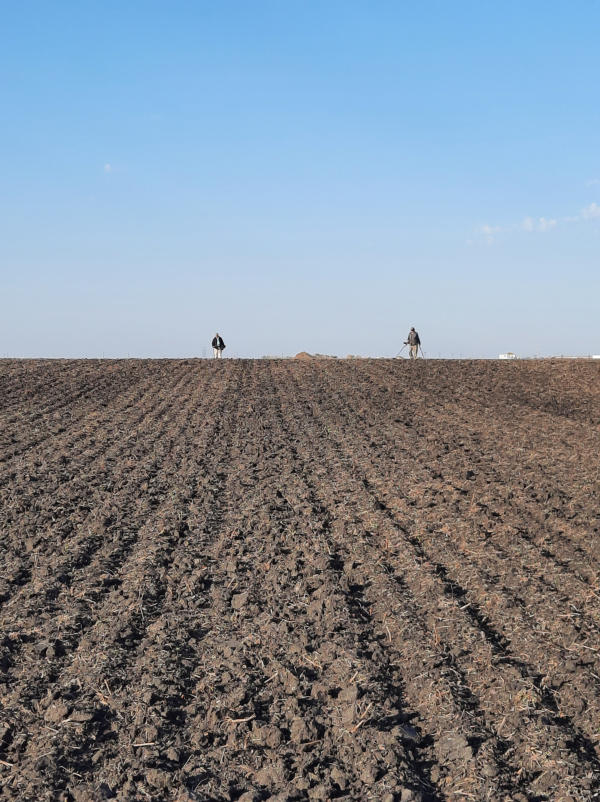
October 10, 2026
It’s all gone…
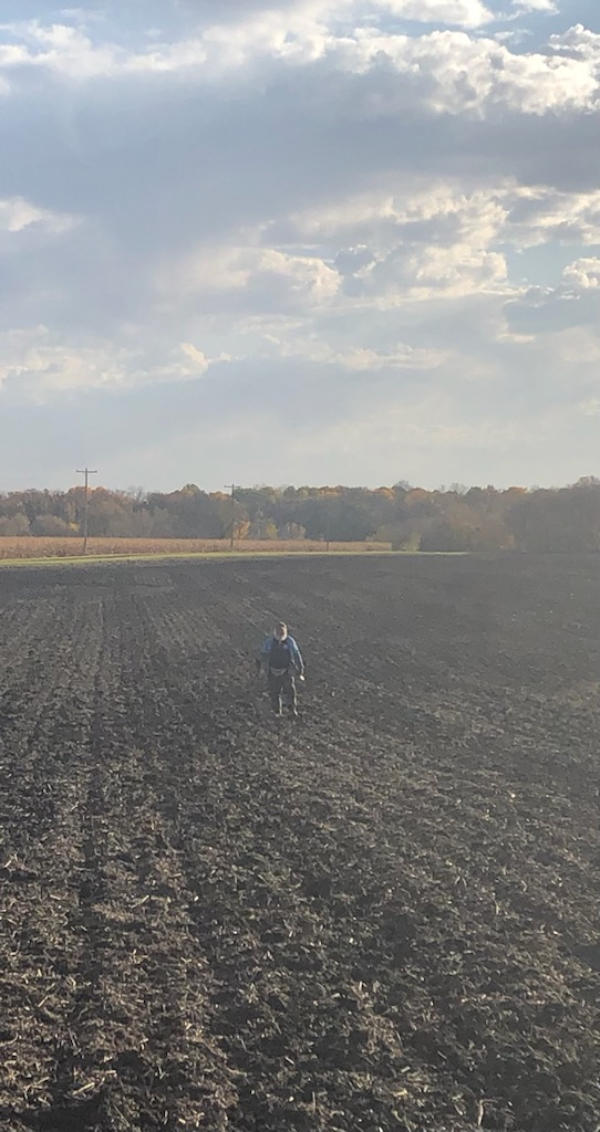
The last time that I was at the old Moore’s House was in around
1976. I was 16 at the time; I had my driver’s license, and I’d taken to
driving around the local backroads looking for abandoned houses
and barns to explore. It was deemed a normal thing to do back
then. My, how times have changed. By the way, what’s the statute of
limitations for trespassing?
The old Moore House was one of those houses that I remember well
as it was one of the few who’s walls and foundation were built from
field stones, a rare sight in the Red River valley where big stones
are not common anywhere. But then again… memory is a fickle
thing, especially over long periods of time. Where have all of the
stones gone?
See: October 3, 2025 - Plan “C”. This is our second foray at this site
but it’s also going to be our last. No, that’s not meant as a bad
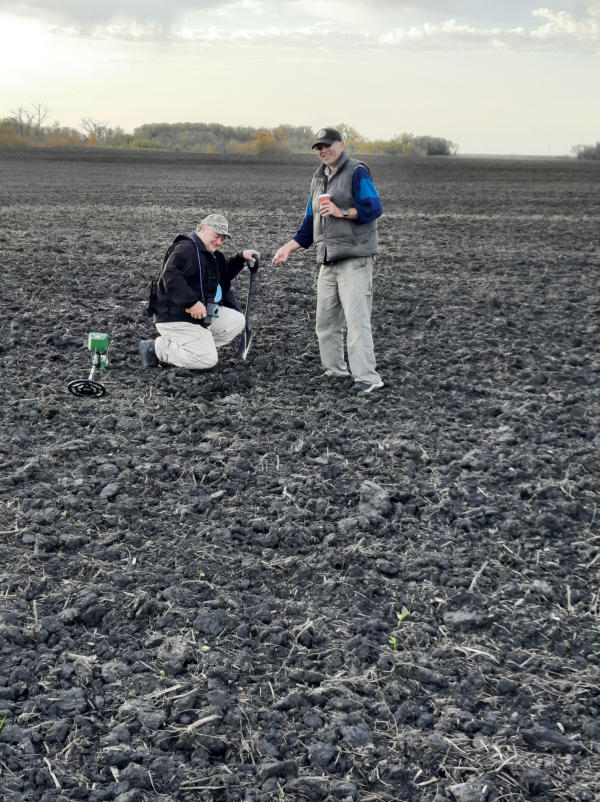
thing. I’m actually quite pleased with the adventure. We had a site
to explore and to metal detect on. I was very fortunate to be able to
obtain the Land Owner Permission. Thank you goes out to you; the
owner. Initially, we did a preliminary walk through the site to see if
we could locate a debris field that would signal where the house
had been. We found very little, but we did this blindly and without
the benefit of old maps or photographs, so in winter I was able to
locate older aerial photos of the site: River Lot 136. Today, we
returned armed with a much more accurate house location.
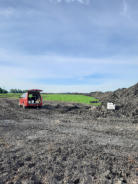
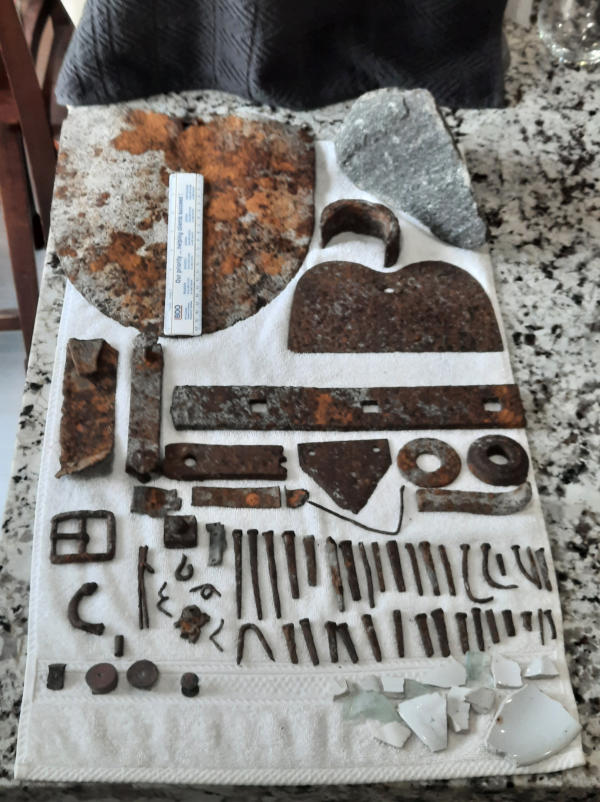
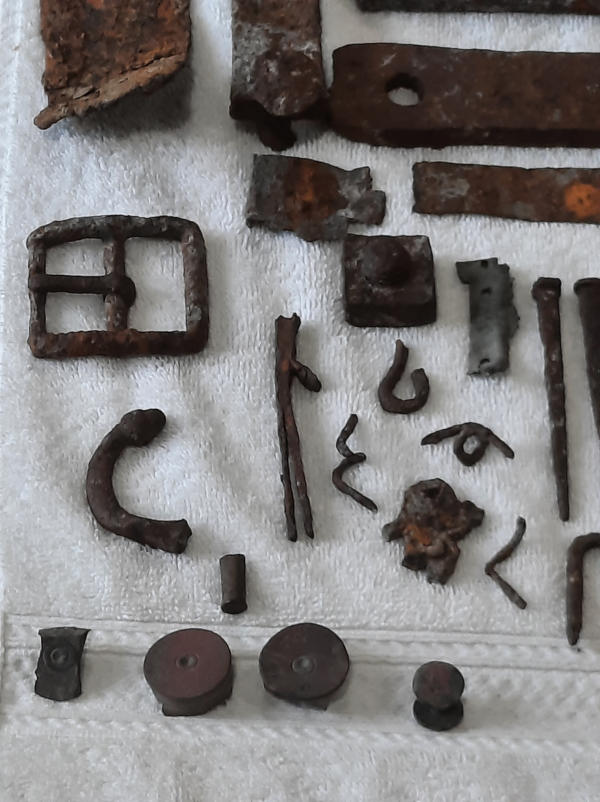
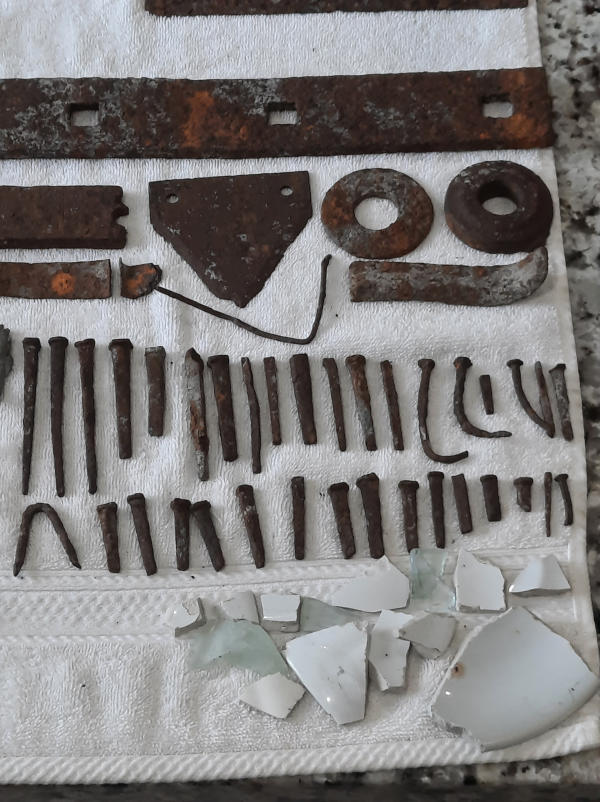
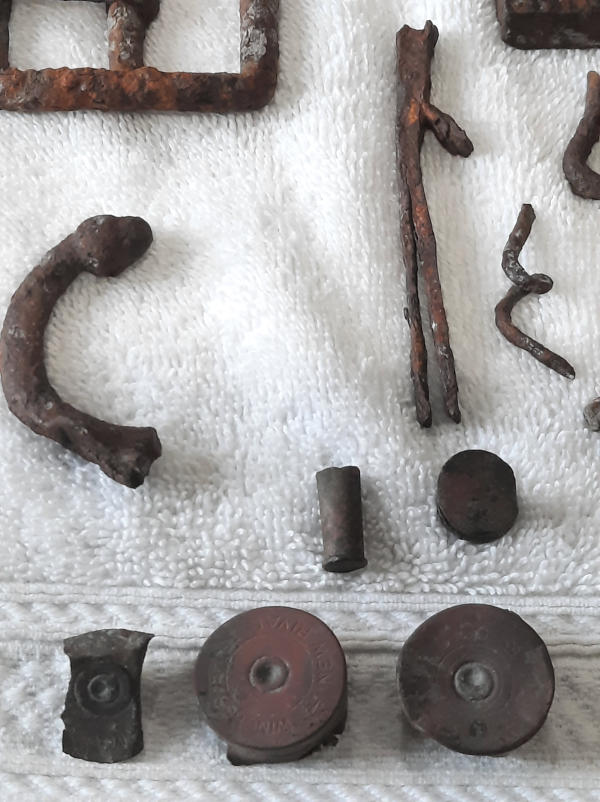
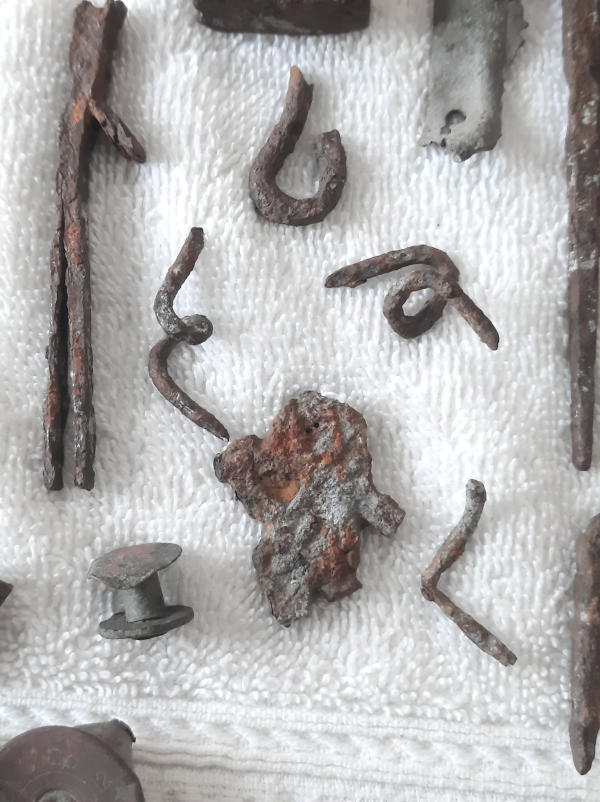
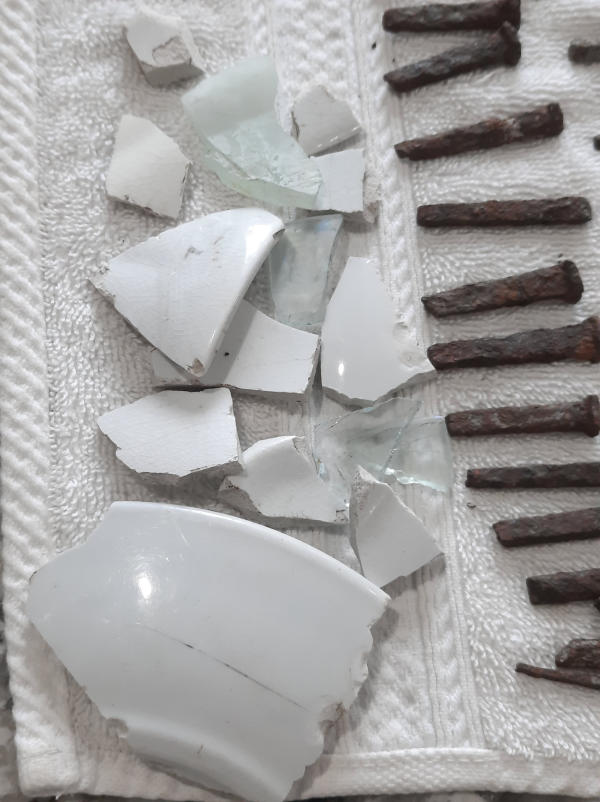
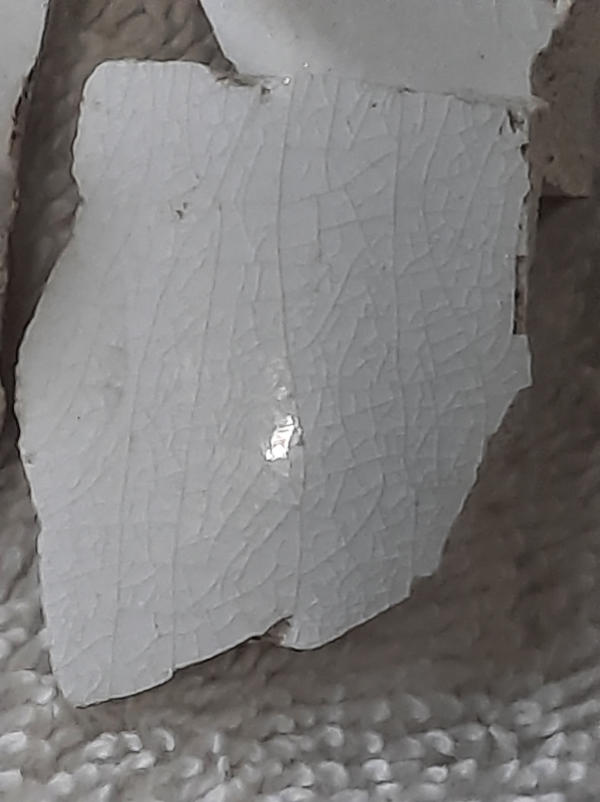
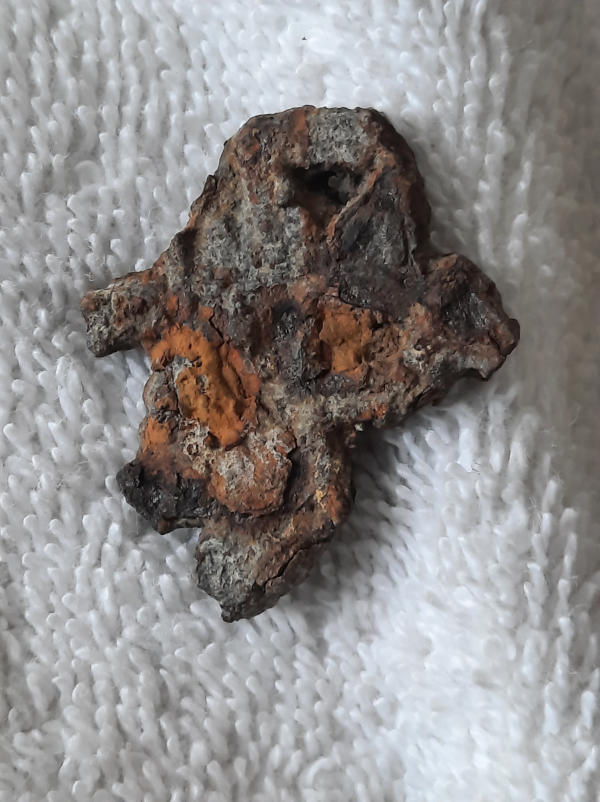
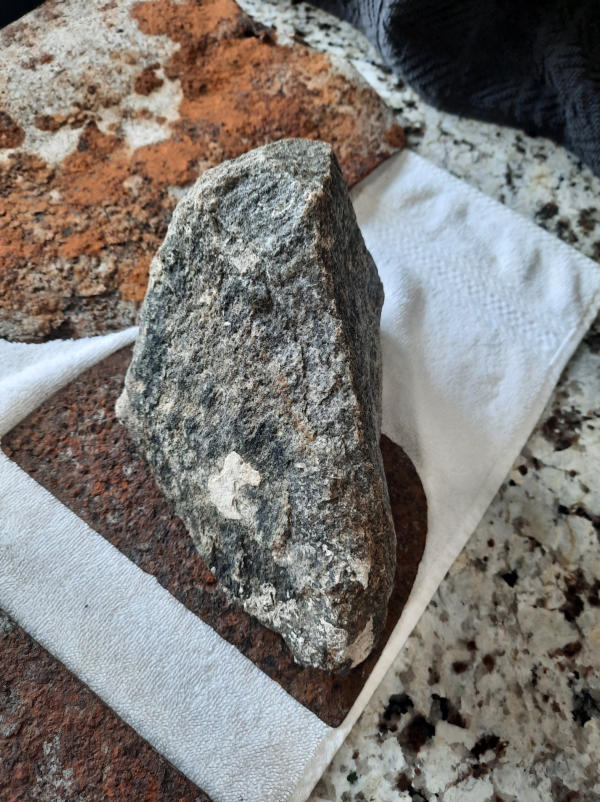
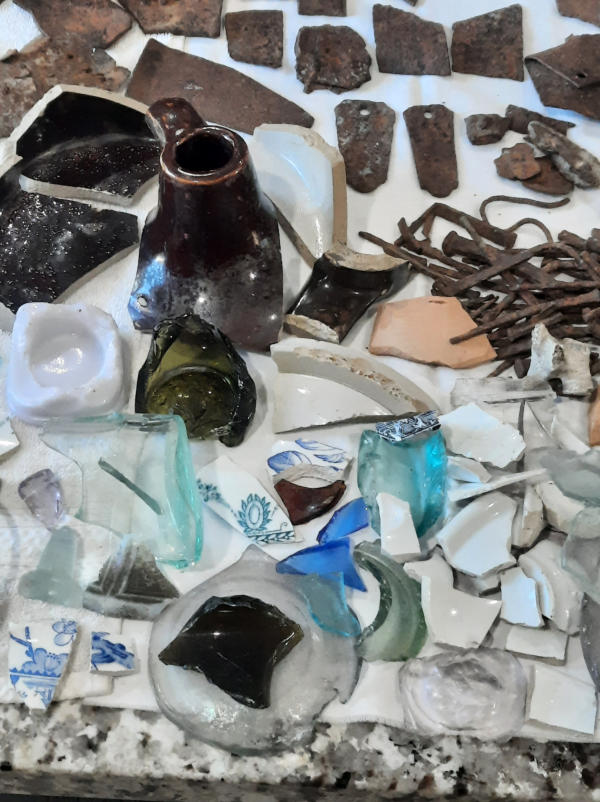
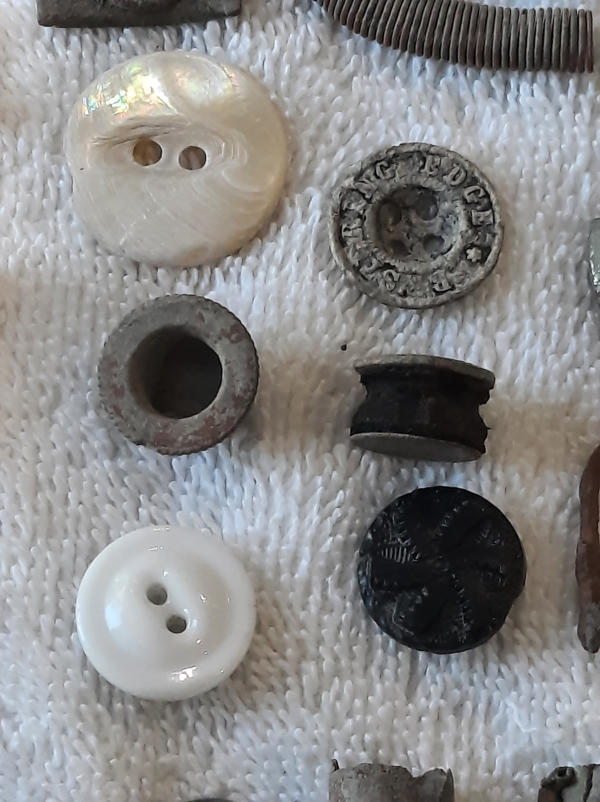
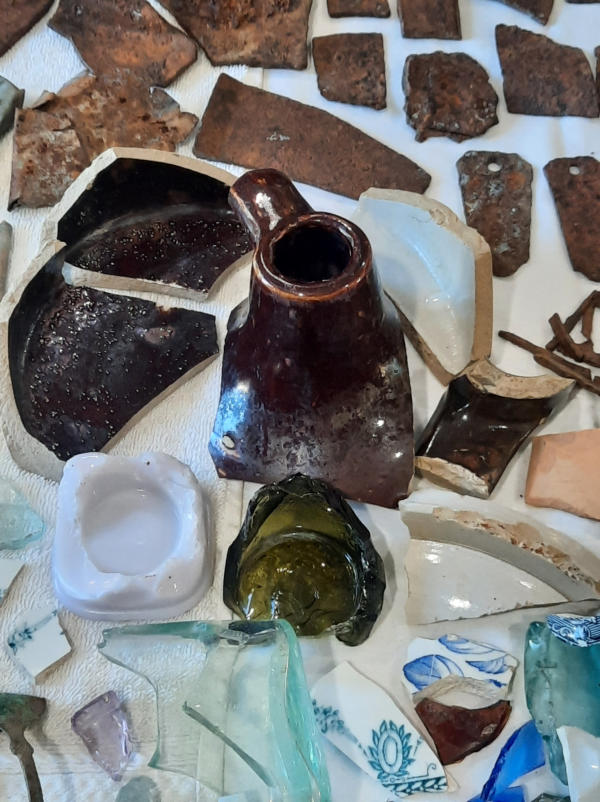
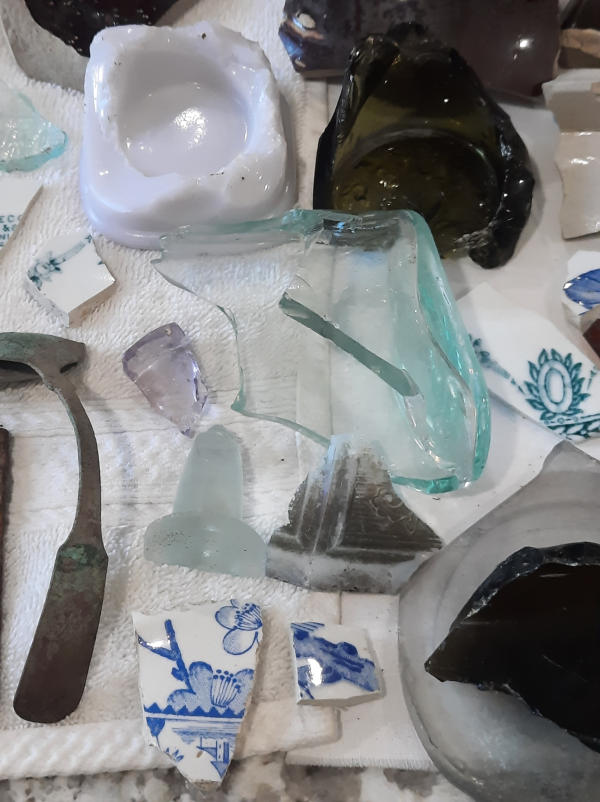
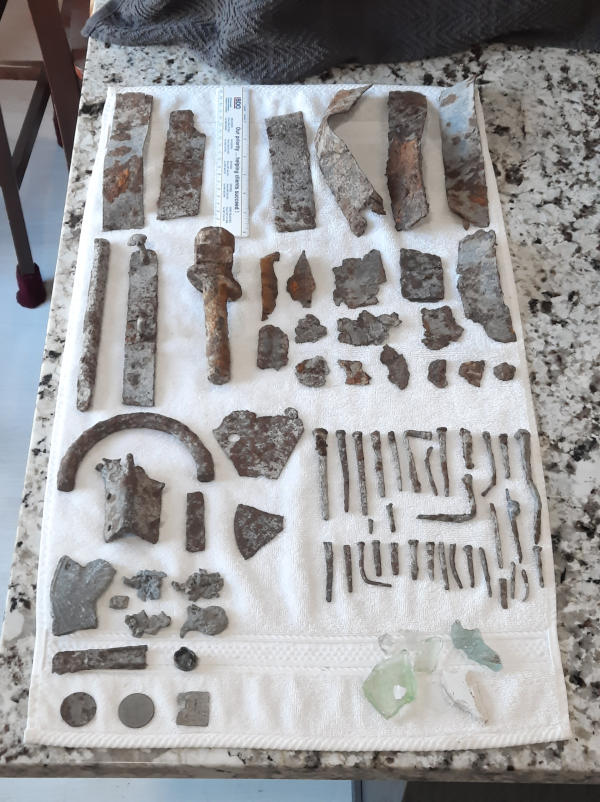
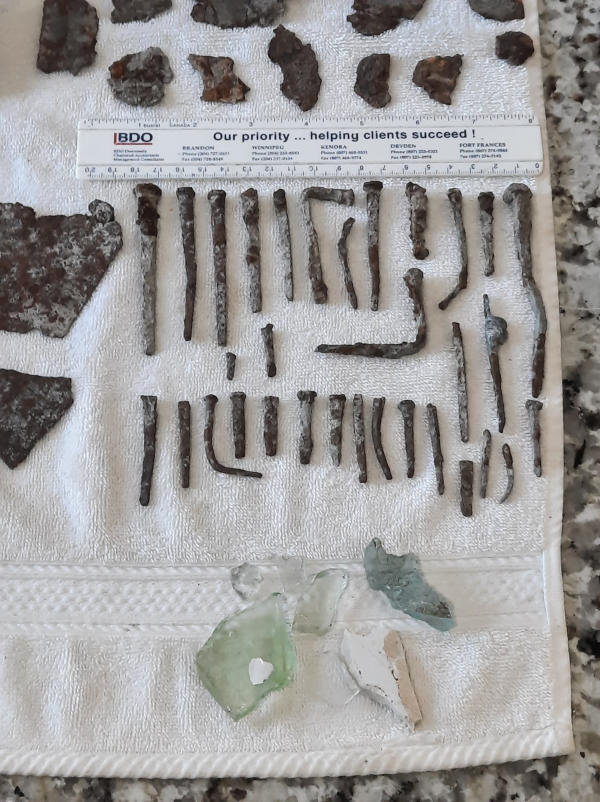
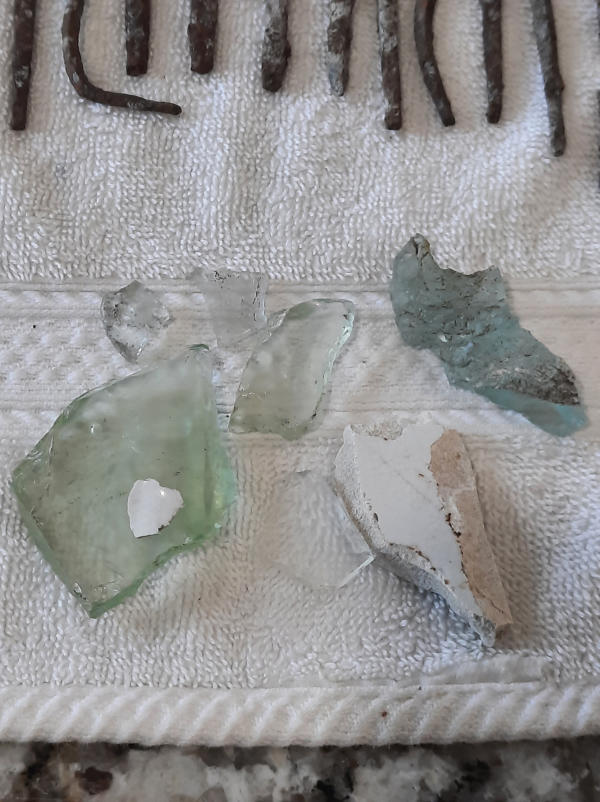
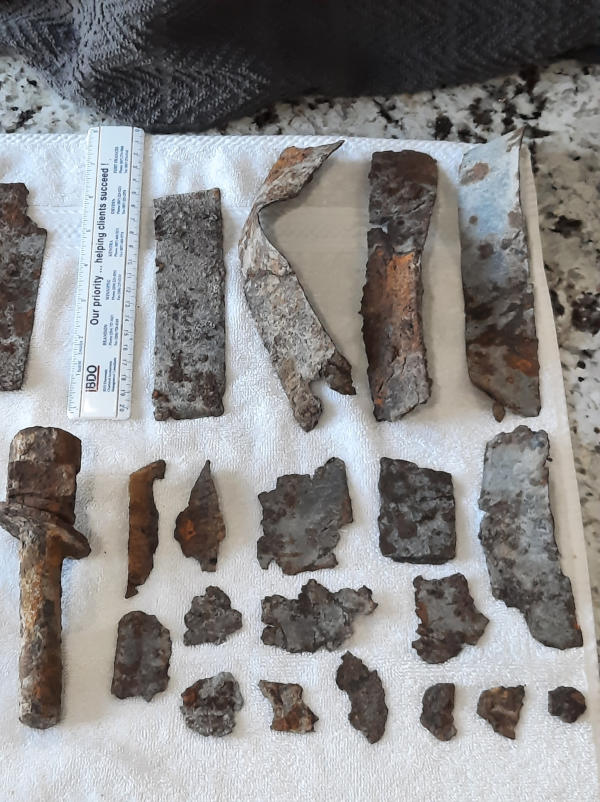
The resulting finds were scant. Ample square nails, check. Purple
glass, check. Ceramic shards, check. Shotgun shells, check. One
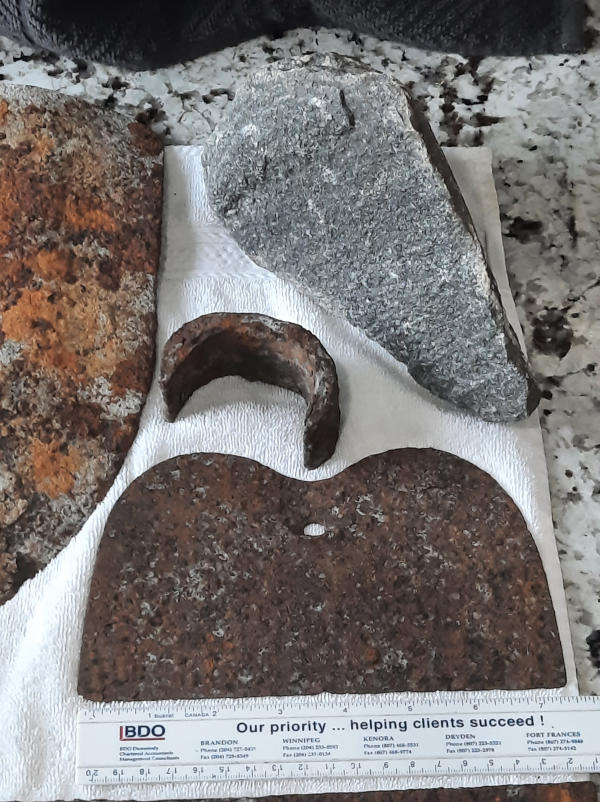
large angular and possible hand cut corner stone, check. One
shovel and a hoe, check. But where have all the other usual
homestead artifacts gone? Where are the signs of life? Where are
the rest of what would have been a great many field stones? To this
I have no answer. Maybe the stones were all repurposed?
Not all metal detecting outings result in great finds and discovery.
We’ve had lots of those but sometimes the outing gives you these
exact results: nothing. That in itself is the discovery. Whatever was
once here is gone. It’s all gone…
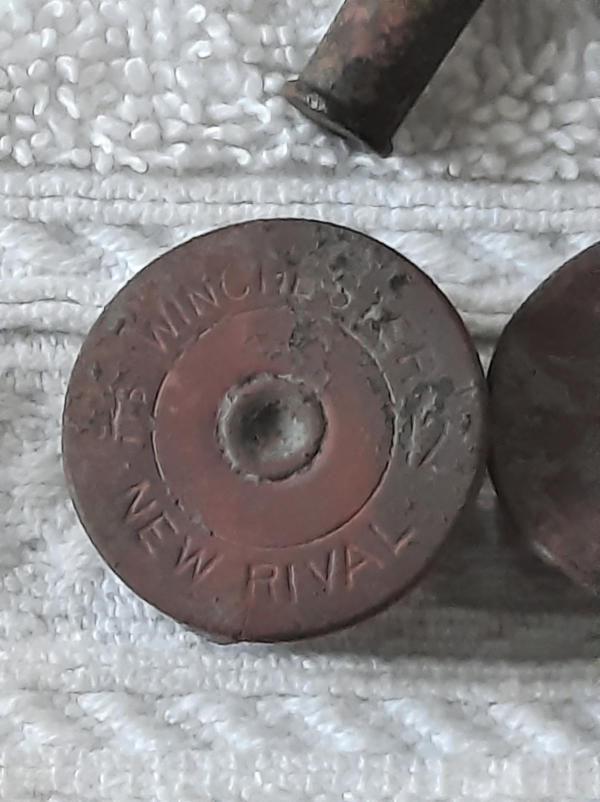
Shotgun Shell Casings :
Winchester No 12 New Rival 1920 – 1929 issue
U M O Co. No 12 Club 1887 – 1906 issue
Williams & Powell 1890 – 1894 issue
Roger
October 10, 2026 - A Second Go.
October 10, 2026
A second go.
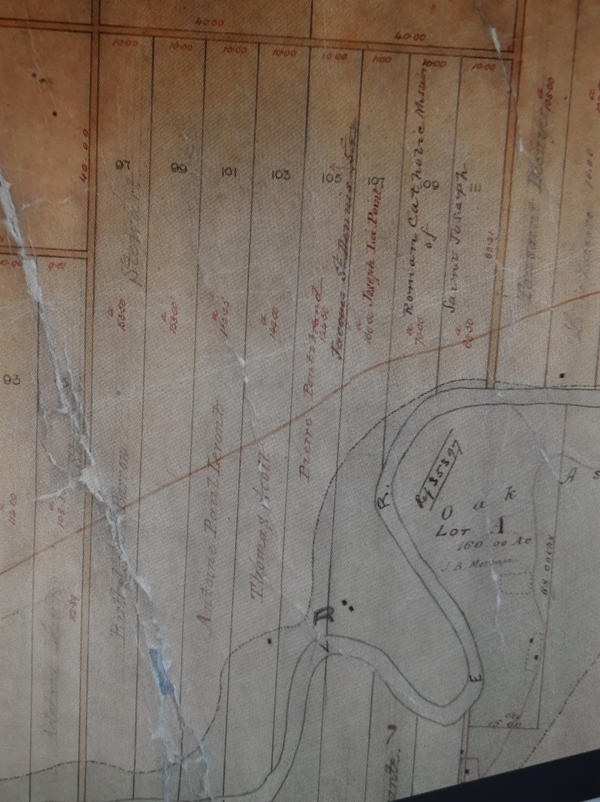
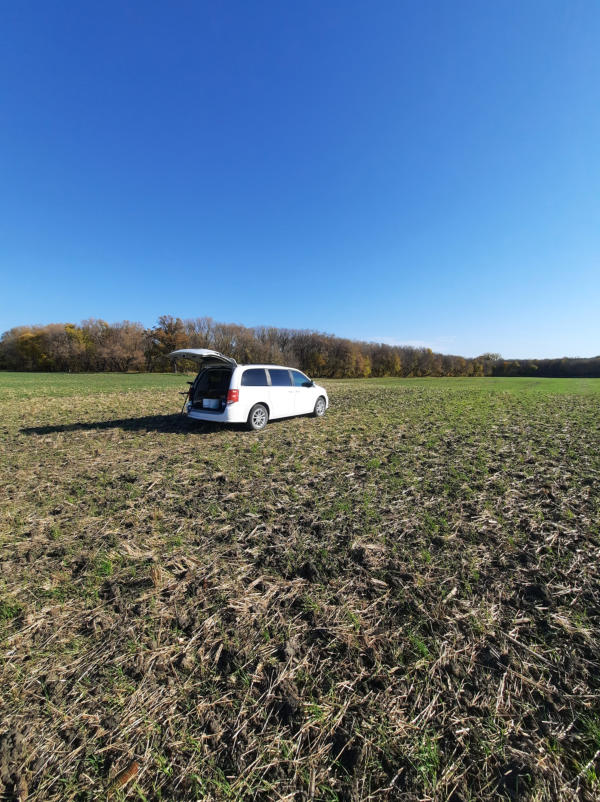
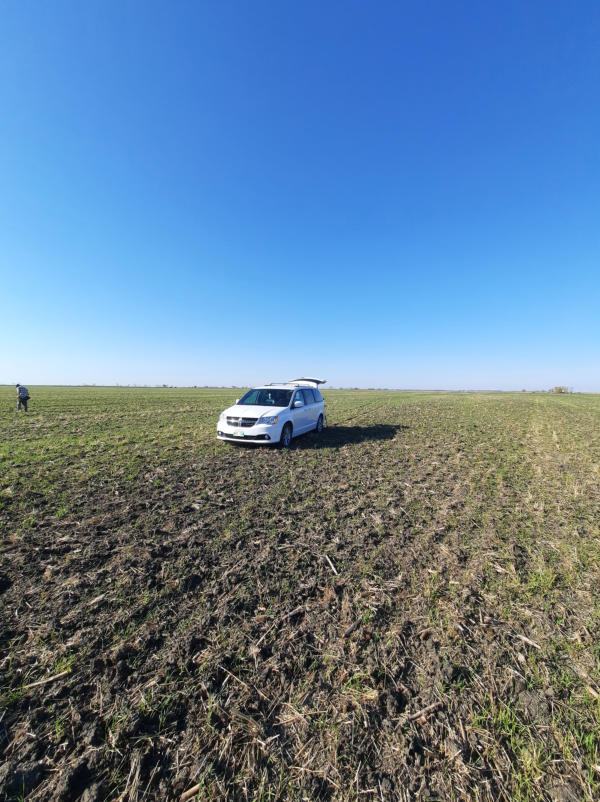
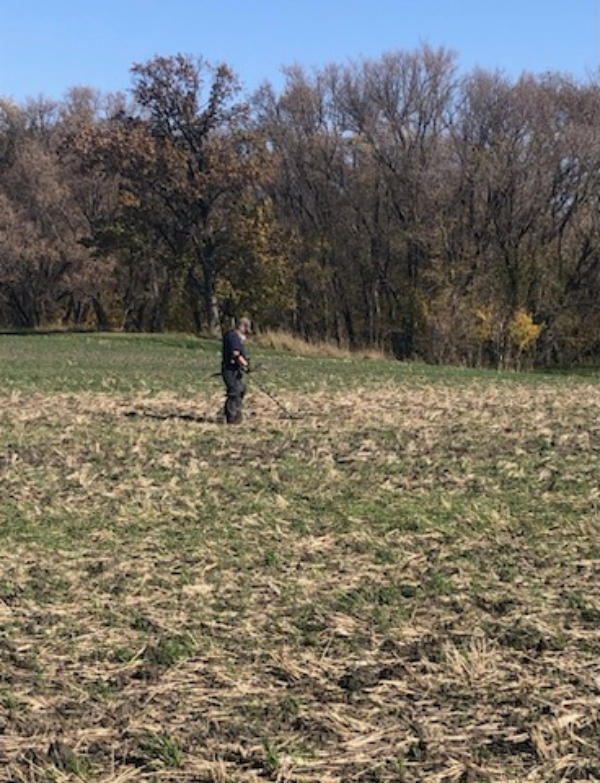
The last time we metal detected here was in spring. See: May 28,
2026 - Red River Lot 105. St. Pie, Manitoba. This was today’s plan
“B”. The Moore House site ran dry so we had a second go at this
location.
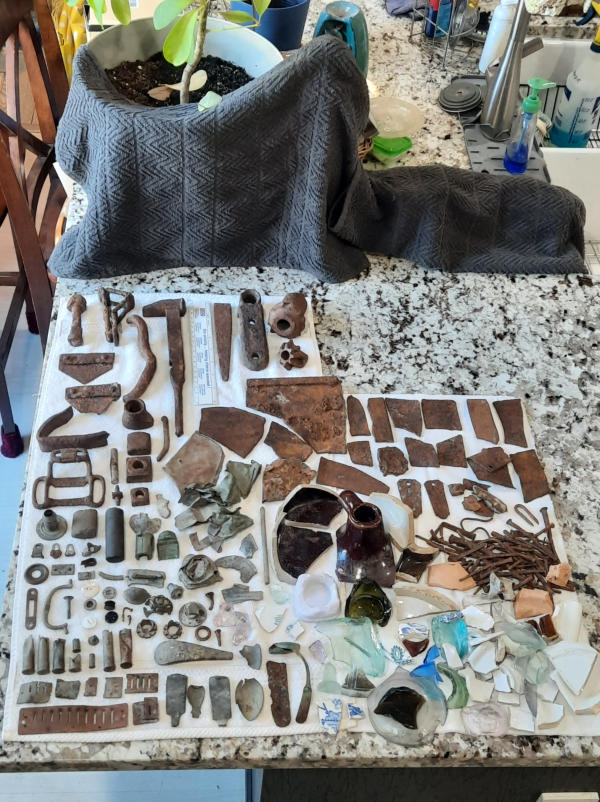
The comparison between these two places couldn’t be starker but
that’s all part of discovery through metal detecting. Not all
homesteads were created equally. Some lasted longer through the
trials of time, others maybe not so long. Some were more affluent
than others, but all left a footprint; some small, some large.
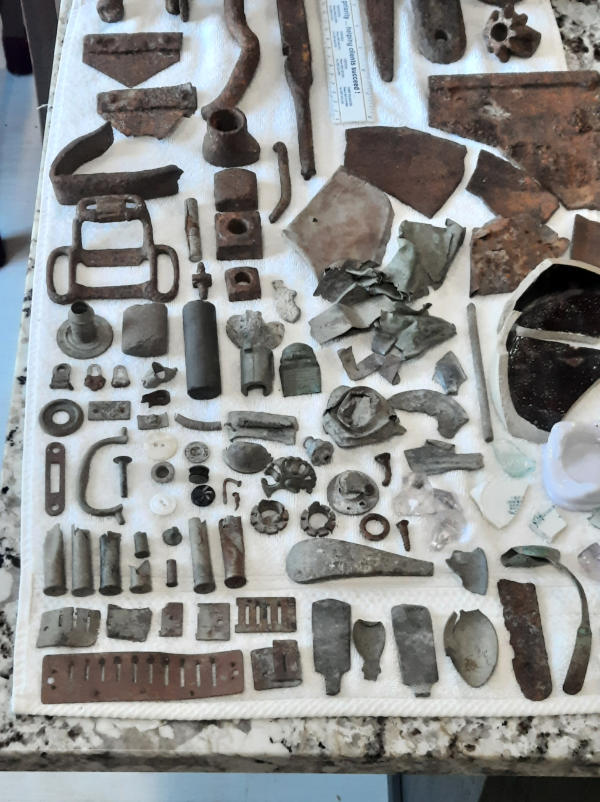
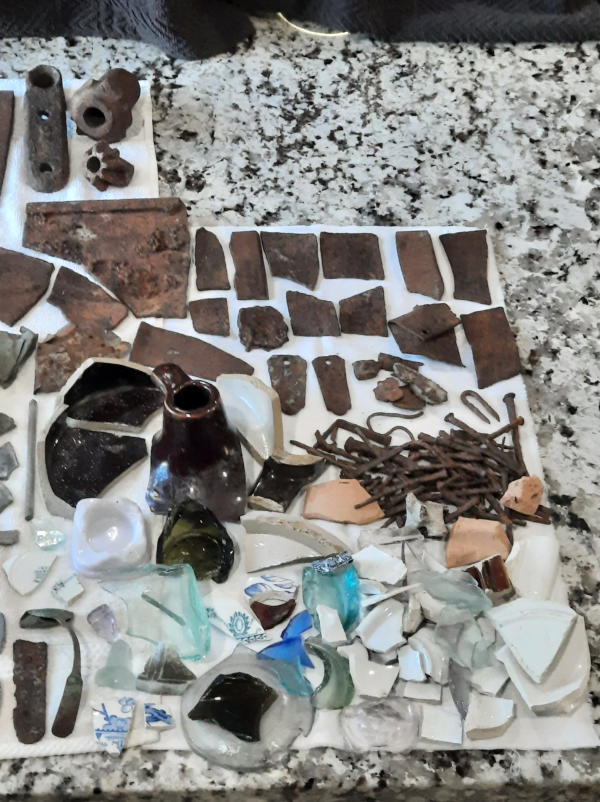
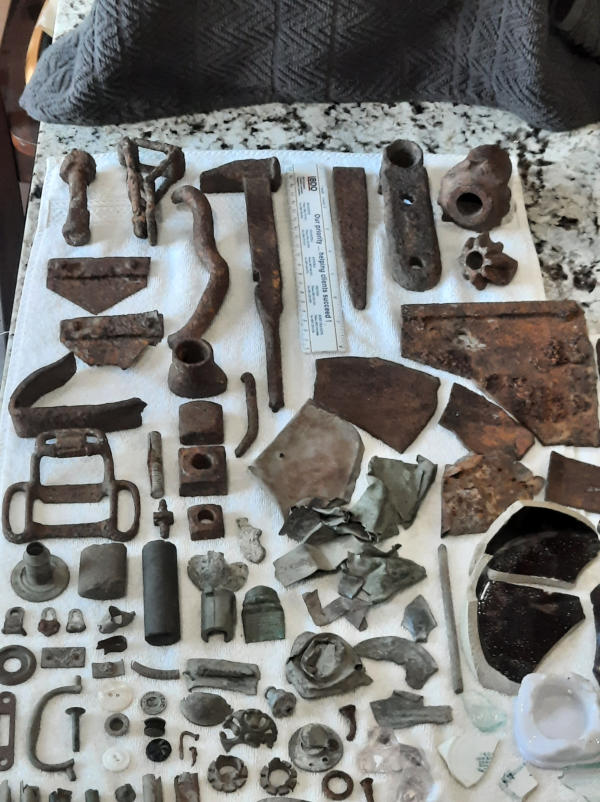
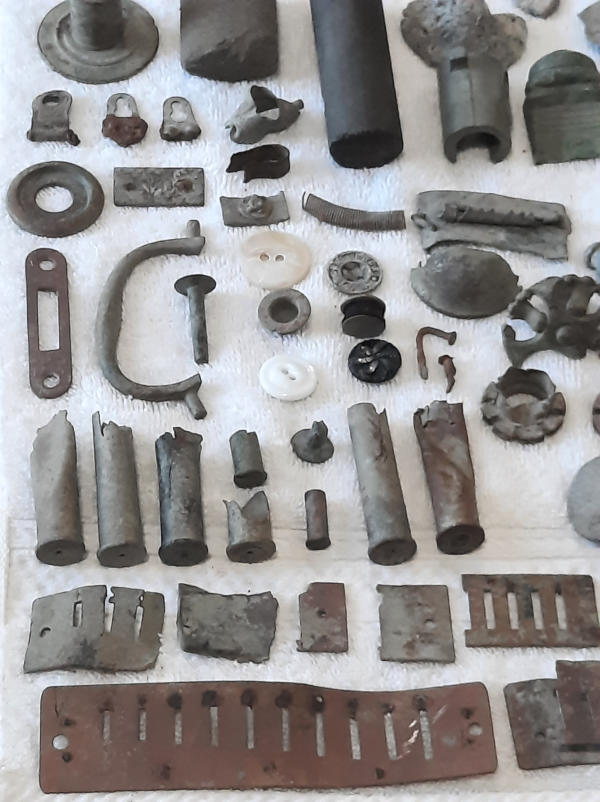
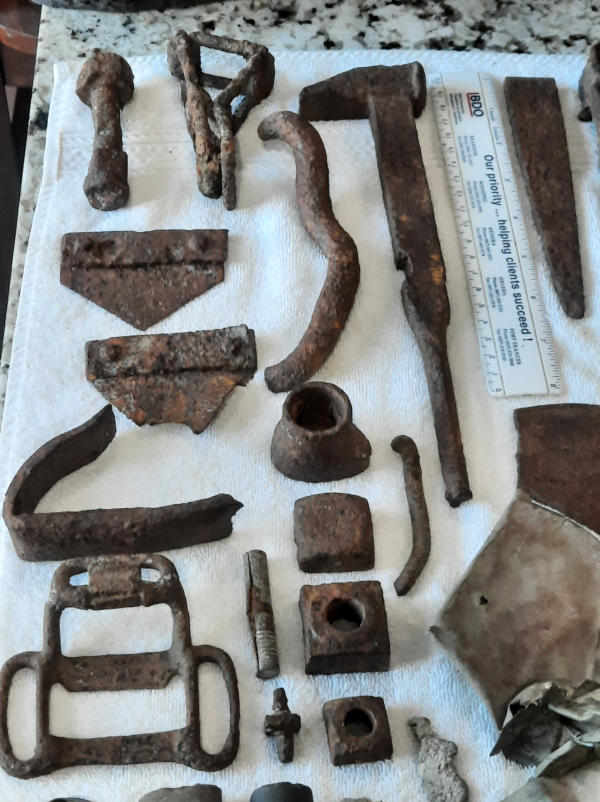
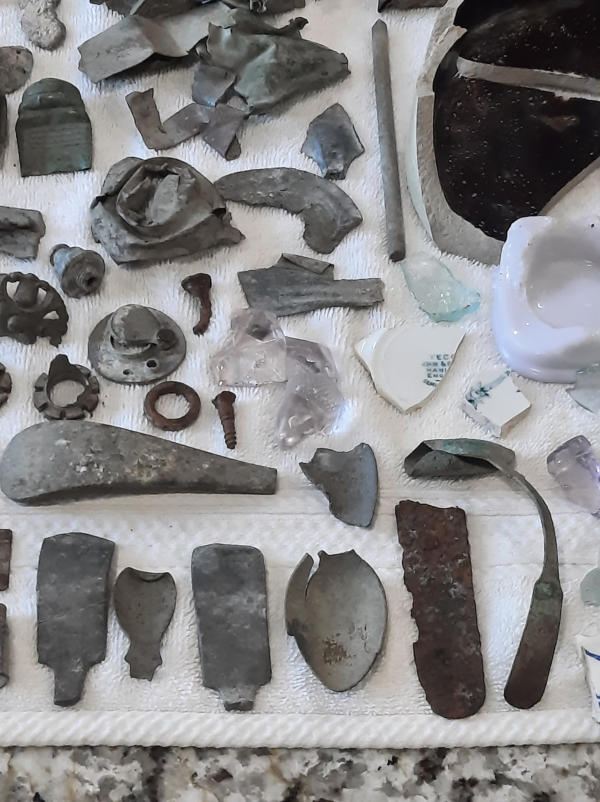
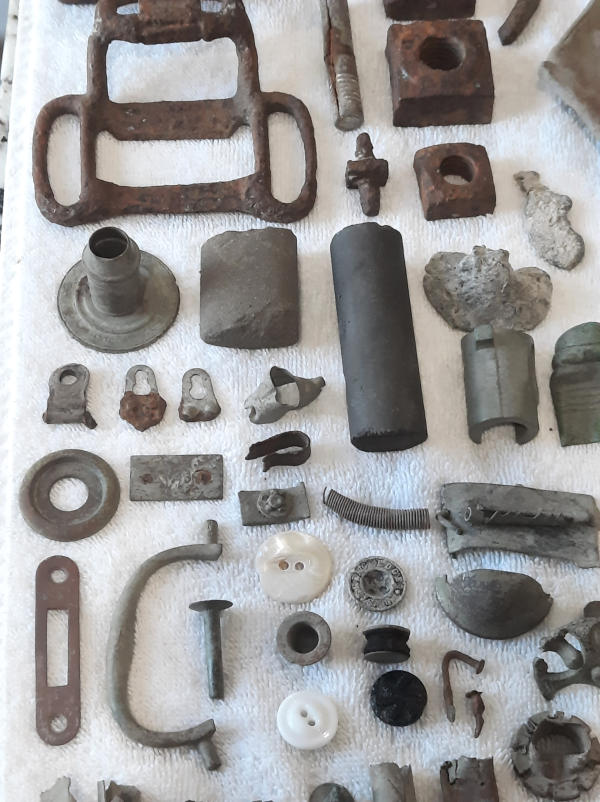
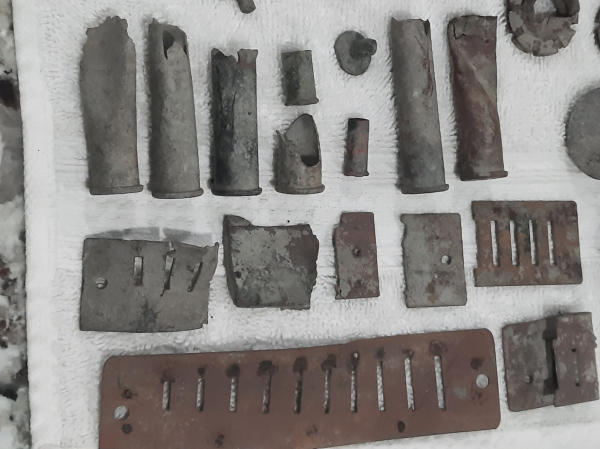
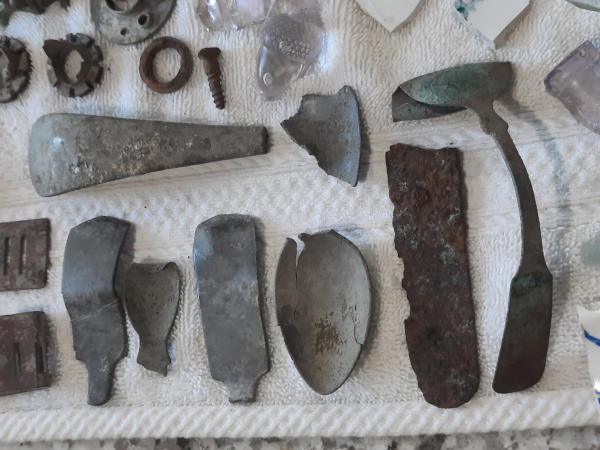
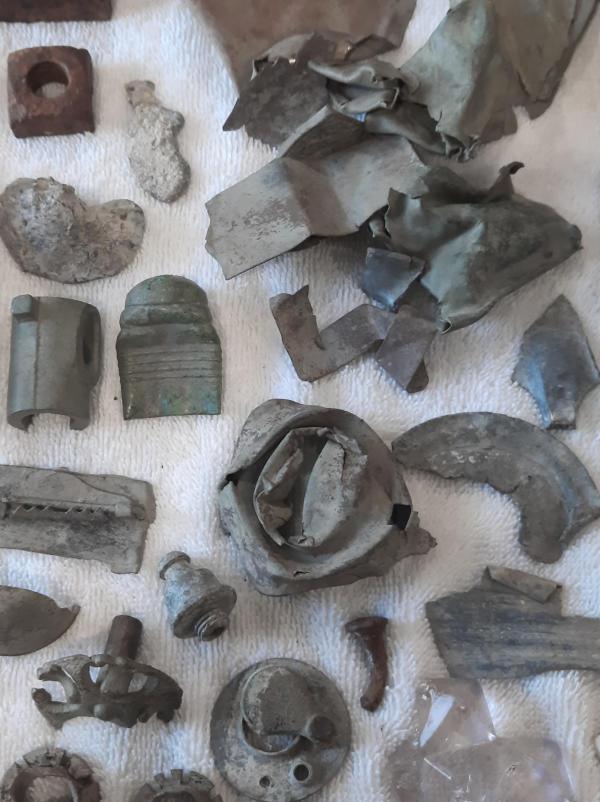
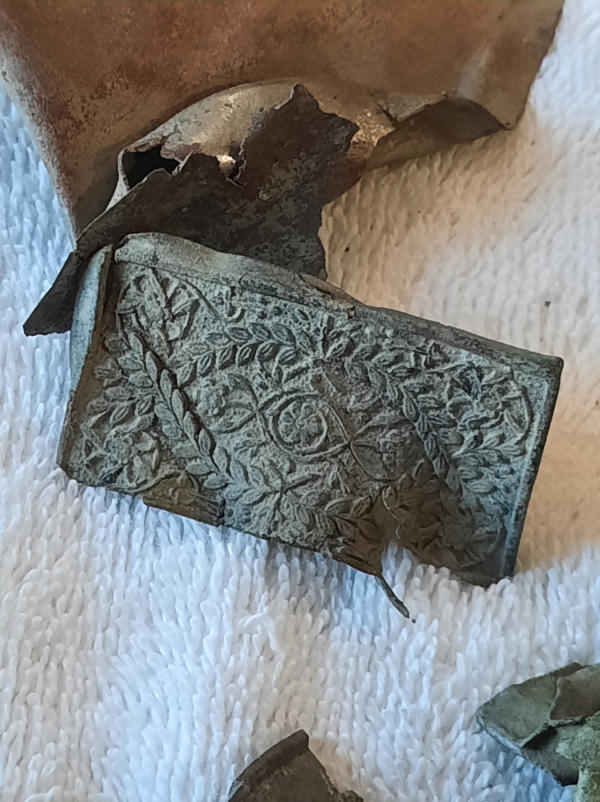
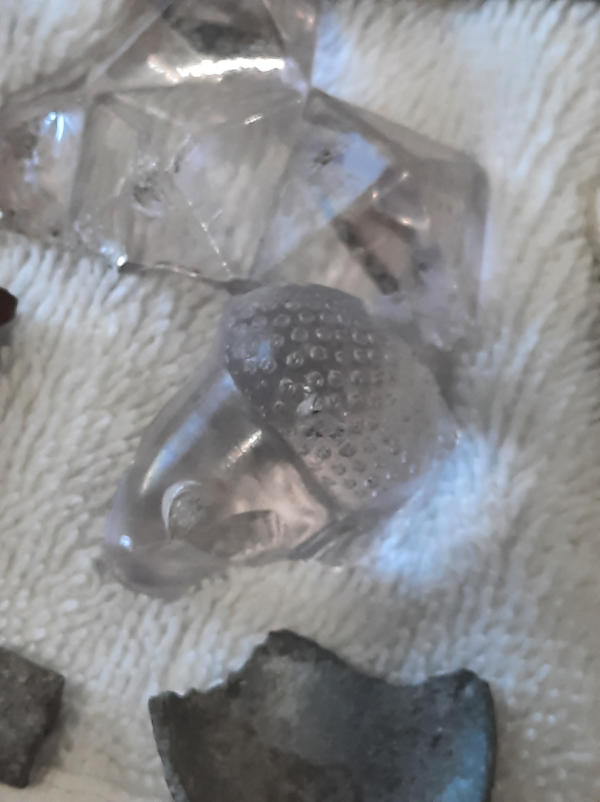
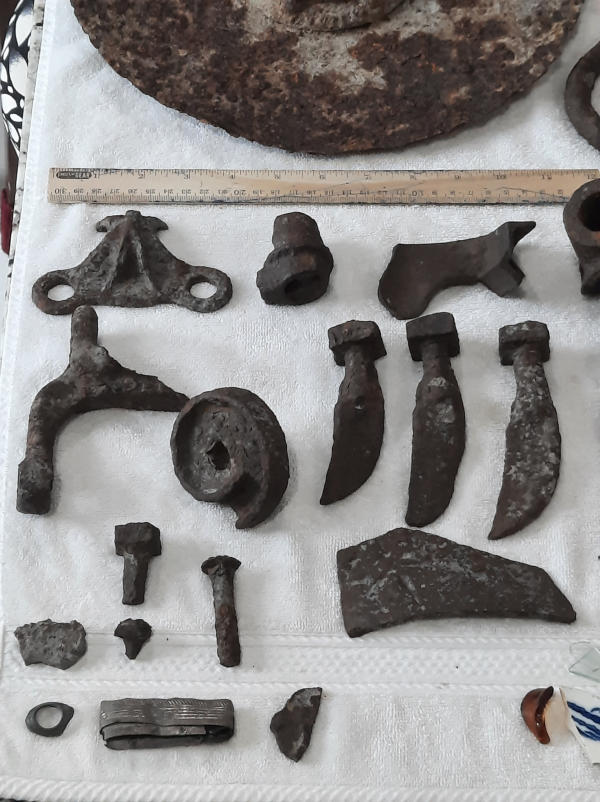
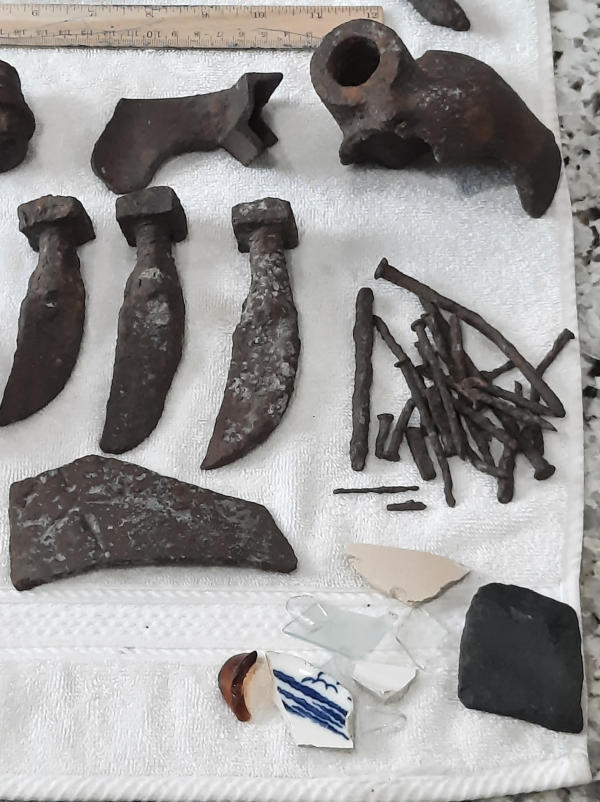
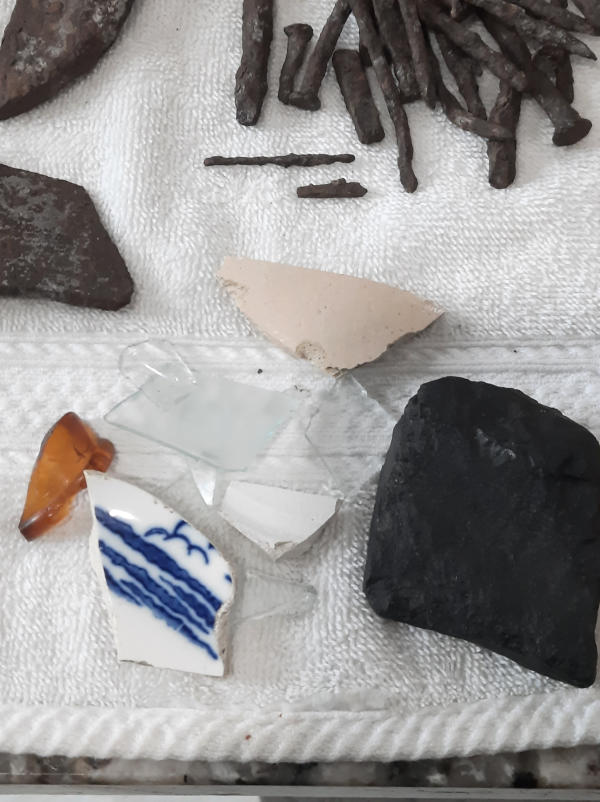
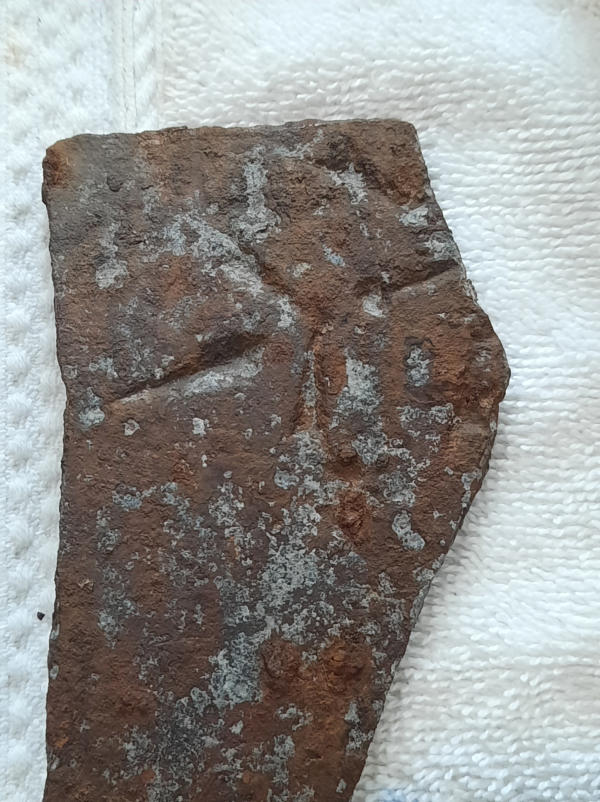
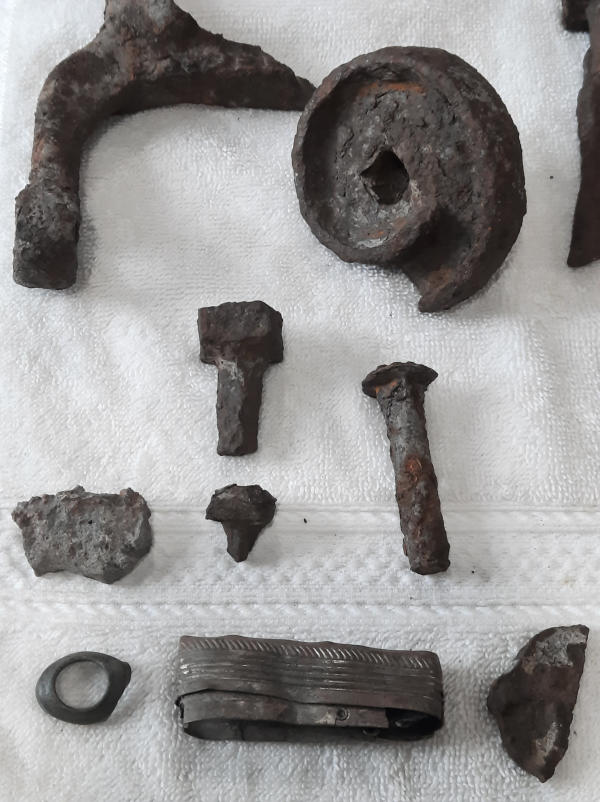
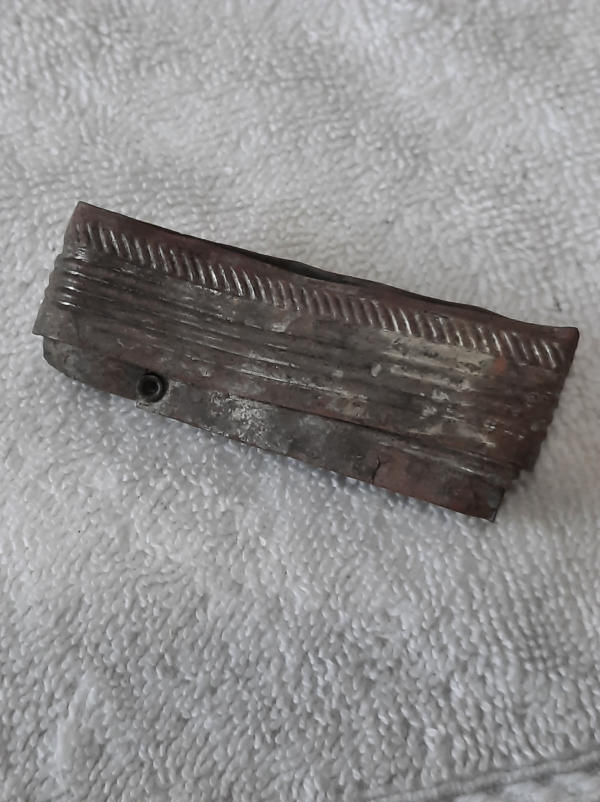
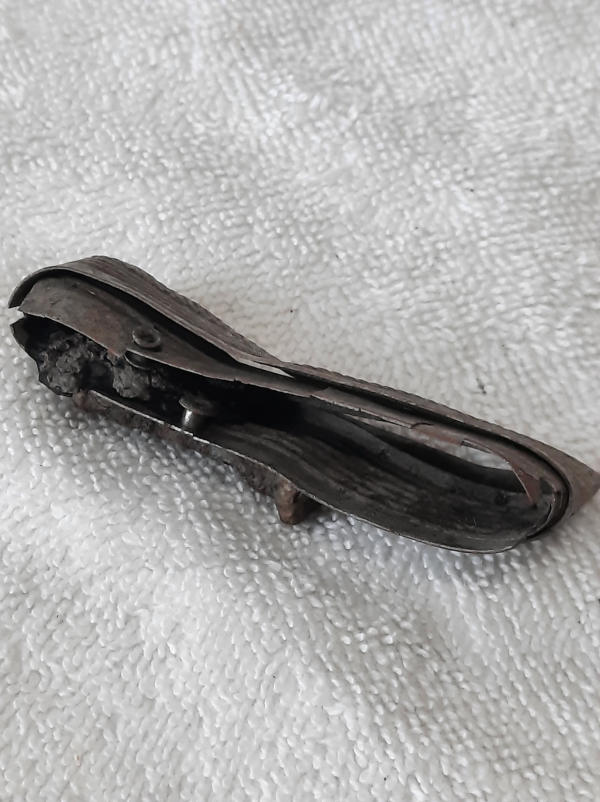
This second site left a lot of footprint and evidence of habitation.
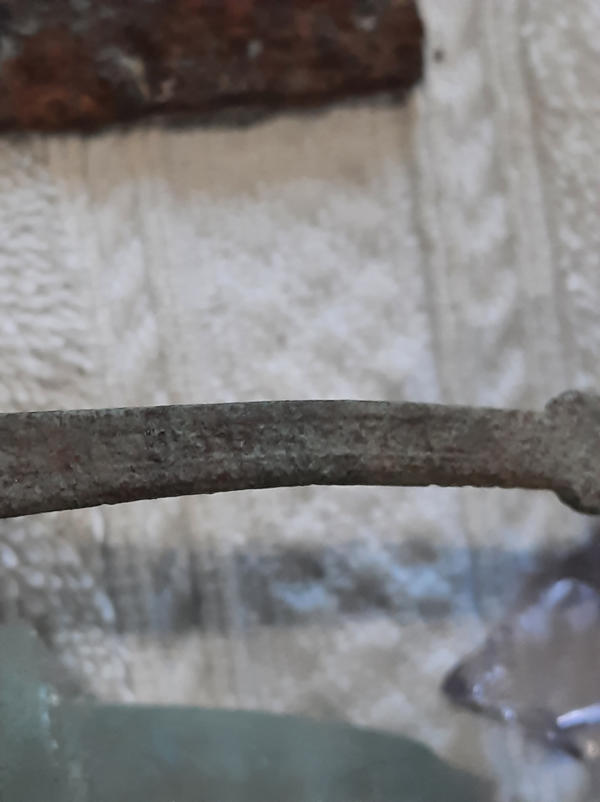
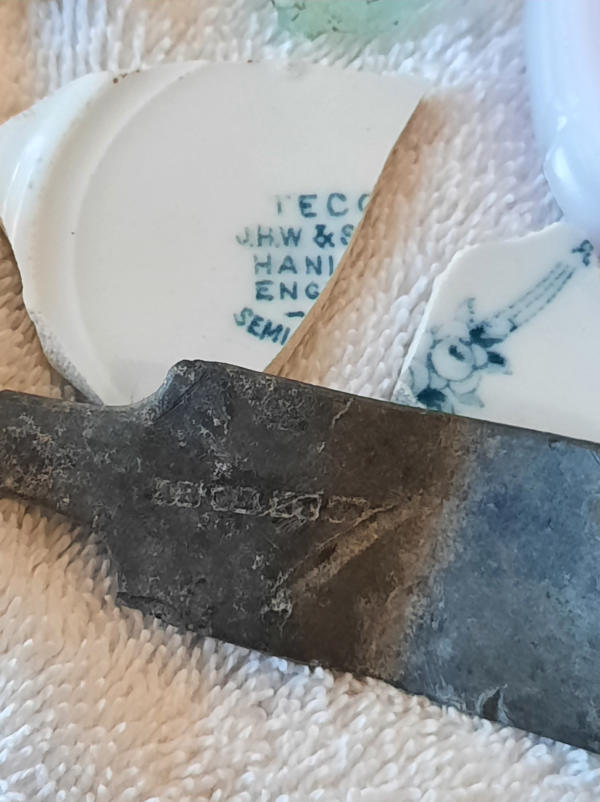
I’ll let the pictures speak for themselves.
Readable Markings:
Spoon Handle: Nevada _ _ _ C Co.
Pewter Spoon Handle: AR GE NT
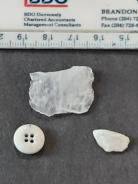
Button: Best Ring Edge
Rifle Shells: R ^ L Ca. II
Roger
October 10, 2026 - A Second Go.

October 20, 2026
An added Discovery.
The last time I was able to metal detect on this location was last
year. See: May 31, 2025 - The Ridge in Spring, and see the two
other associated links. These links tell the story of what makes
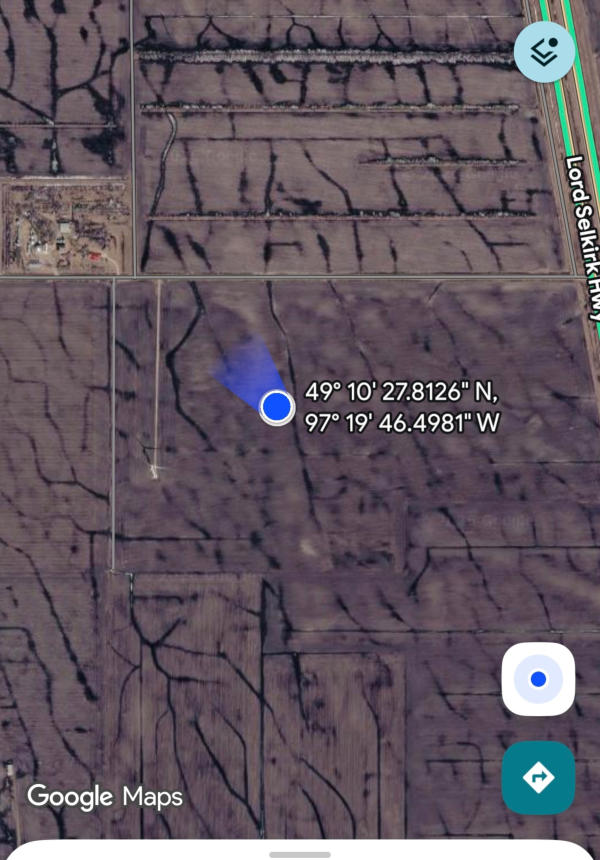
this site so special. It is the confirmed camp site, used by the
surveyors in 1873. F. A. Martin D.L.P. was the person in charge of a
group of 5 men, out in the prairie, surveying new land. The date
was August 30th 1873.
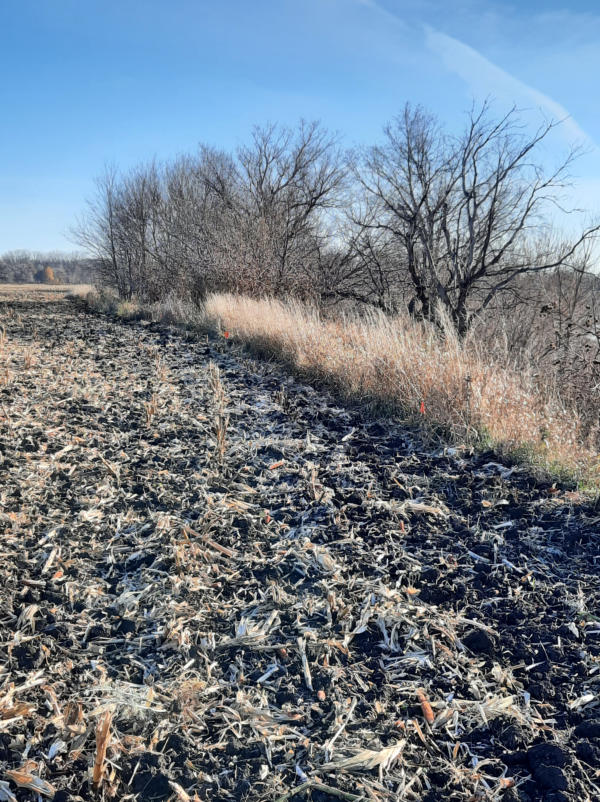
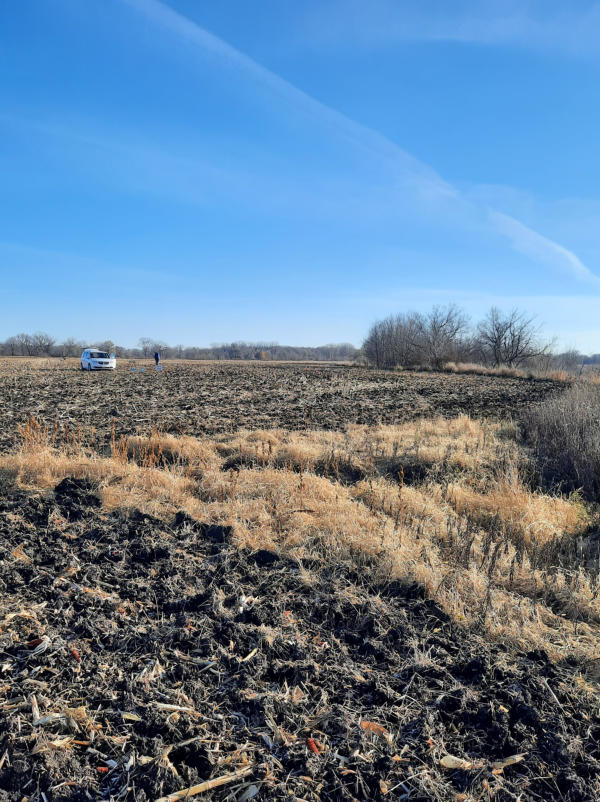
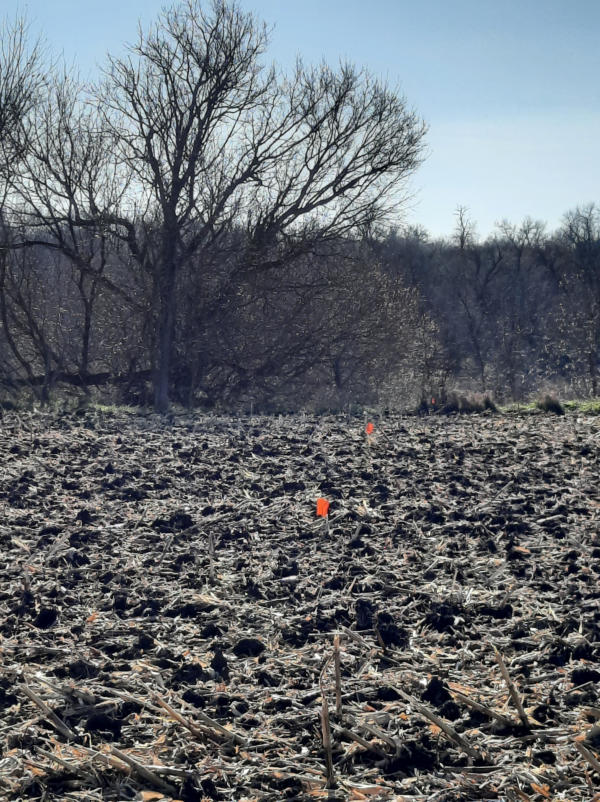
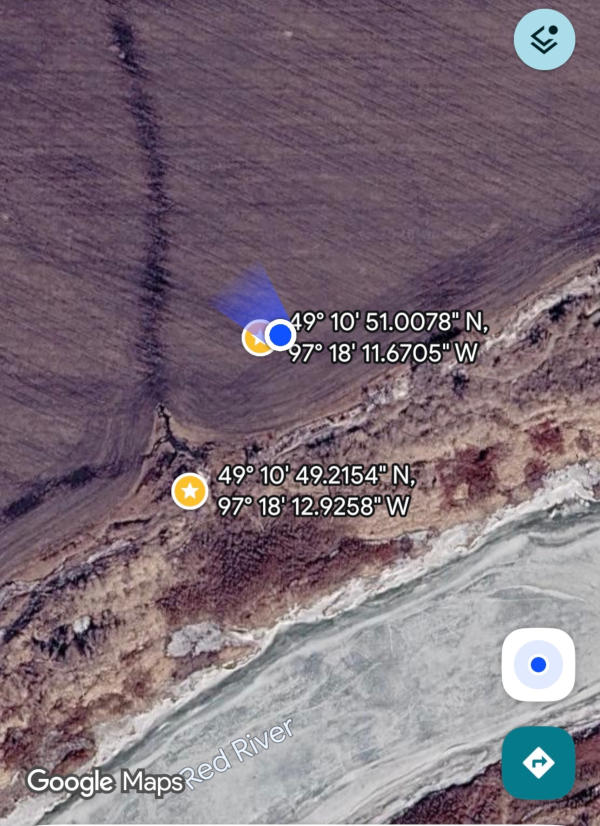
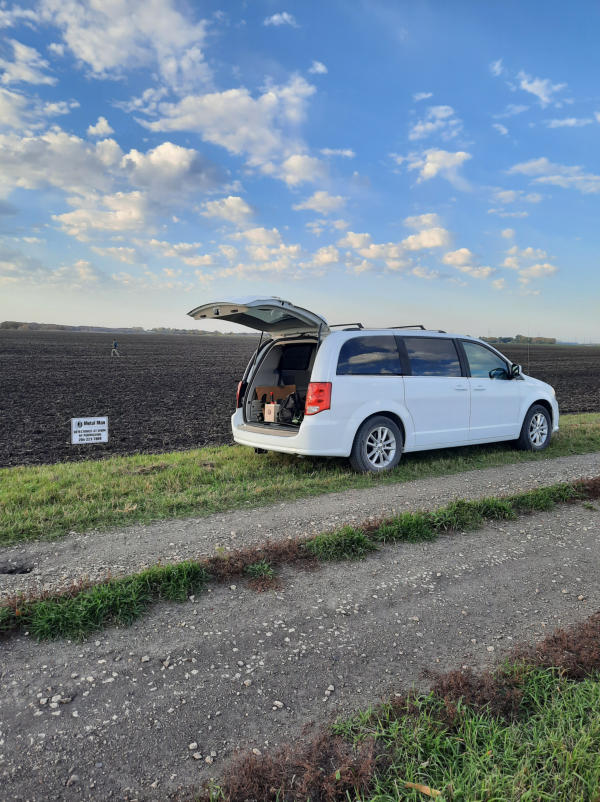
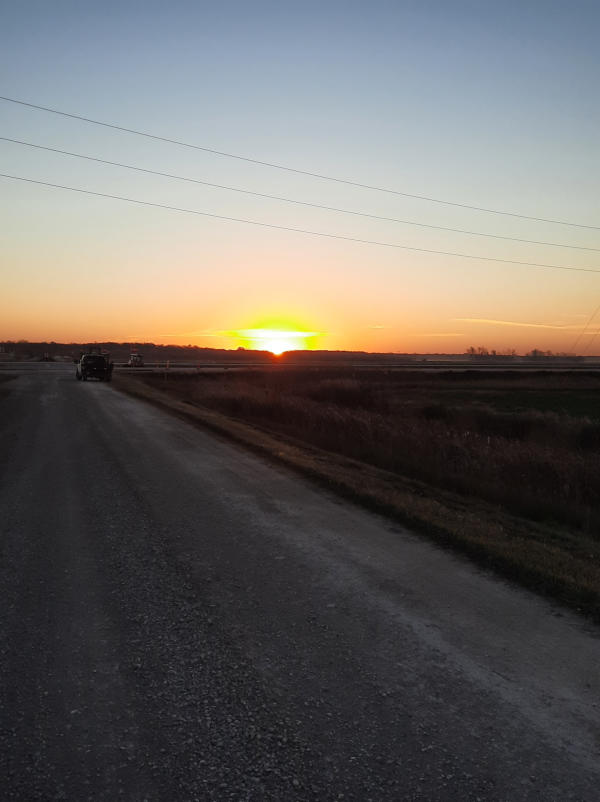
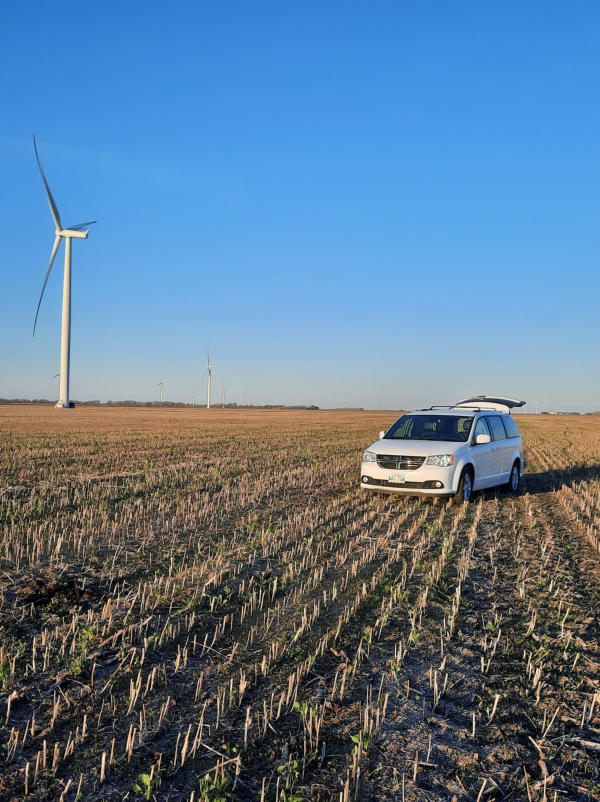
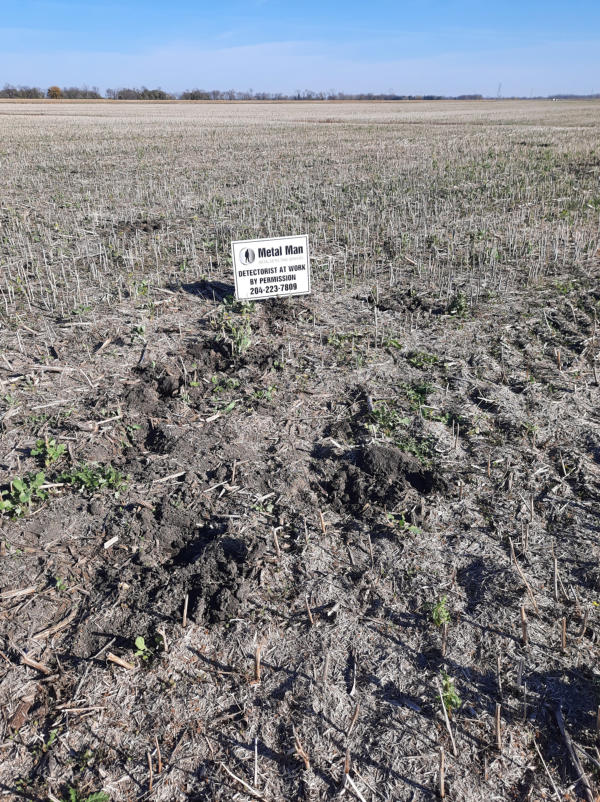
The actual GPS coordinates and a view of the site are on the first
picture.
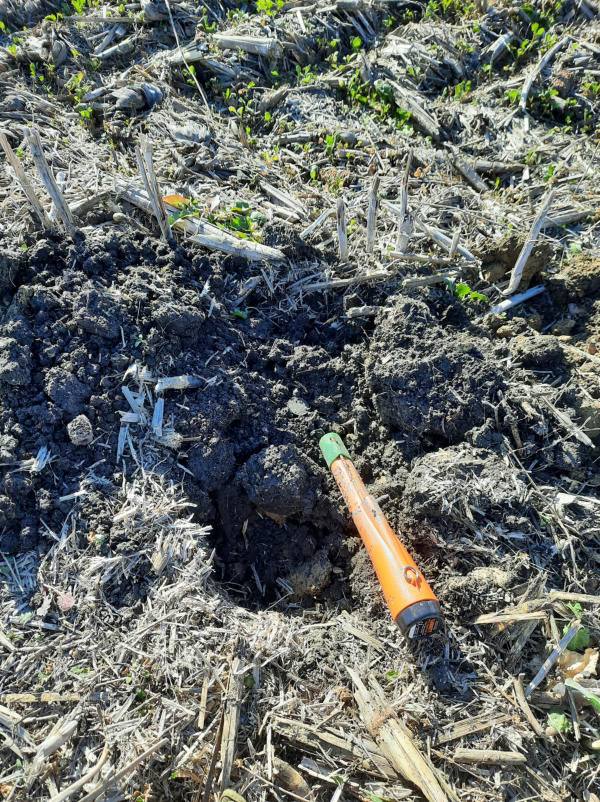
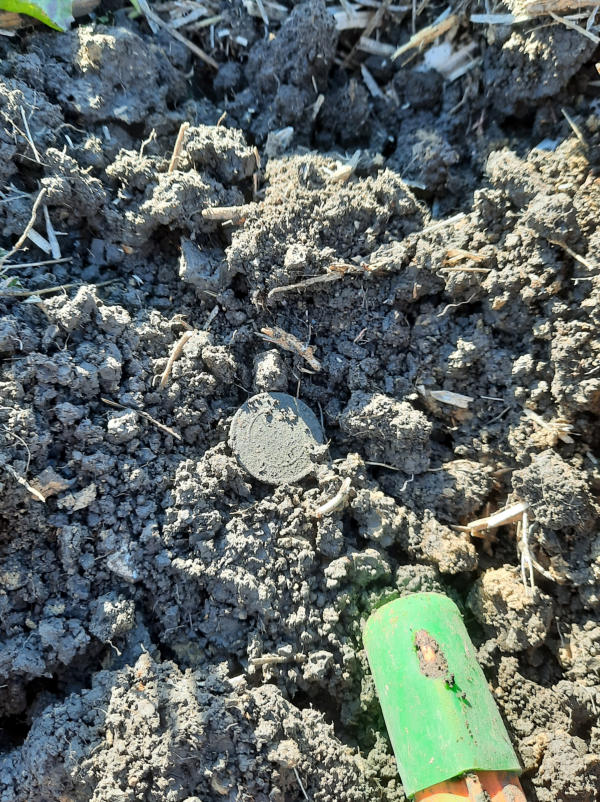
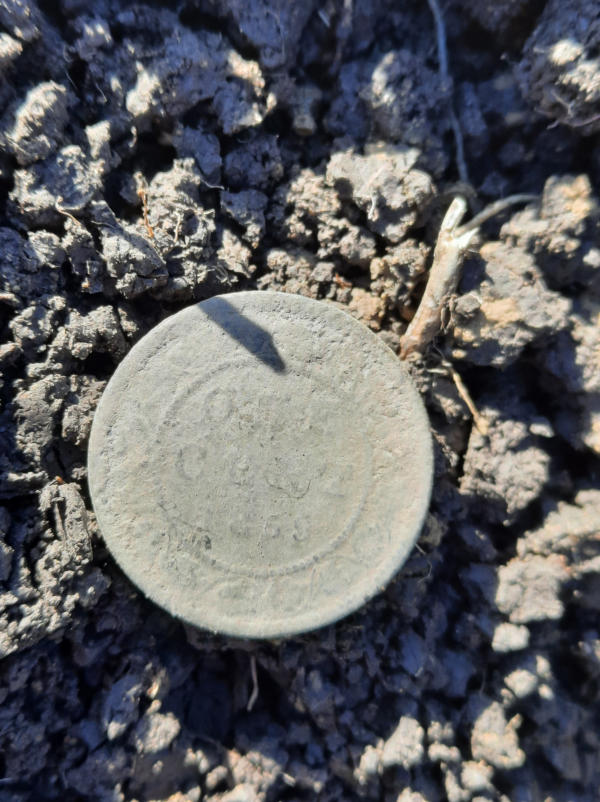
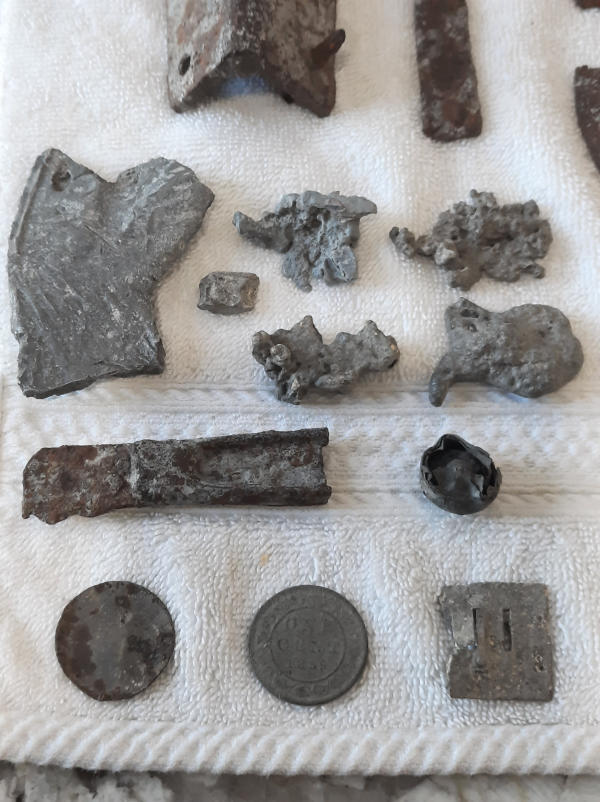
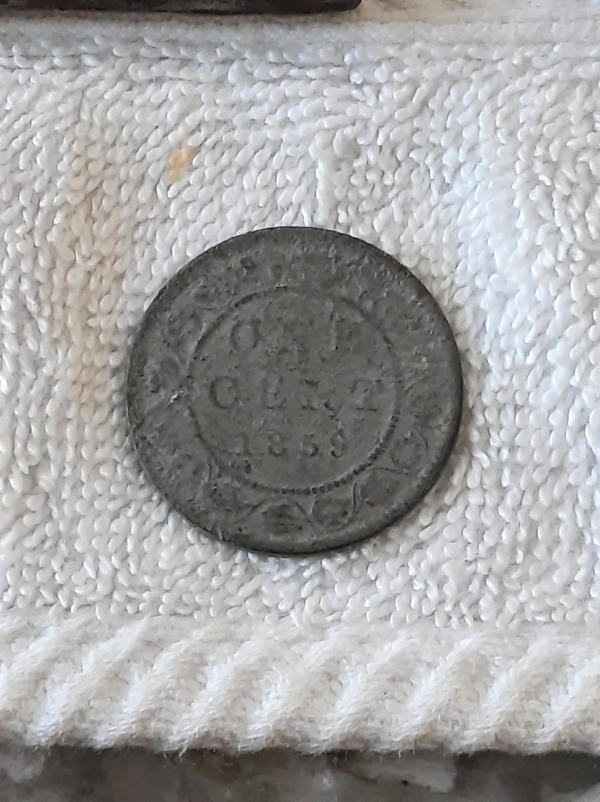
This Canadian large one cent piece was issued in 1859, 167 years
ago.
It was lost in 1873, 153 years ago on this very site by one of these
men.
Today, it sees the light of day again and comes out of hibernation
with provenance.
I can’t help but find this very exciting. To find an old coin is one
thing but to be able to tie it to just a few people, and on such a
close a date, is incredible.
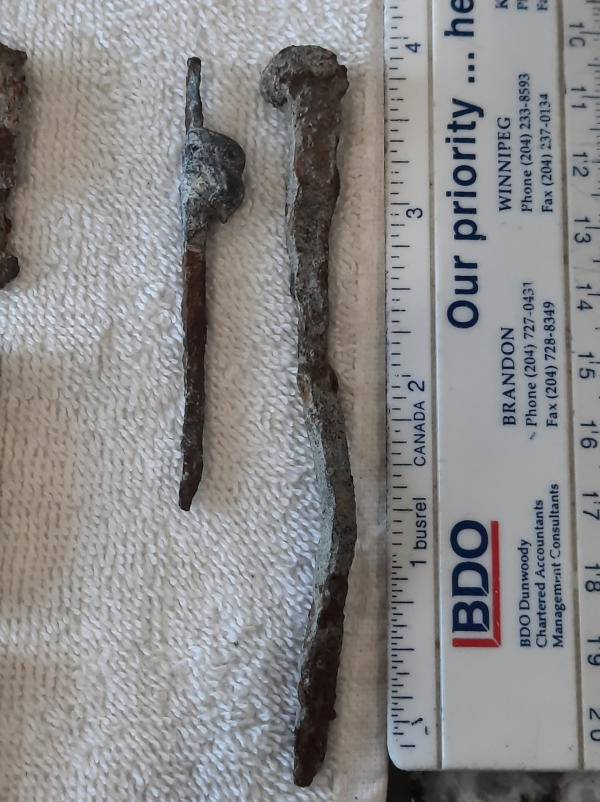
The other items located on this small site are common and
unassuming and may not be as exciting to look at but special
attention is given to try to tie some of these to the early surveyors.
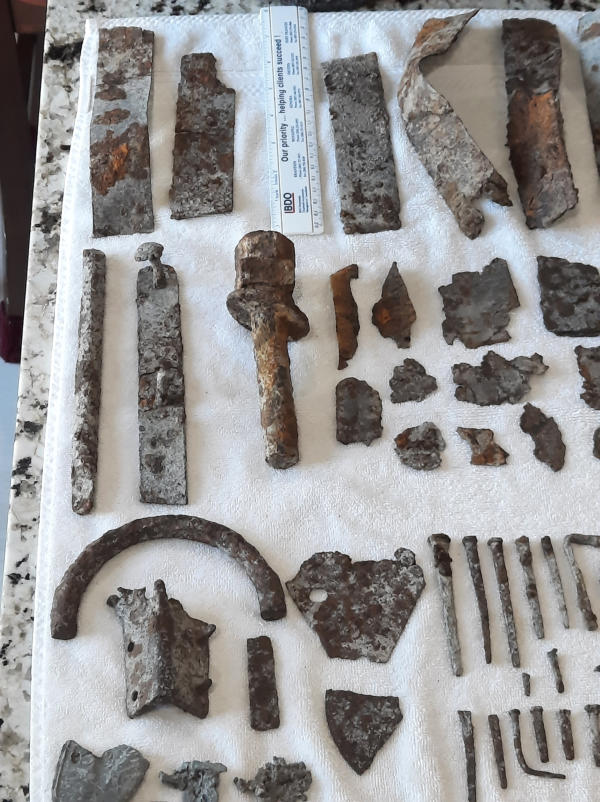
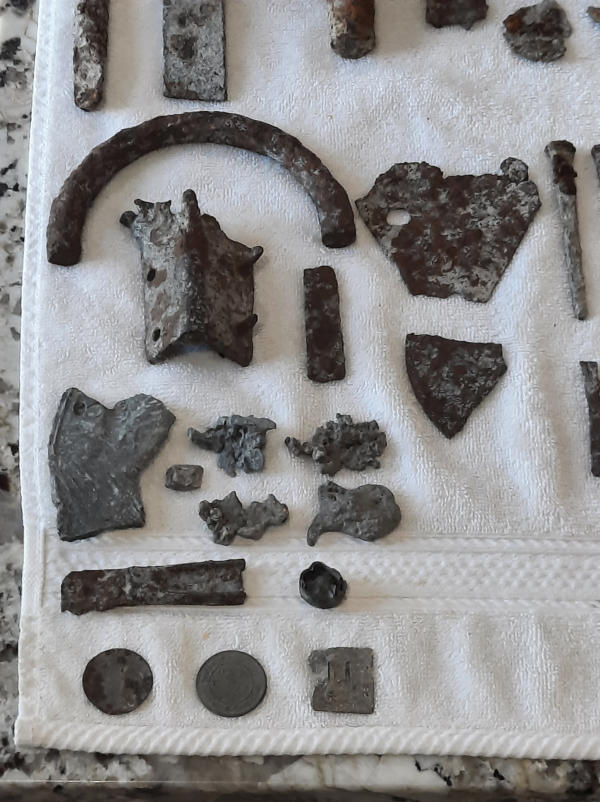
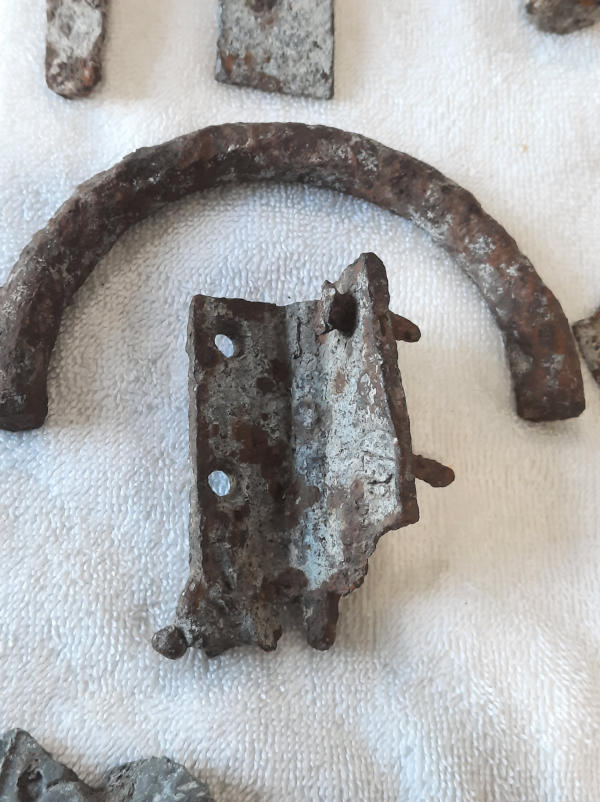
The numerous metal bands were all dug out of one hole and were
between 6 to 10 inches deep. I can only speculate as to what they
were for but I’m guessing they were perhaps the loops around a
small barrel.
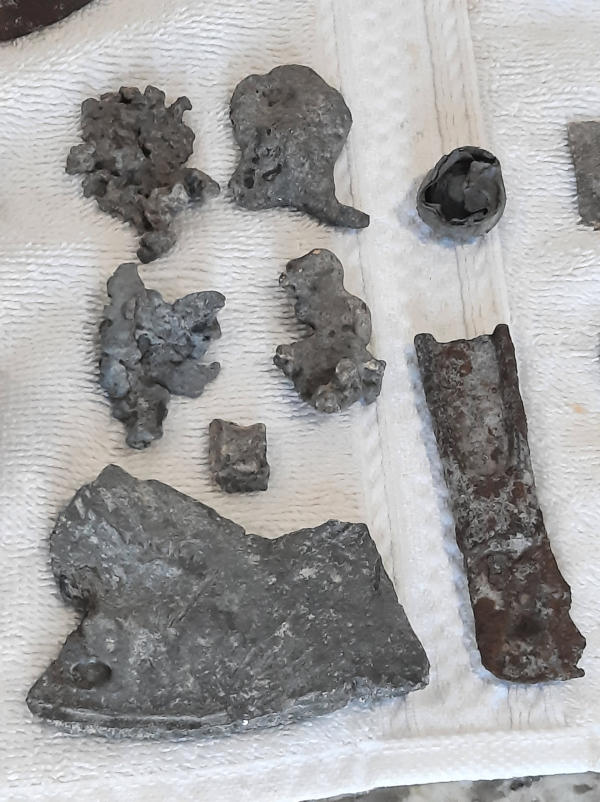
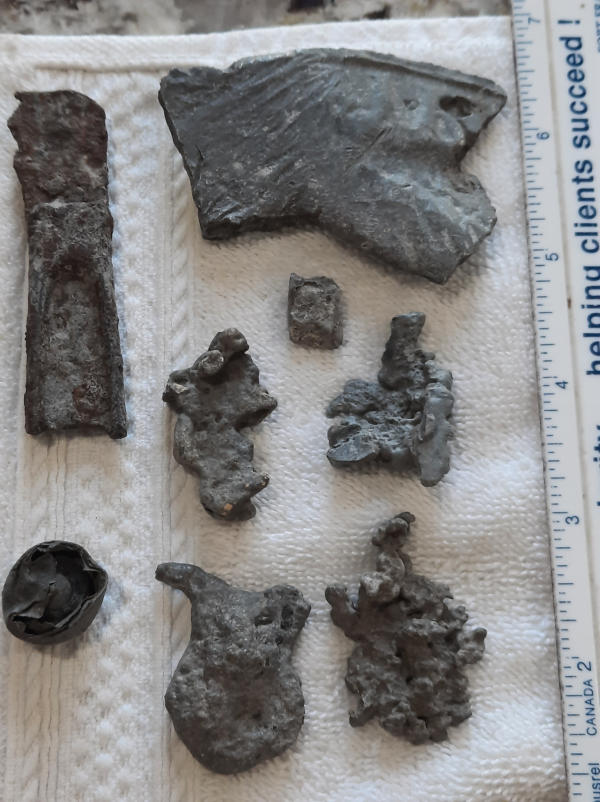
Also found were pieces of molten lead… Here are the weights of
five of the molten lead pieces.
W/t 12.11 gr.
W/t 12.68 gr.
W/t 23.35 gr.
W/t 25.48 gr.
W/t 14.57 gr. – This last piece from the May 31, 2025 hunt.
Possible musket balls?
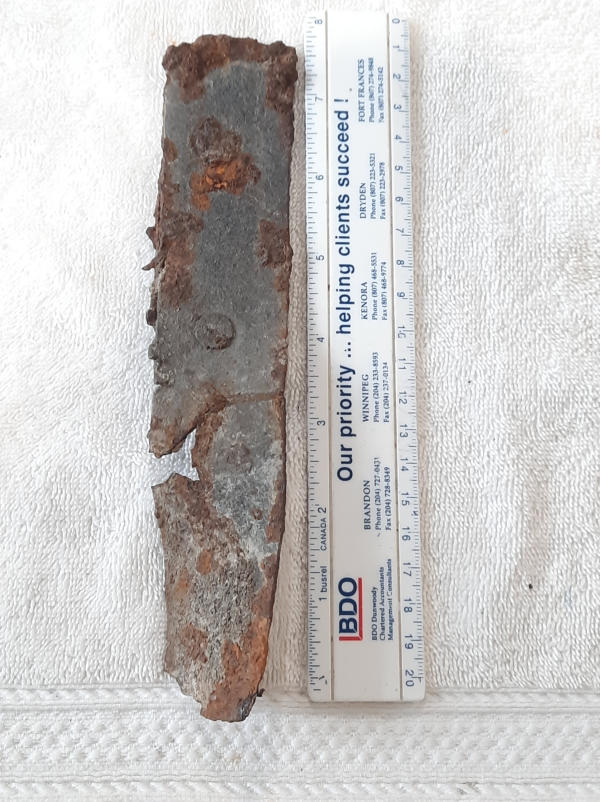
After lunch, I moved over to another known farm site. The
farmhouse and barn that sat here are now long gone but their
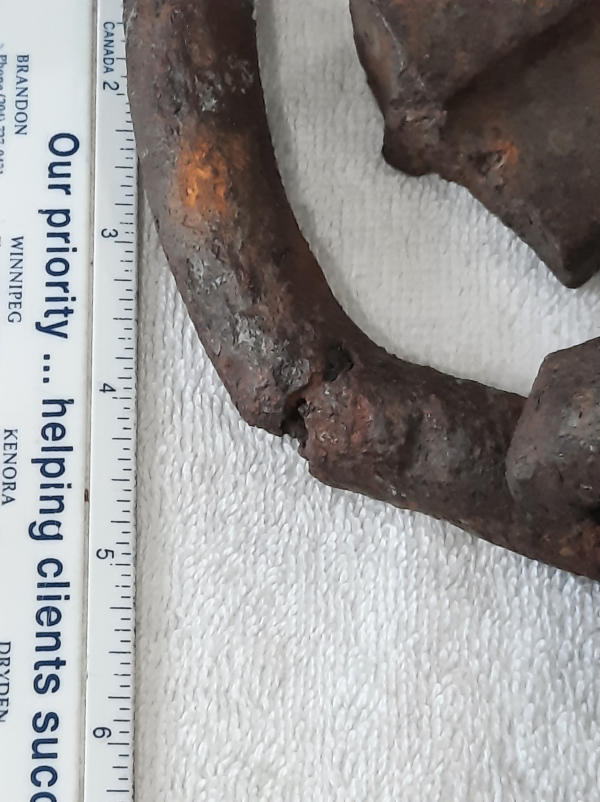
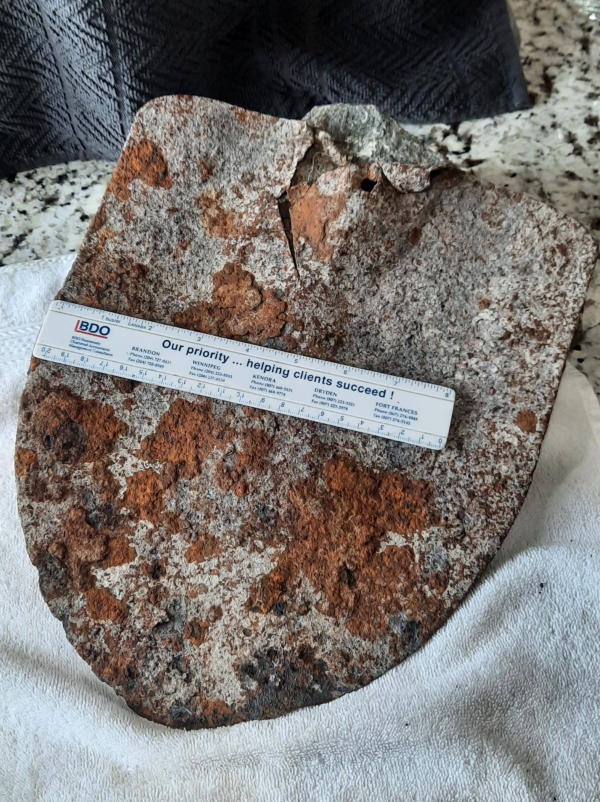
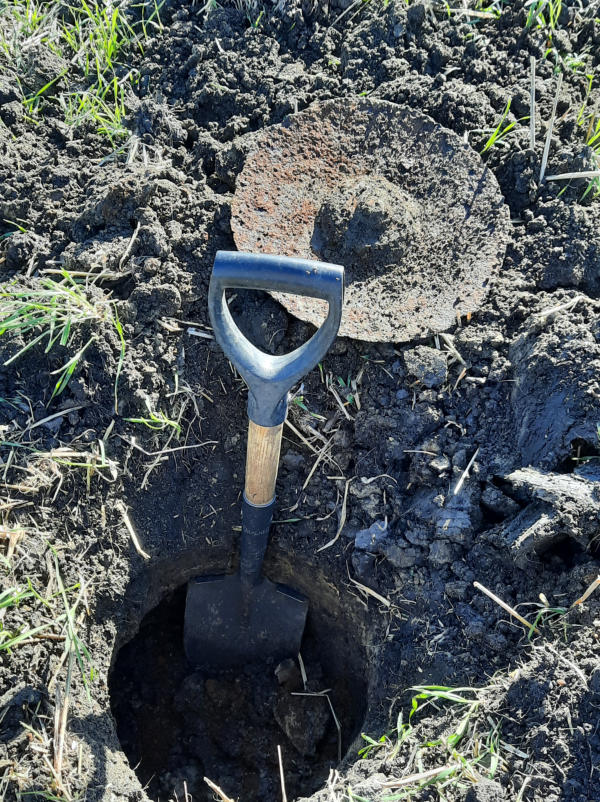
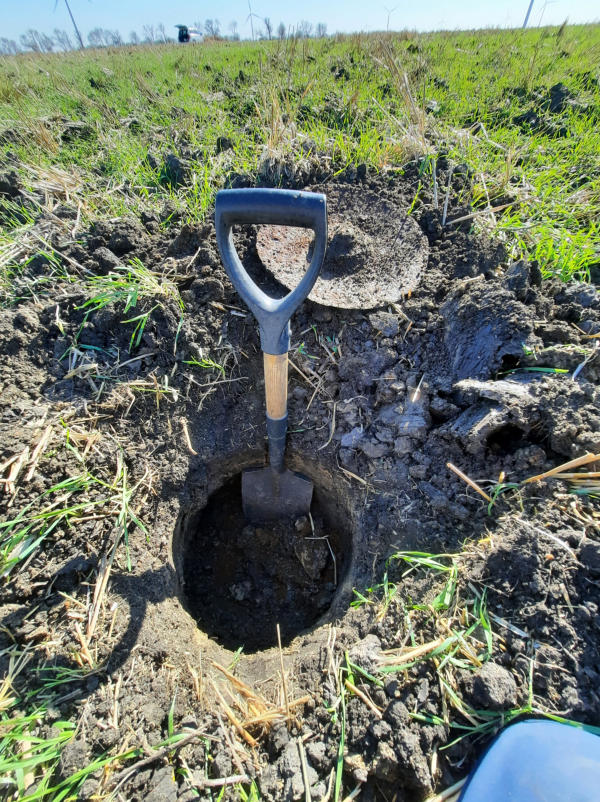
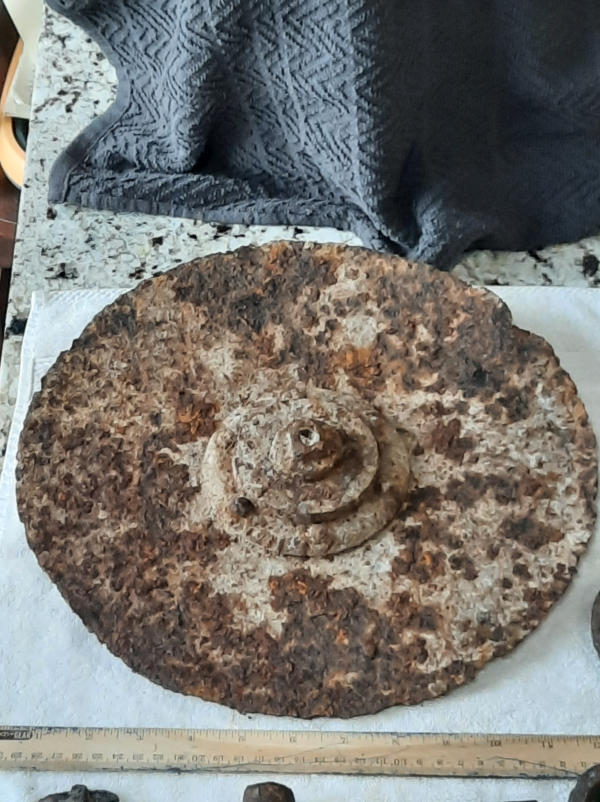
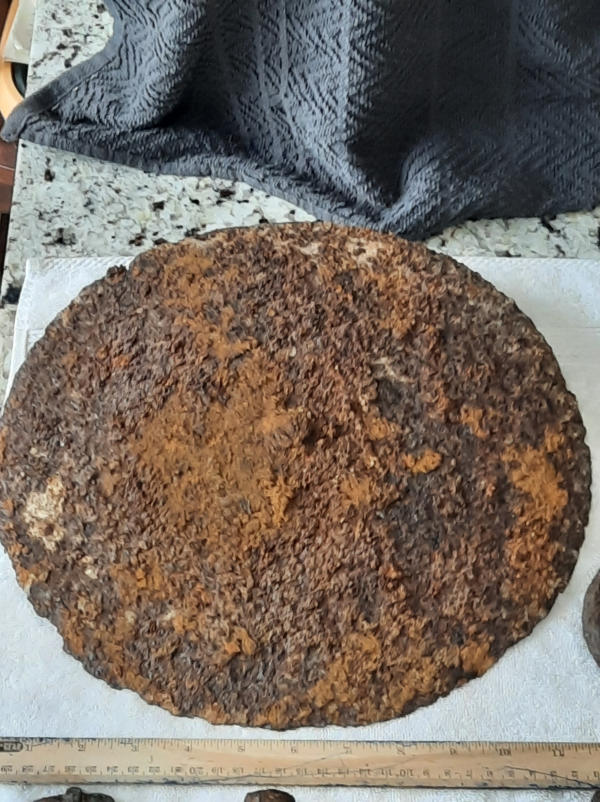
footprint remains. This is where the one foot wide disk was found.
This is the soil cutting part of a disker. What really got me going
was the depth at which this item was found and that it was lying
flat in the ground. At first, I thought that I might have come across
a cache of sorts, and then I thought that this might be the cap on
top of a well. It’s after a lot of digging that I came to realise what
this was, but why and how could this thing be buried so deep and
flat, convex to the ground? My brother came out with the most
plausible answer. Judging by the amount of rust and corrosion,
this disk has been on and in the ground for a very long time. Over
time, soil gets blown around both in summer and winter and a lot
of soil got moved during the dirty thirties. This piece was sitting in
a farm yard which in itself naturally collects more dust and drifting
soil. Basically the ground level rises by increments year over year
over year and this is the result of what may well be over a century
of soil movement. Incredible, and most probable.
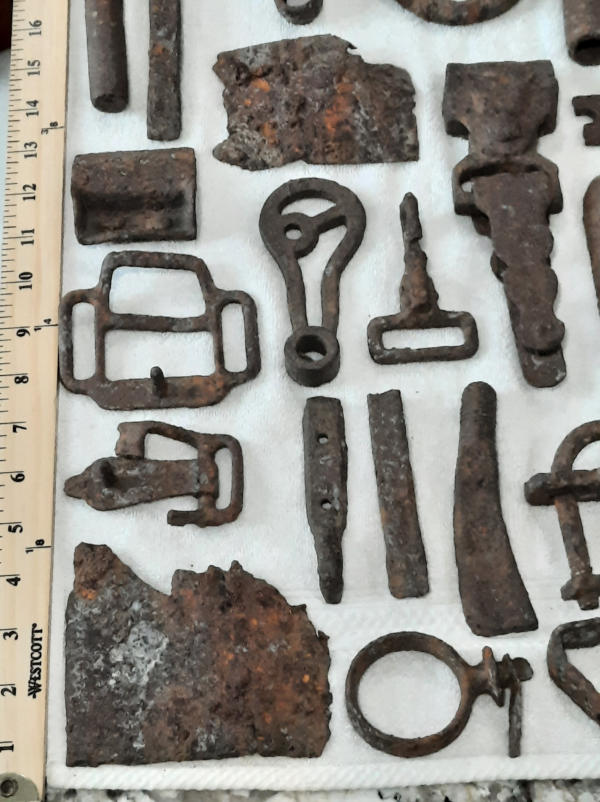
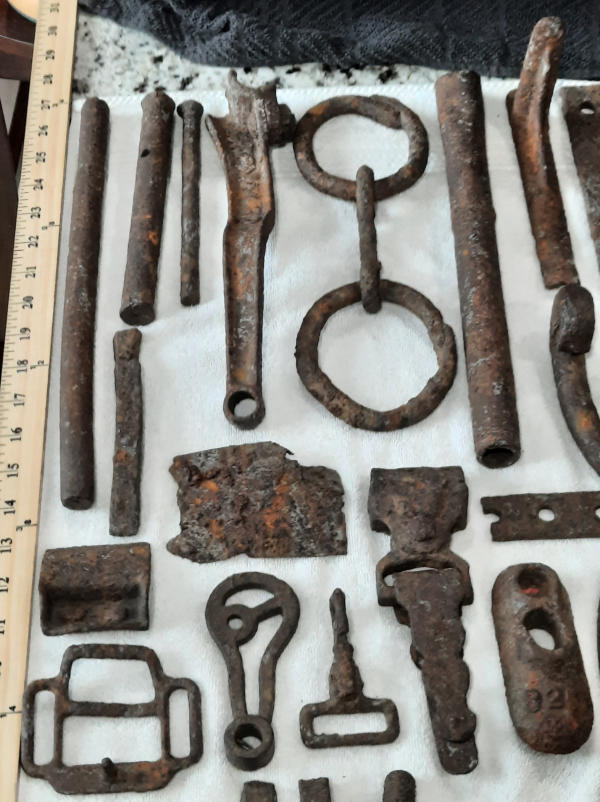
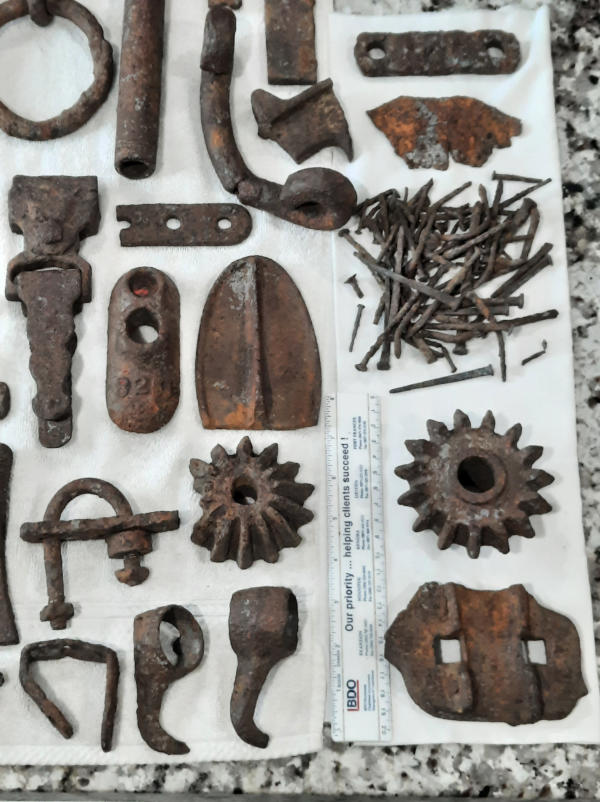
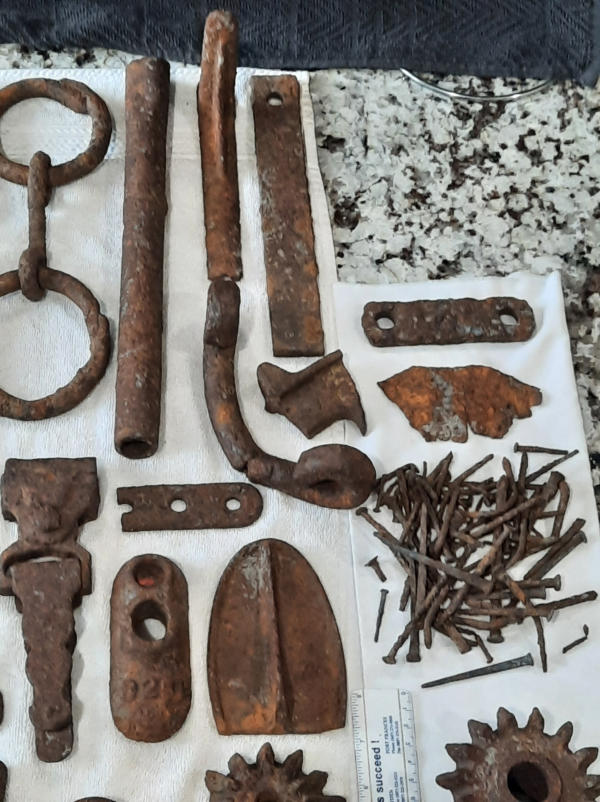
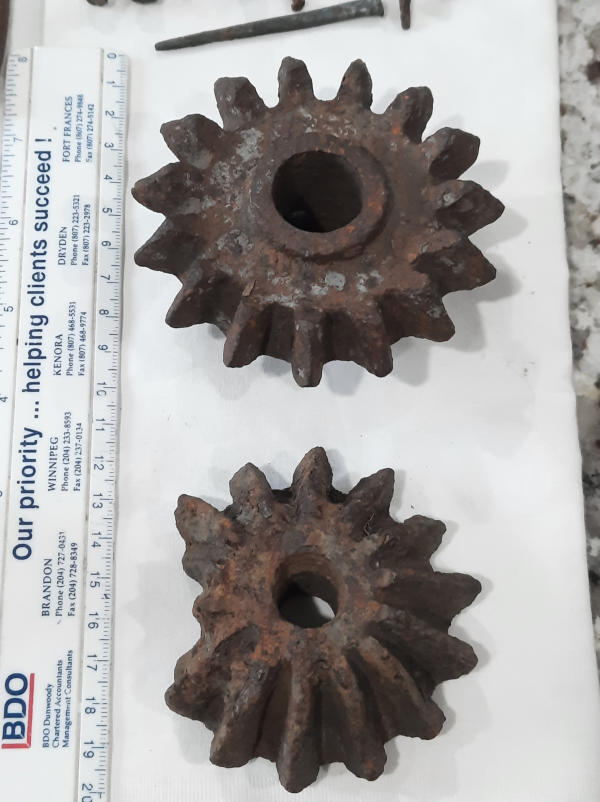
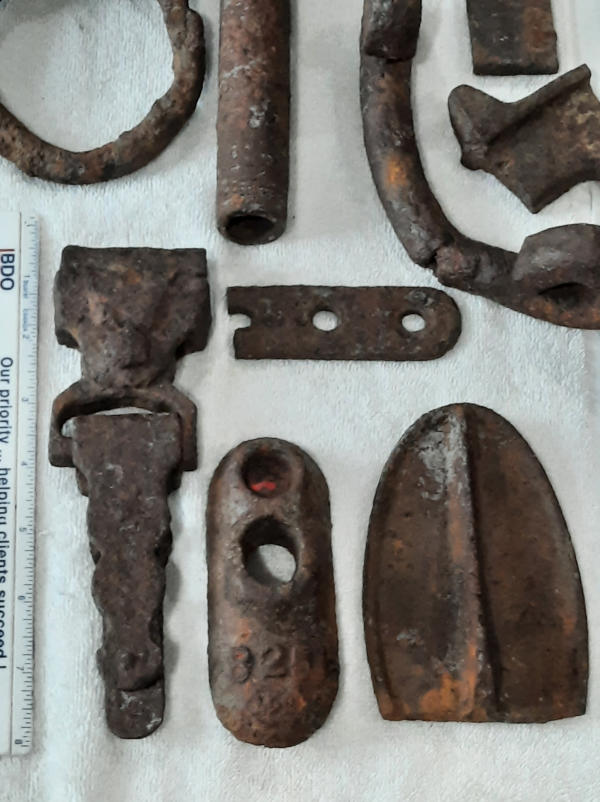
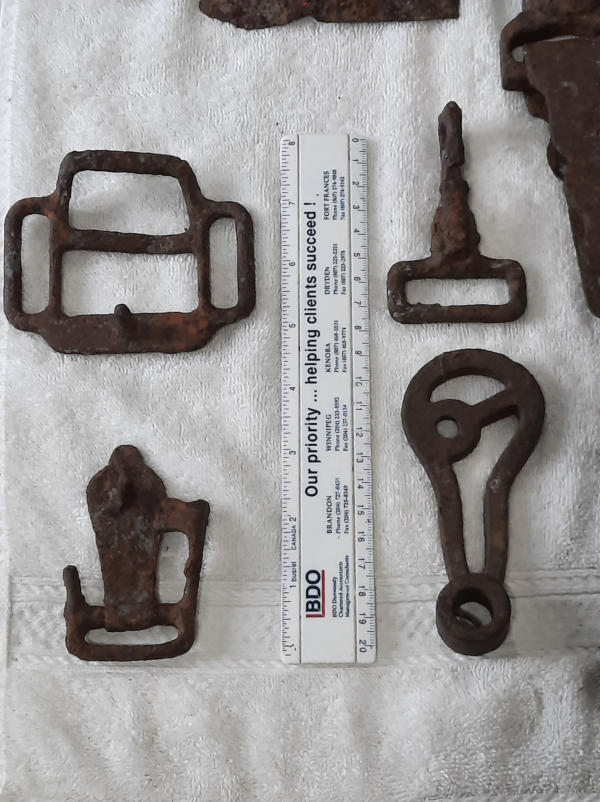
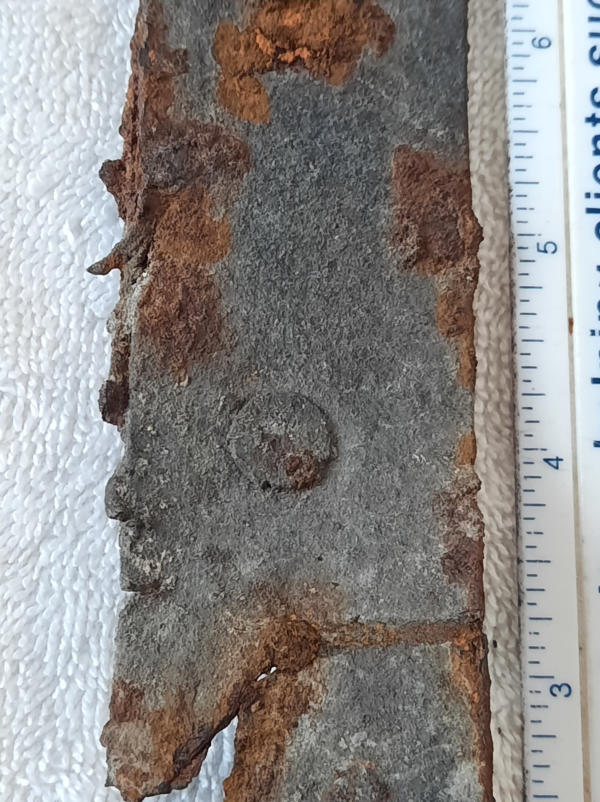
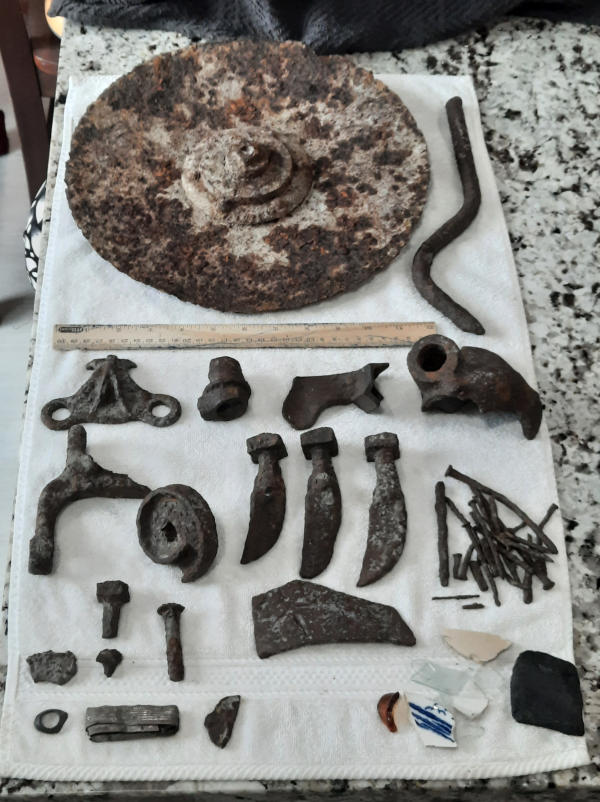
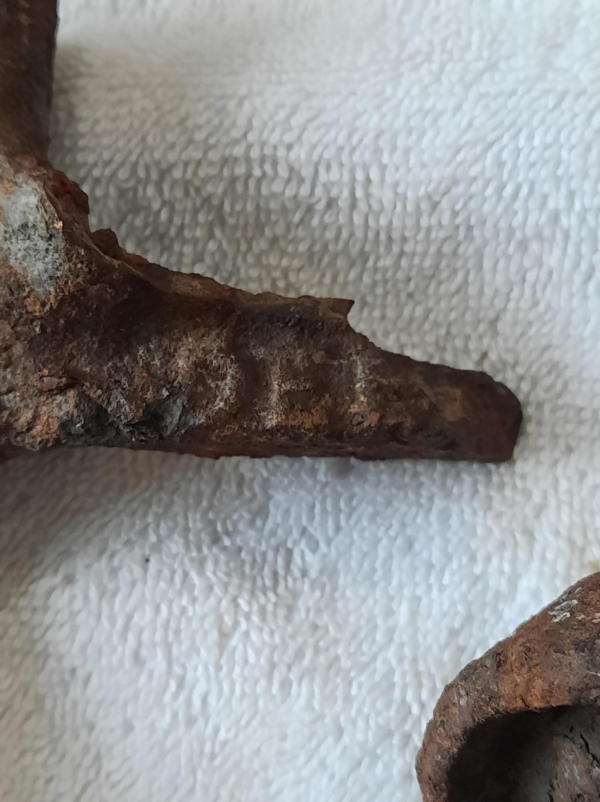
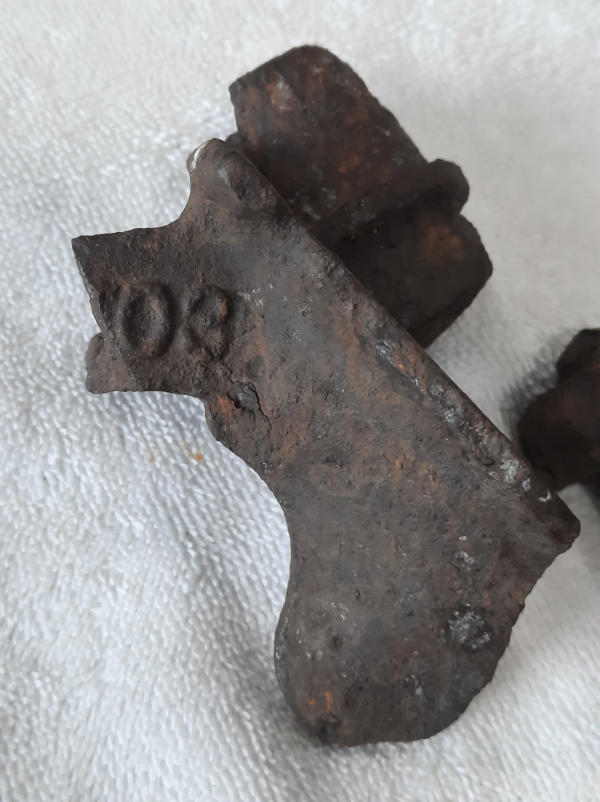
The other items found here are typical farm field and farm yard
artifacts. I particularly like the part numbers and symbols seen on
these machine parts.
Roger
October 20, 2026 - An Added Discovery
October 25, 2026
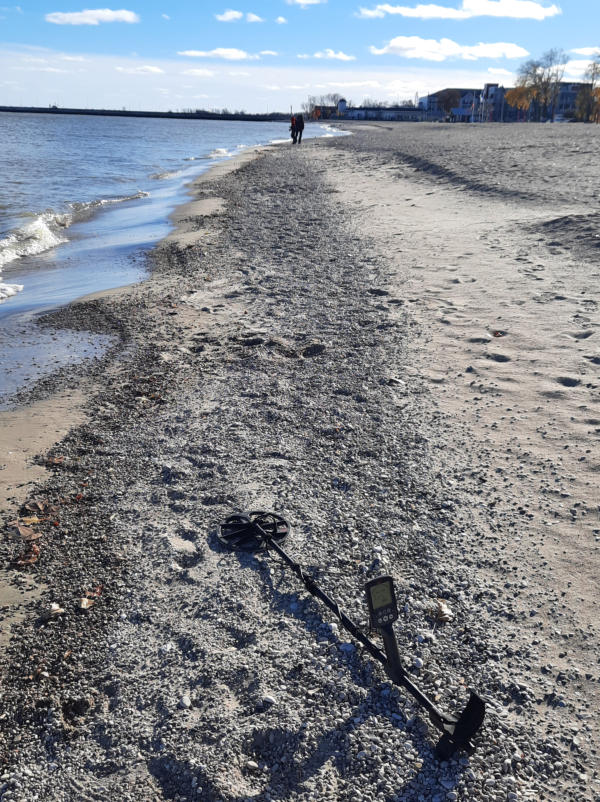
Gimli Beach.
Yes indeed, this has been the “summer of beaches” for this
detectorist. Just when I thought I was done doing beach, I’m back
at one more beach again... Gimli Beach.
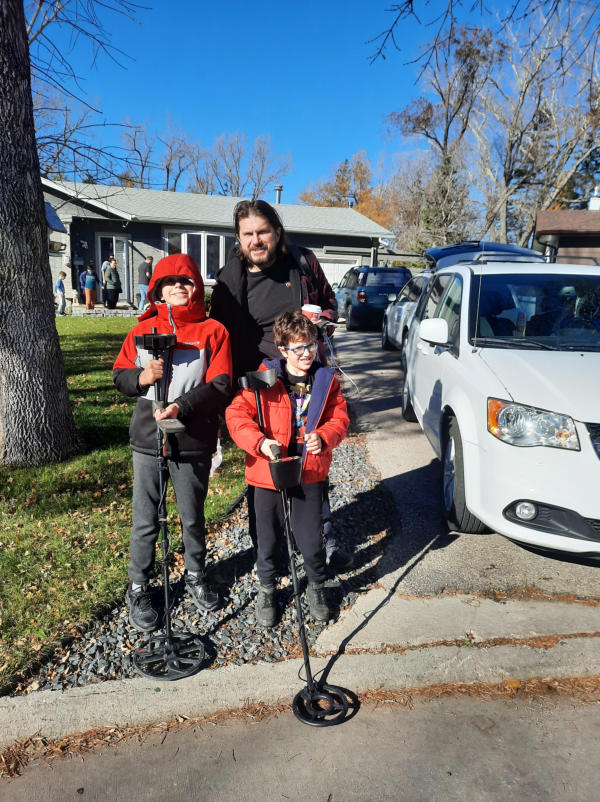
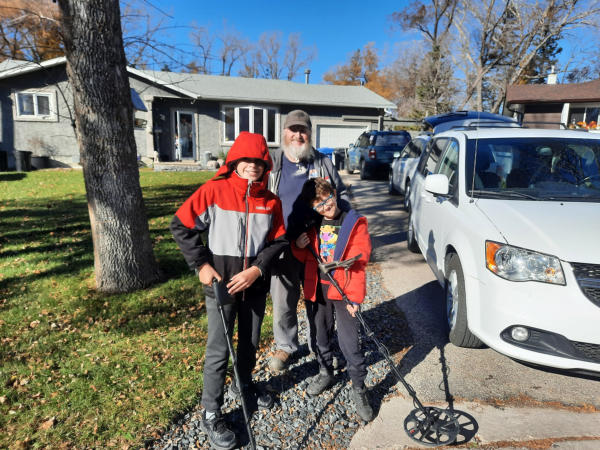
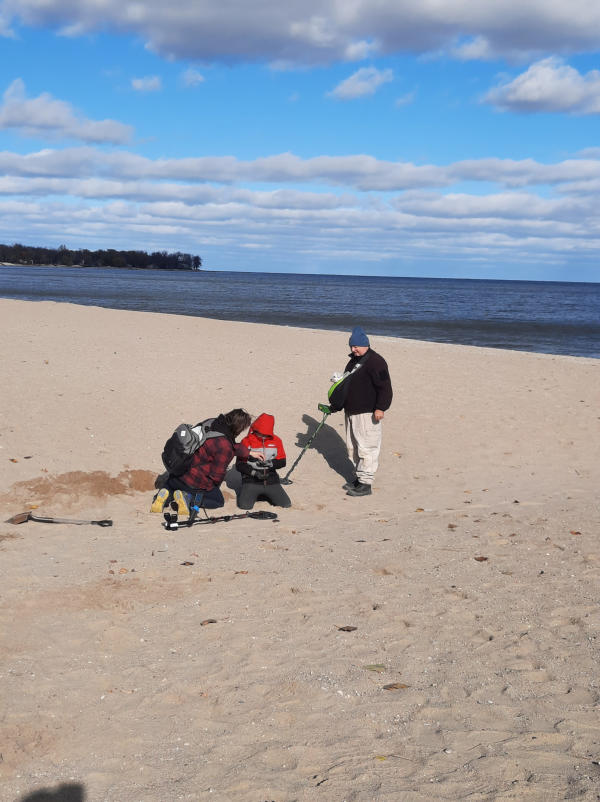
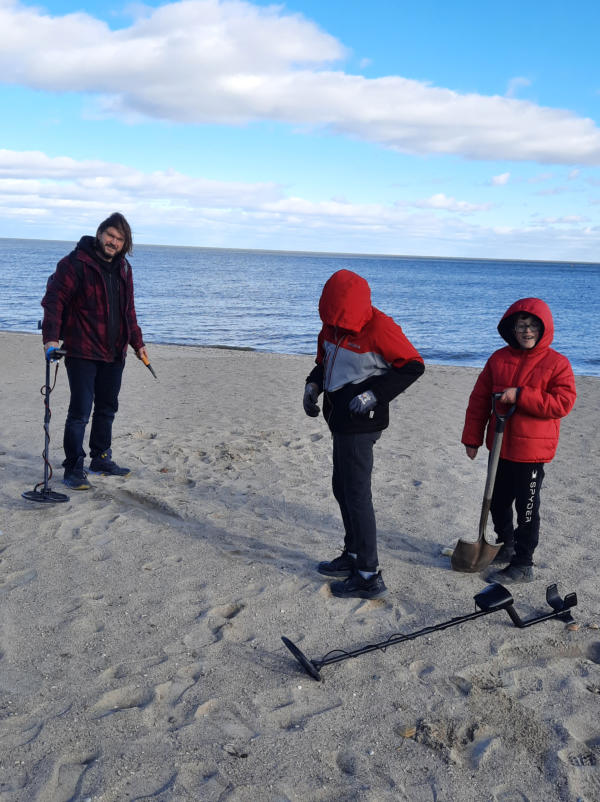
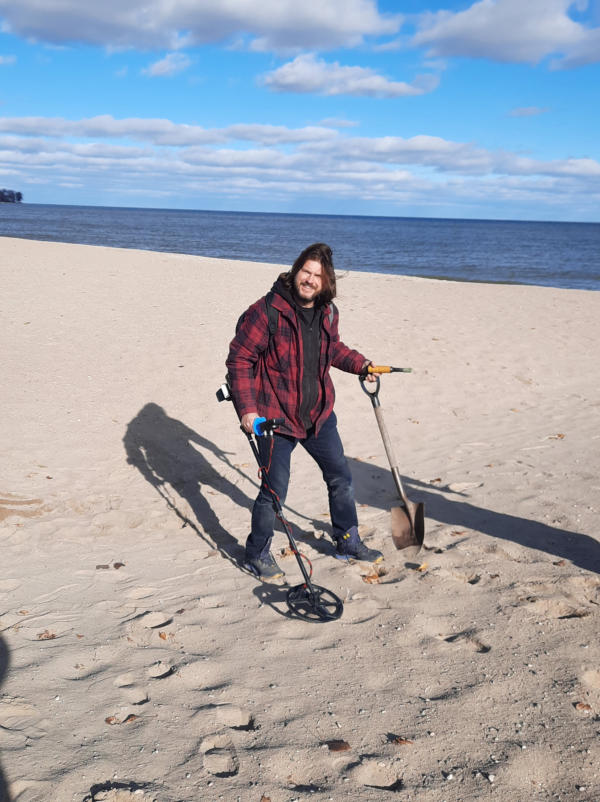
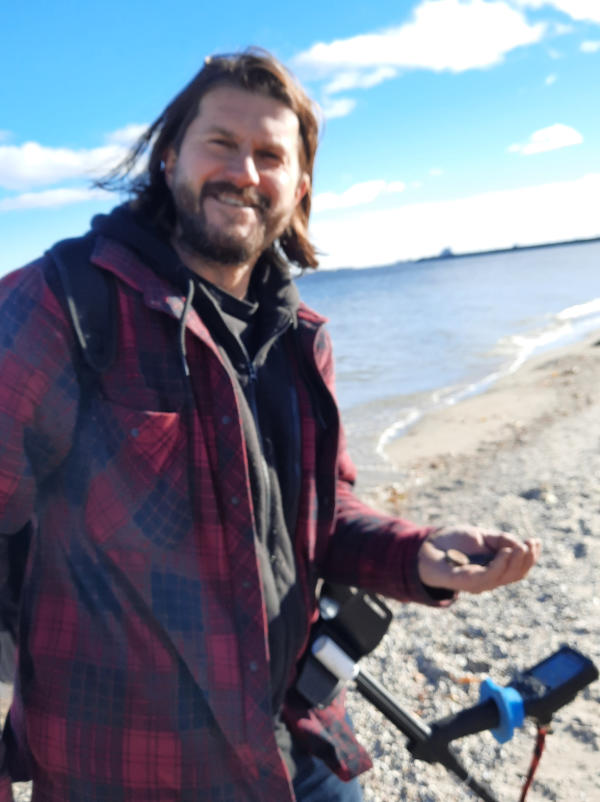
However, today I had the privilege of introducing this hobby to a
Dad and to his two young boys. And yes, I chose a beach for ease
of access and for easy digging especially for young kids. You don’t
want to put them off by having to work hard at cutting plugs or
pushing cutting tools on a farm field. The beach seemed to be the
perfect solution to learning the hobby.
We quickly learned about back filling all of our holes, and about
double checking your hole after retrieving the first item. You don’t
want to pocket a nickel and leave a ring behind. We learned about
putting found trash into your pouch for later disposal so that you
or some other detectorist doesn’t have to dig up that same piece
again. These are all good code of conduct rules to live by.
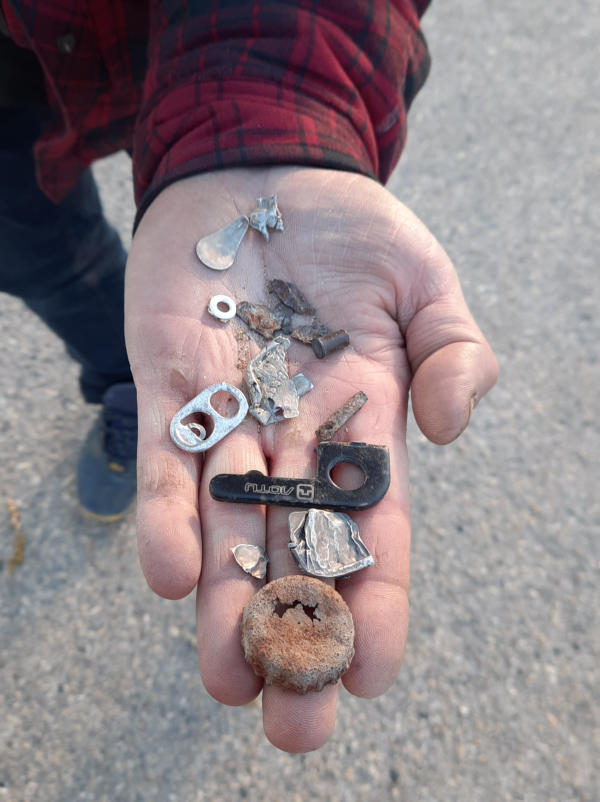
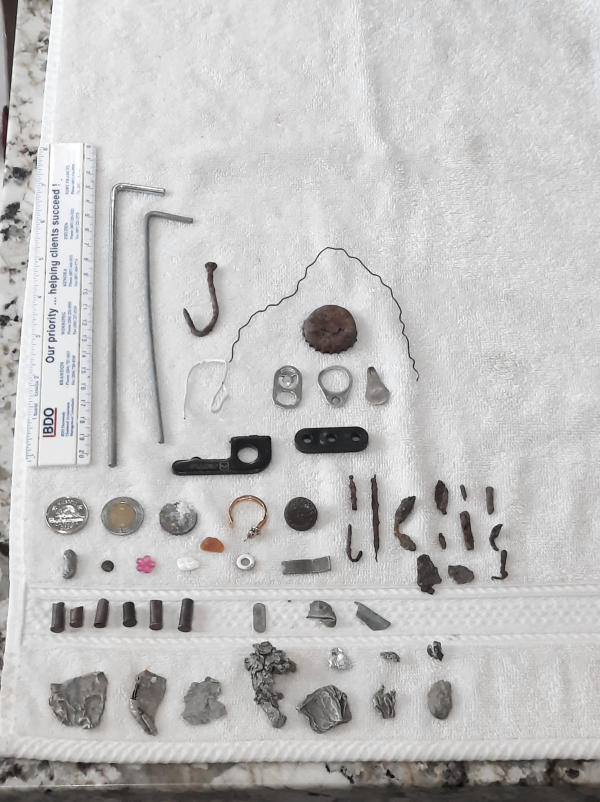
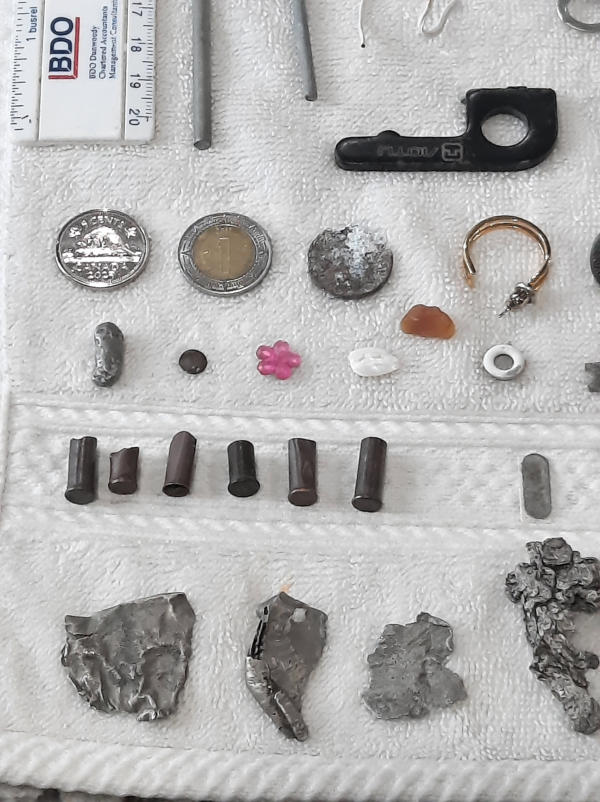
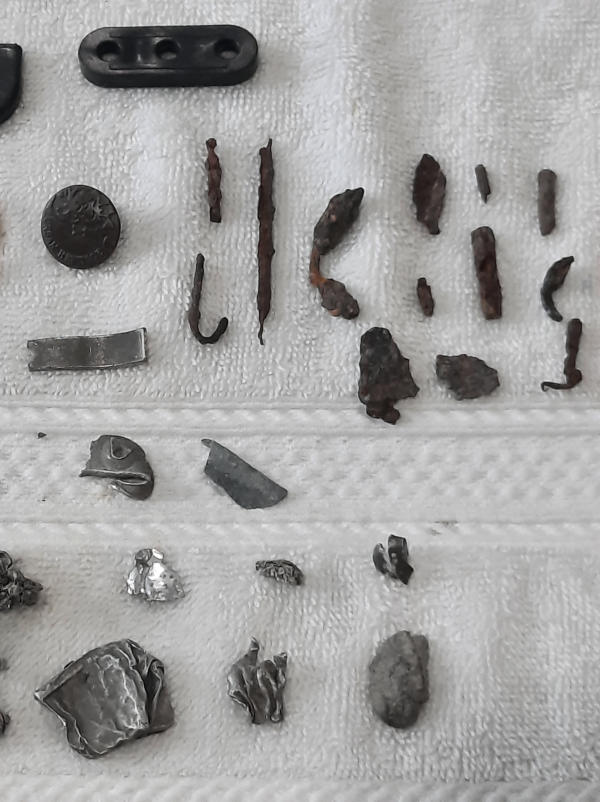
What always amazes me at so many beaches is the amount of
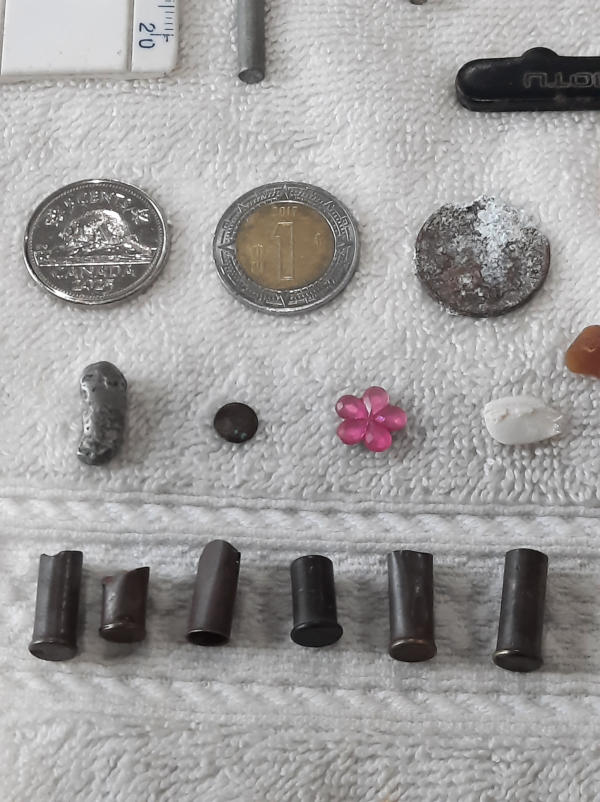
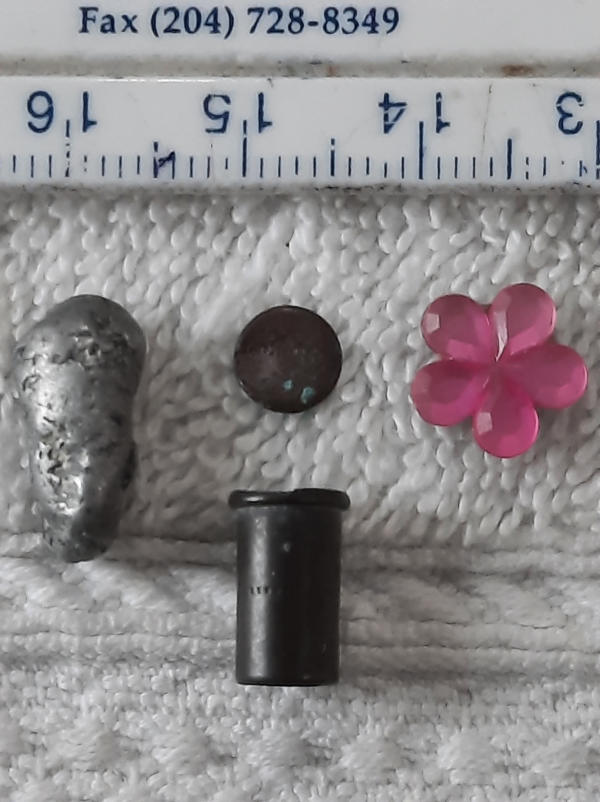
bullets and shells that one finds. Today we collectively found six
.22 shell casings and two actual bullets. I was disappointed at how
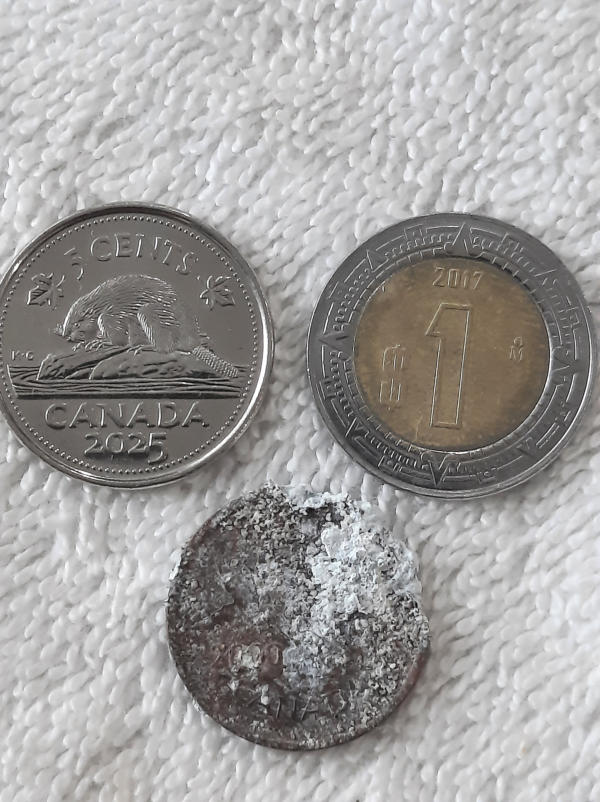
quickly our modern money supply deteriorates when left out to the
elements. This corroded penny is dated 2000. I have found
Canadian pennies from the 1940’s on a farm field in fine condition.
Yup, clad!
Can you actually fish with a rusty nail?
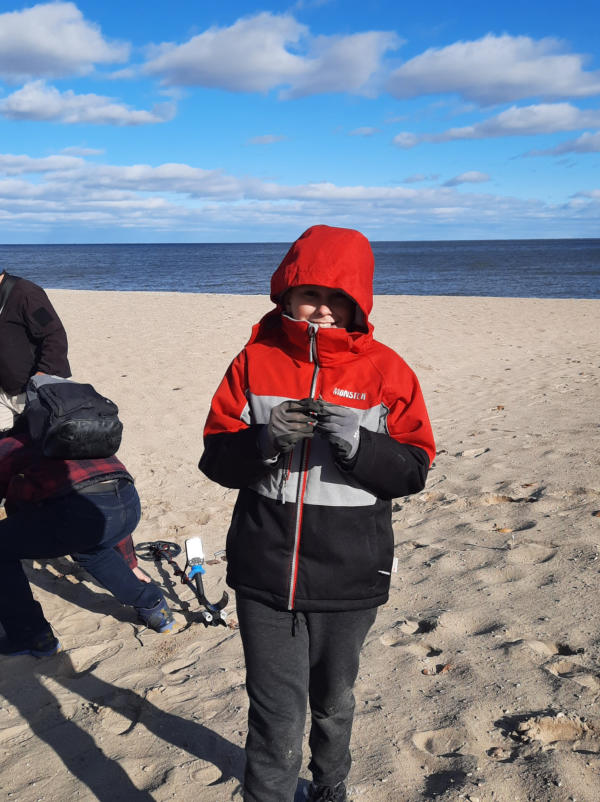
Two of the top finds were a Rainbow Ring found by one of the
boys. You just couldn’t separate him from it, even just to take a
picture. The second best find has to be the tiny round, flat, copper
disk. No not a rare Roman coin but the remnant bottom end of a
.22 shell. The casing has now been eroded and only the thicker
bottom remains. It’s also a fitting tribute to the power and the
ability of modern metal detectors to find such a small item in
beach sand on a vast shore line.
Also encouraging is how few pull tabs we found. Pull tabs tend to
pollute metal detecting areas everywhere. Have you been detecting
in a city park recently?
All and all, it was a great day for all. I think the father was more
“Bitten” by the hobby then the boys were, but they all had fun.
Dad’s last words on the beach were “Hey, just one more try”, to
which he pulled out a second tent peg out of the sands of Gimli
beach.
Roger
October 25, 2026 - Gimli Beach

October 30, 2026 - Archaeology and Metal Detecting
October 25, 2026
Gimli Beach.
Yes indeed, this has been the “summer of beaches” for this
detectorist. Just when I thought I was done doing beach, I’m back
at one more beach again... Gimli Beach.
However, today I had the privilege of introducing this hobby to a
Dad and to his two young boys. And yes, I chose a beach for ease
of access and for easy digging especially for young kids. You don’t
want to put them off by having to work hard at cutting plugs or
pushing cutting tools on a farm field. The beach seemed to be the
perfect solution to learning the hobby.
We quickly learned about back filling all of our holes, and about
double checking your hole after retrieving the first item. You don’t
want to pocket a nickel and leave a ring behind. We learned about
putting found trash into your pouch for later disposal so that you
or some other detectorist doesn’t have to dig up that same piece
again. These are all good code of conduct rules to live by.
What always amazes me at so many beaches is the amount of
bullets and shells that one finds. Today we collectively found six
.22 shell casings and two actual bullets. I was disappointed at how
quickly our modern money supply deteriorates when left out to the
elements. This corroded penny is dated 2000. I have found
Canadian pennies from the 1940’s on a farm field in fine condition.
Yup, clad!
Can you actually fish with a rusty nail?
Two of the top finds were a Rainbow Ring found by one of the
boys. You just couldn’t separate him from it, even just to take a
picture. The second best find has to be the tiny round, flat, copper
disk. No not a rare Roman coin but the remnant bottom end of a
.22 shell. The casing has now been eroded and only the thicker
bottom remains. It’s also a fitting tribute to the power and the
ability of modern metal detectors to find such a small item in
beach sand on a vast shore line.
Also encouraging is how few pull tabs we found. Pull tabs tend to
pollute metal detecting areas everywhere. Have you been detecting
in a city park recently?
All and all, it was a great day for all. I think the father was more
“Bitten” by the hobby then the boys were, but they all had fun.
Dad’s last words on the beach were “Hey, just one more try”, to
which he pulled out a second tent peg out of the sands of Gimli
beach.
Roger
October 30, 2026
Archaeology and Metal Detecting
Yes indeed, archaeology and metal detecting. What a combination!
It may not be as strange as it sounds. In fact, metal detectors are
occasionally used during archaeological digs. It all depends on
what is being sought. After all, the detector is a tool and a very
handy one at that.
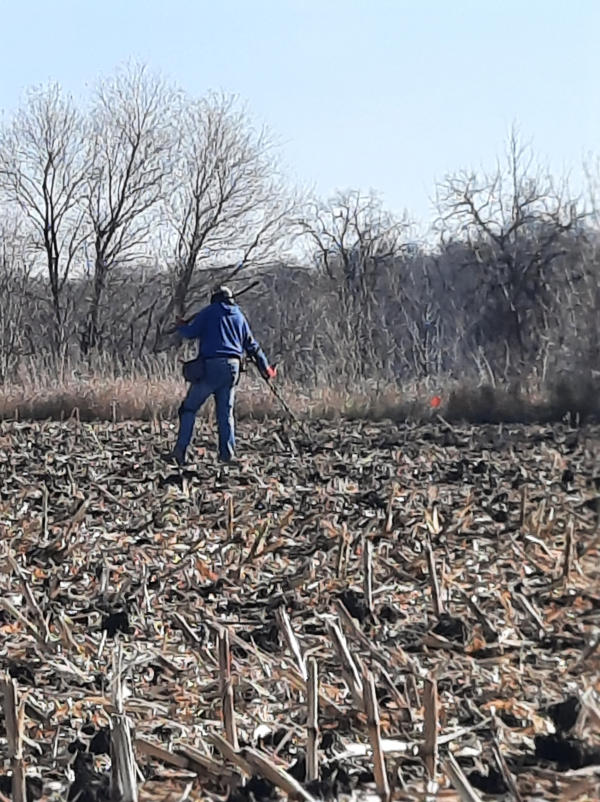
Now to set the stage as to what we are doing. An archaeological
project has many different faces. At times, one of the first stages
that lead up to a formal “Dig” is the walk-through. Archaeologists
and perhaps a group of students walk through say, perhaps a
freshly tilled field, or at the edge of a river bank, and visually look
for artifacts. In a roundabout way, this is what has occurred here
on River Lot 154. Over the course of the last few years, I have
spotted, by eyesight, a dozen or so pottery sherds, a Venetian
glass bead, and a small amount of knapped flint flakes. These are
probable signs of sustained aboriginal presence in a given area
where the concentration of artifacts was found.
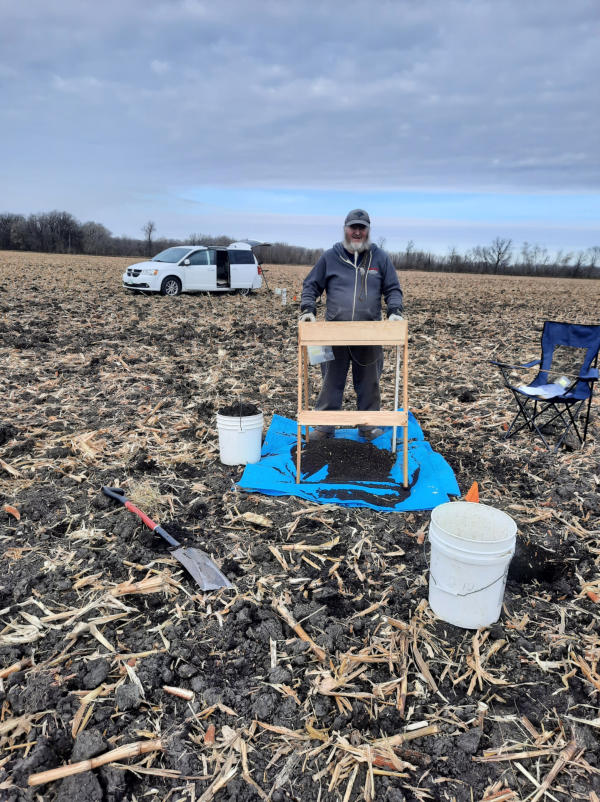
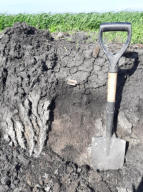
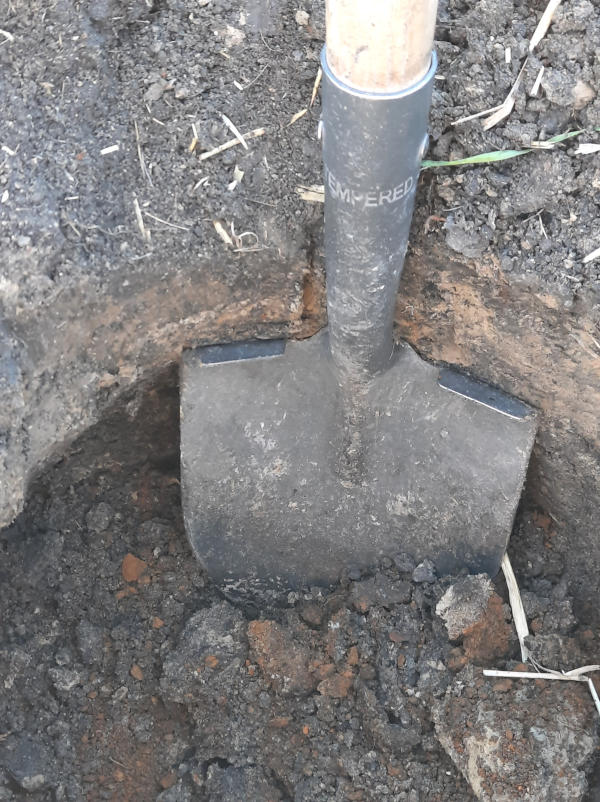
A second stage with archaeology is to conduct a Shovel Test Pit
(STP). This consists of digging a grid of holes, “Test pits”, by
shovel and screening the soil removed. The holes are about 12 to
14 inches square and dug to a soil horizon where the bottom is a
zone where human activity would no longer have occurred. In the
case of this site, the holes vary from 15 to about 20 inches deep
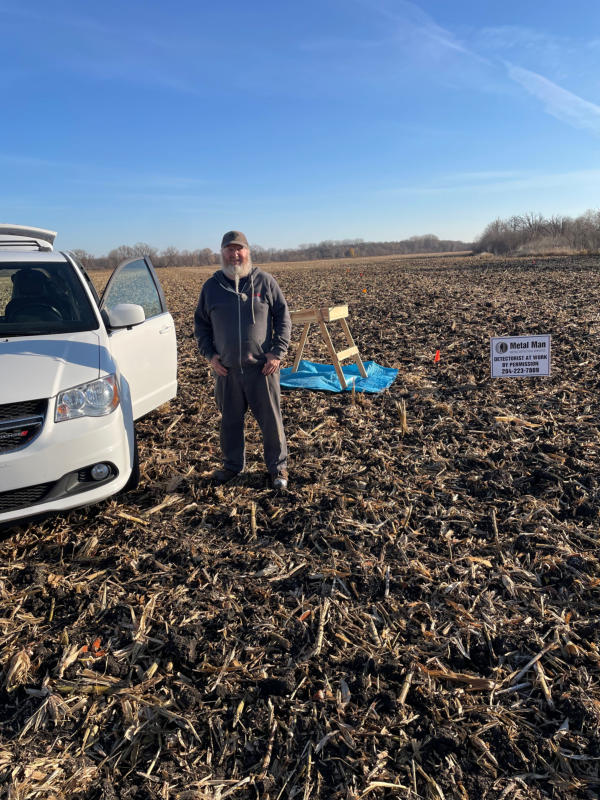
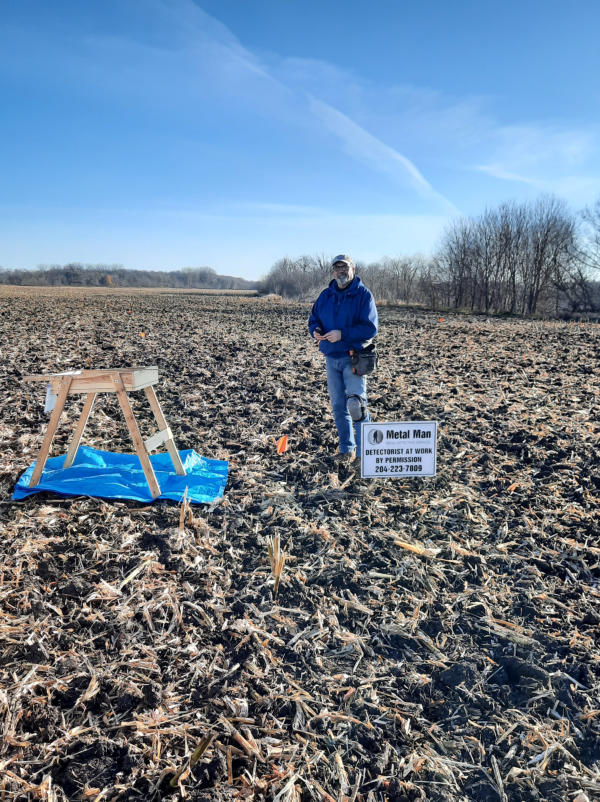
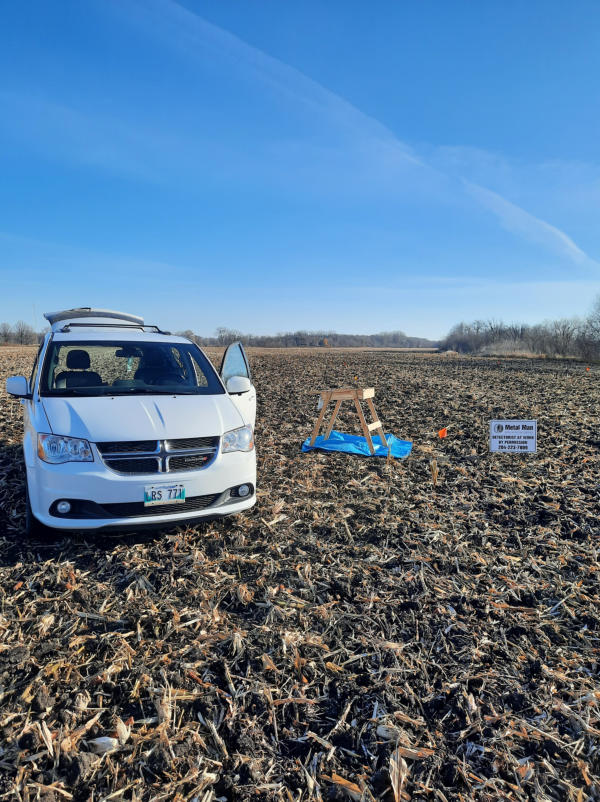
until Lake Agassiz till is reached. In this project, 21 flags have
been placed in a 50 x 50 feet grid which covers a 300 x 150 foot
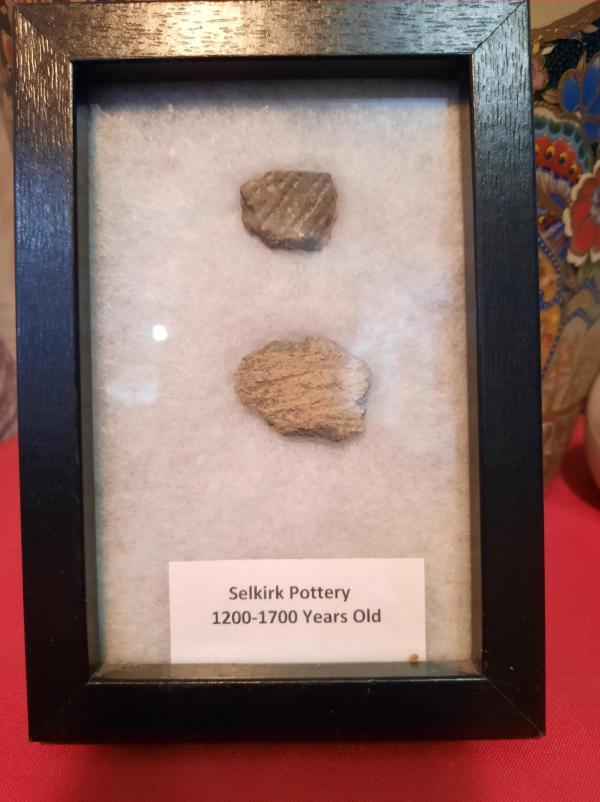
area. This is the area where the most of the artifacts had been
found. The last picture features two framed pottery sherds found
over the years. If enough relavant material if found then a formal
dig might be consided. The idea of the shovel test pit is to help
archaeologists locate the places that will yield finds and results.
Today, we dug three test pits. Holes number 1 through number 3,
18 more to go at a later date. I considered this as a test run
leading up to a more intense day of digging and screening. A lot
was learned. For one, the ground is really not ideal for screening
until around noon as there is too much morning dew and humidity
in the top layer and clay doesn’t sift well when humid. Gloves are a
must; the metal screen is unforgiving on bare fingers. So we
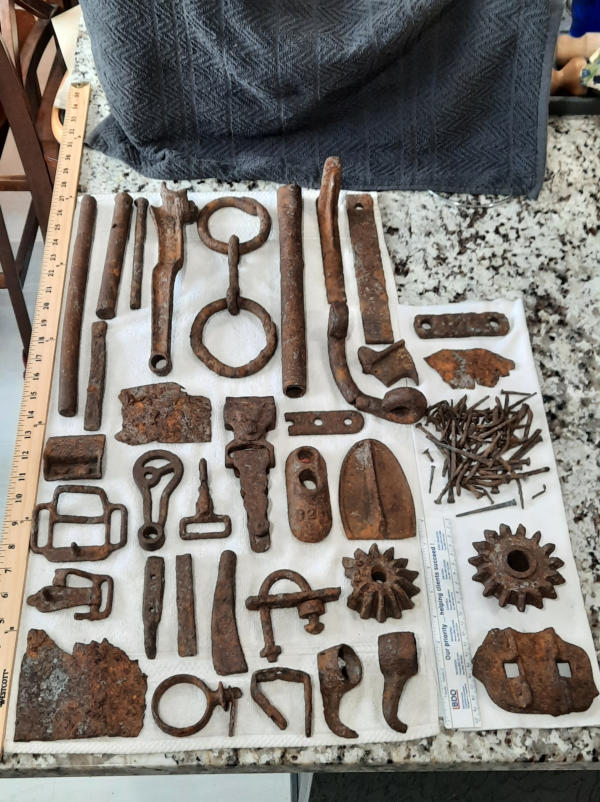
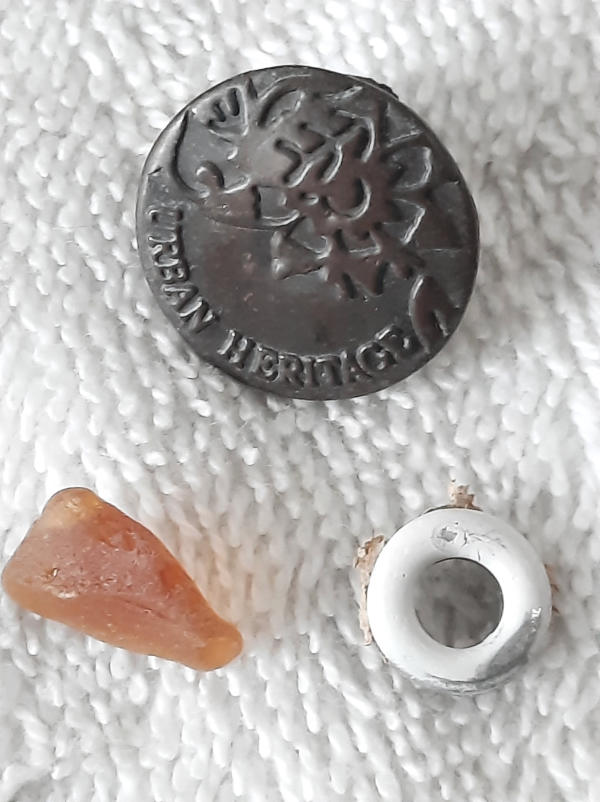
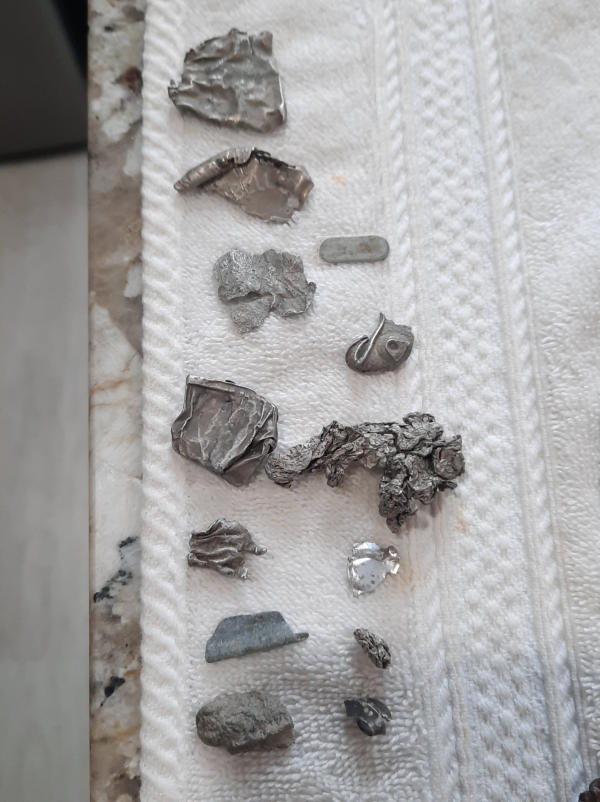
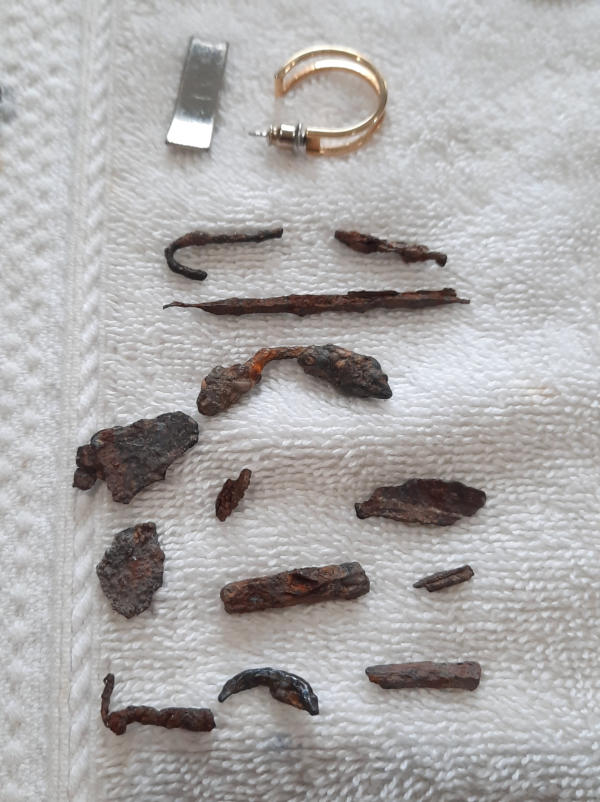
occupied our morning with metal detecting as usual. The pictures
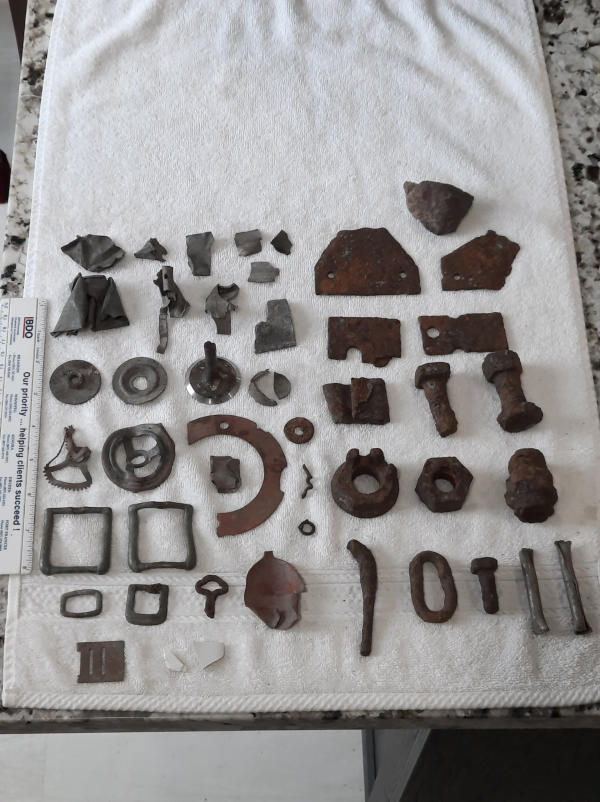
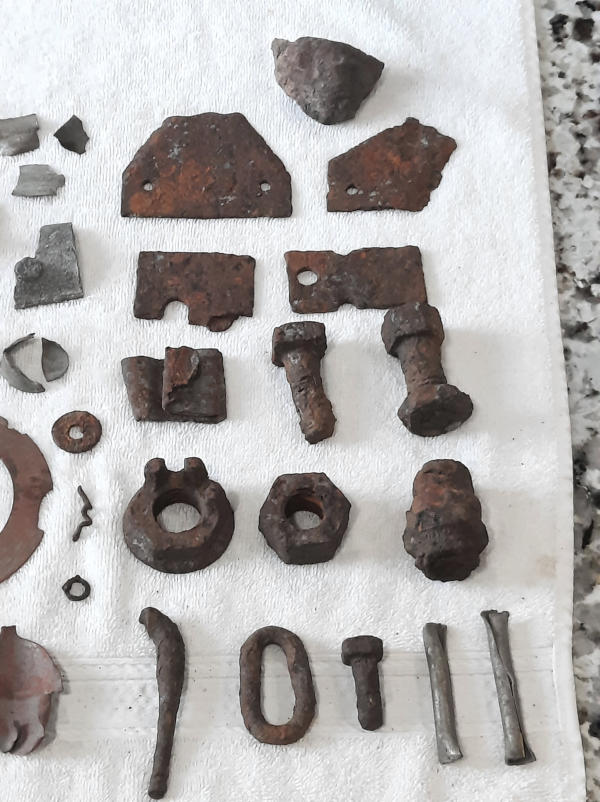
speak for themselves. Yes, there is always a lot of bid iron at this
site plus a few nice finds too, like a harmonica reed. A big surprise
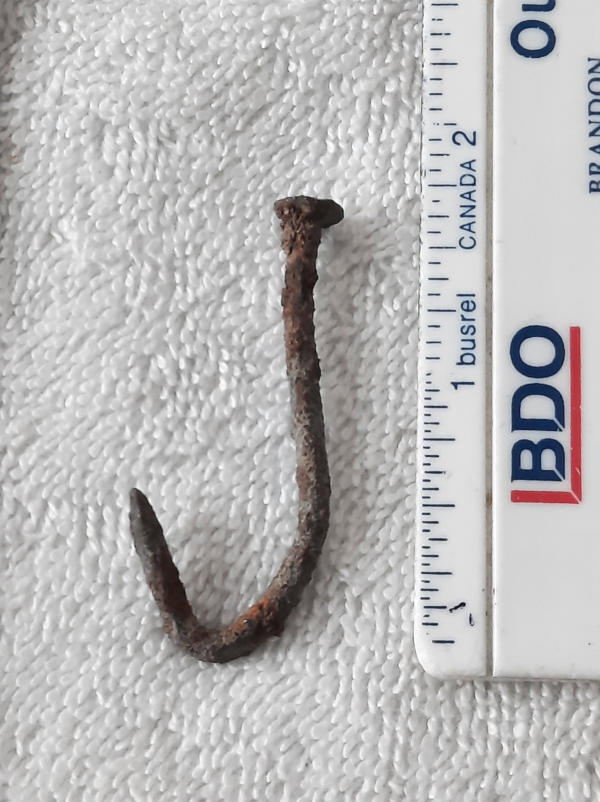
was what I call a cache of nails. One spot sounded really good
with the detector, a bit scrambled but with a promise of copper…
Turns out it was a jumble of nails of all sorts including square
nails that looked almost new. I can only speculate as to why so
many nails all showed up at this one spot.
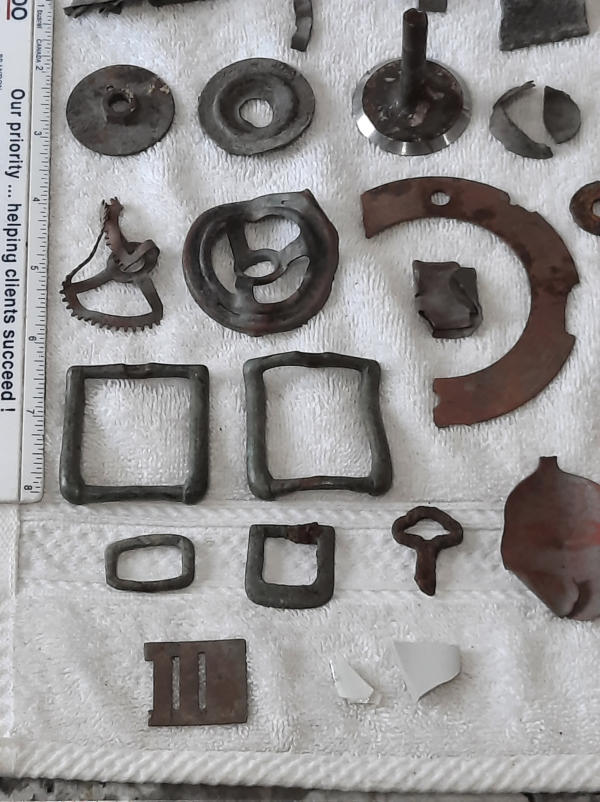
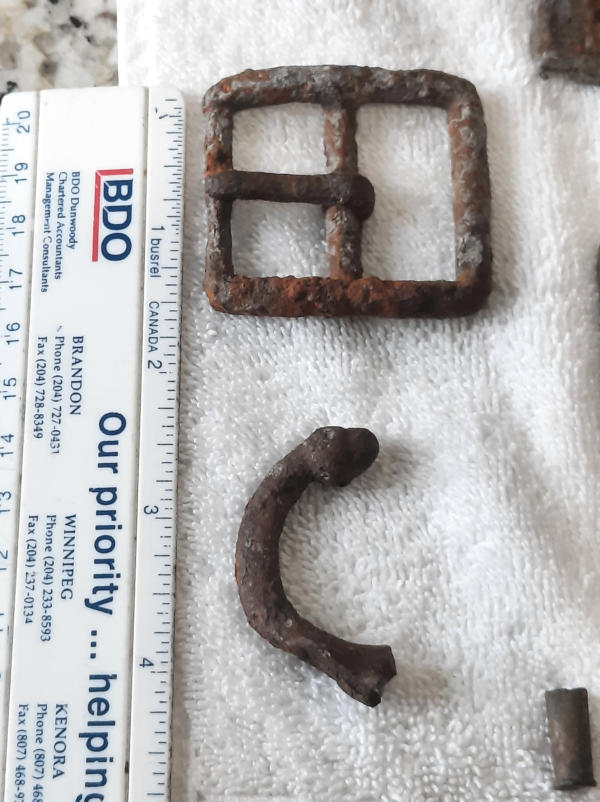
The two bigger buckles made of brass are just gorgeous. The
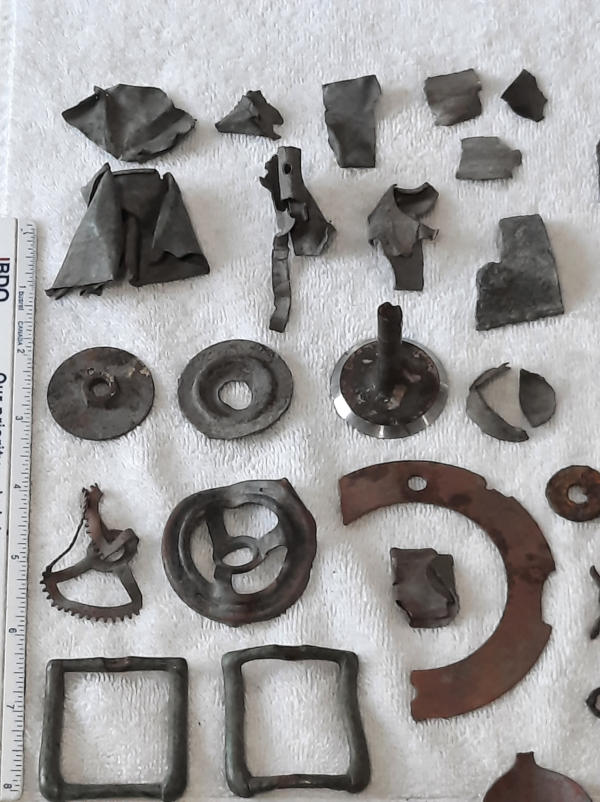
other ornate iron pieces of horse tack are quite intriguing to look
at. The top half of a key was also found along with clock parts and
other copper bits and pieces. This is also not the first time that we
find shoe making equipment.
Check and look for new posts in mid-November for what is certain
to be a continuation of archaeology and metal detecting. Best of
luck…
References:
https://en.wikipedia.org/wiki/Shovel_test_pit
Archaeological Shovel Test Pits: 101 YouTube·GVSU
Anthropology·Mar 21, 2019
Roger