© 2026 Roger Fontaine, Designed by Bison Software

Metalman9
M
E
T
A
L
M
A
N
9


M
E
T
A
L
M
A
N
9


Ph: 204-223-7809
METALMAN9
Ph: 204-223-7809
METALMAN9
Click the date link, then a photo to start larger photo gallery & see descriptions

August 6 - The Old Church Yard in Letellier


August 6, 2026
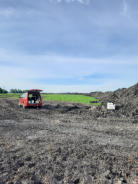
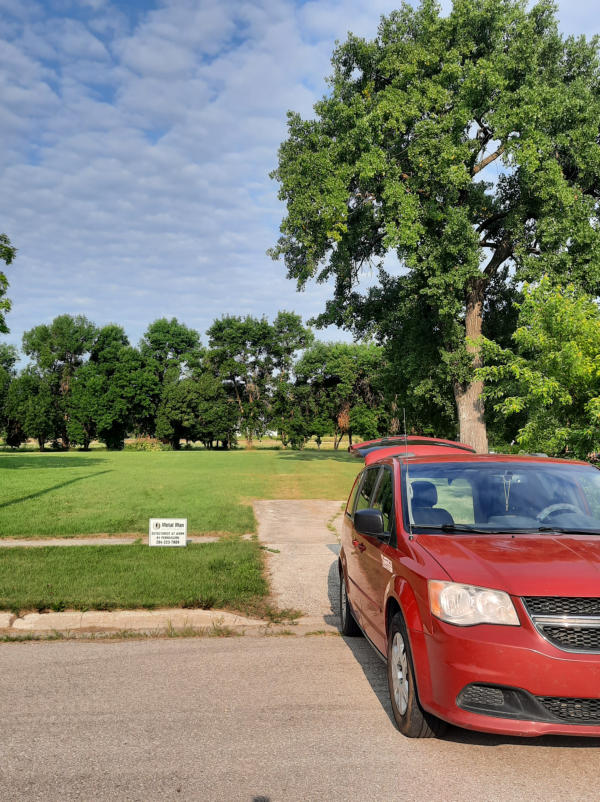
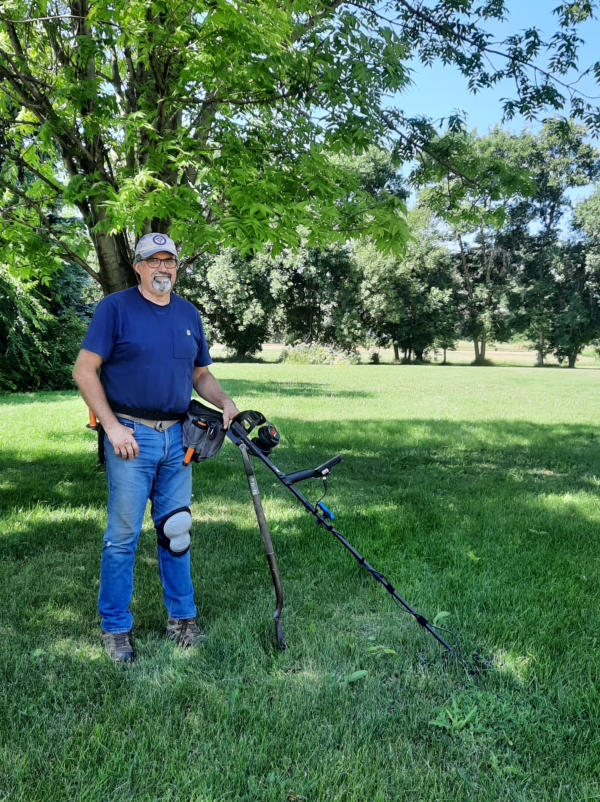
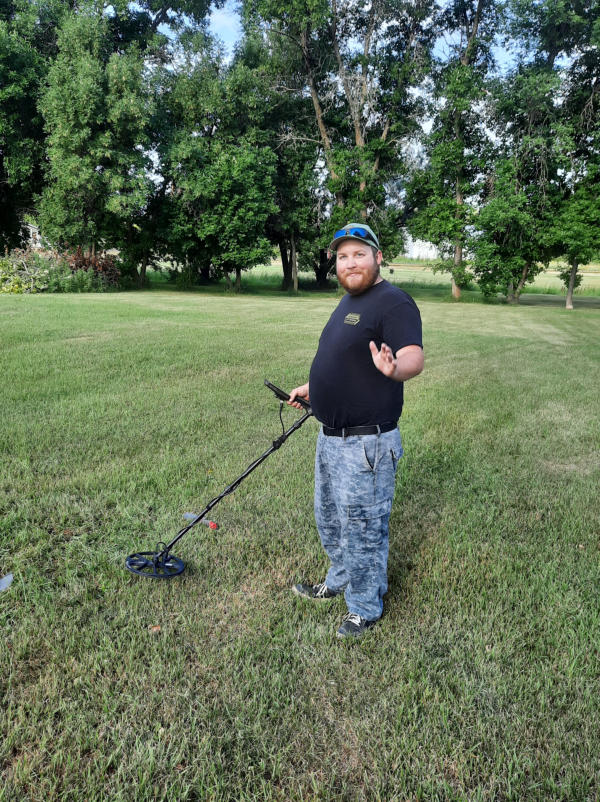
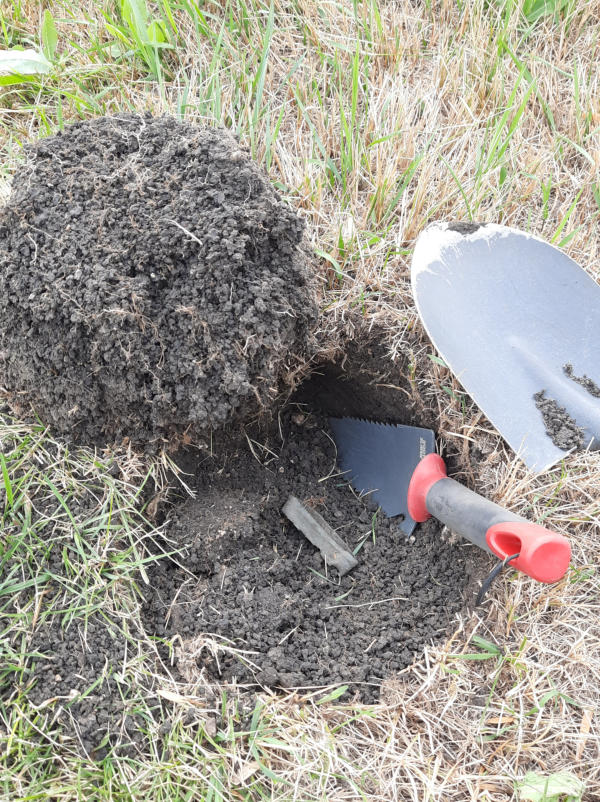
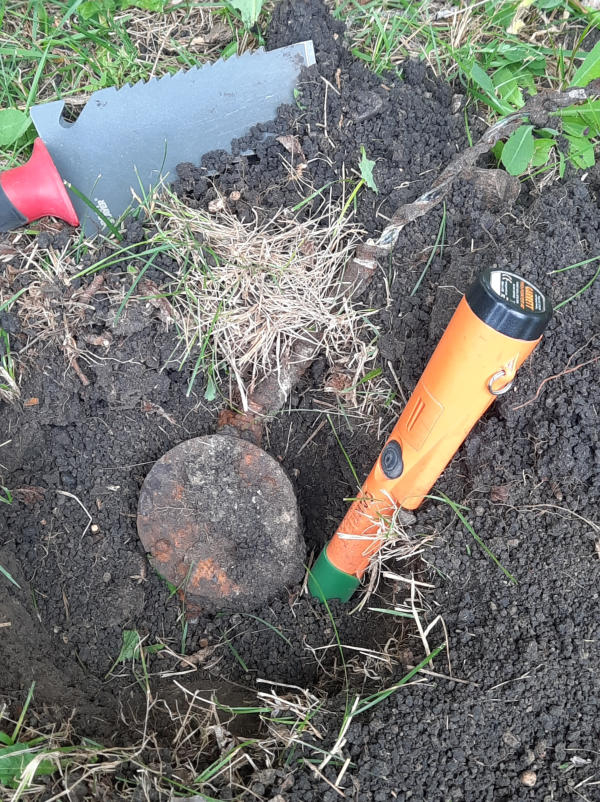
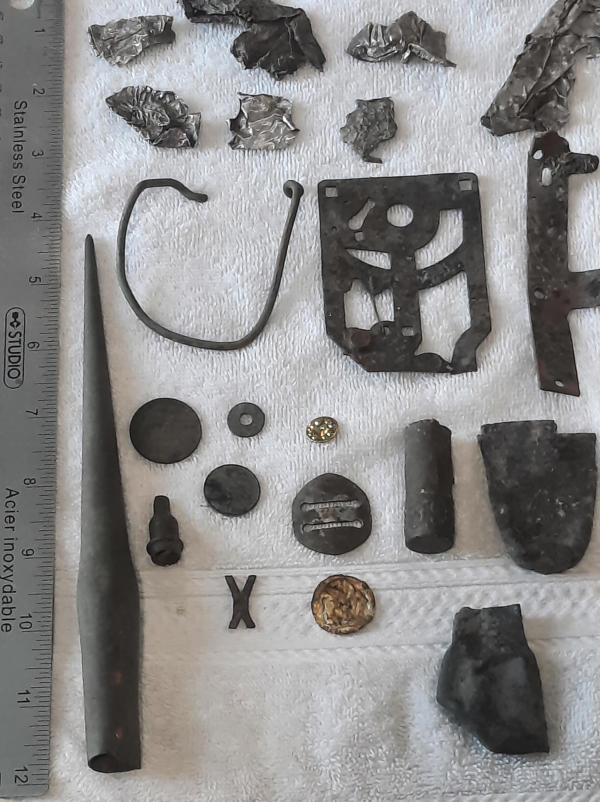
The Old Church Yard in Letellier.
It’s
starting
to
look
like
the
easy
pickings
on
this
site
have
been
already
found.
This
is
my
third
visit
to
the
old
church
yard
with
various
detectorist
friends
and
I
have
a
feeling
that
we
are
now
down
to
material
that
was
either
leftovers
from
previous
construction
and
maintenance
or
items
brought
in
when
the
grounds were leveled with fill from who knows where.
See:
August
31,
2024
-
The
Letellier
Church
Site
and
November
6,
2024 - One More Go At The Letellier Church Site.
Thanks
as
always
go
out
to
Shawn
and
Cindy
for
the
landowner
permission
and
thanks
also
to
Ray
who
came
along
for
the
adventure.
Honestly,
he
found
most
of
the
artifacts.
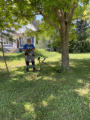
We
were
graced
with
four
different
visitors
while
there
and
I
was
doing
most
of
the
talking
while
Ray
did
the
detecting
and
consequential
digging.
My
nephew
Gabriel
even
had
a
chance
to
try his hand at detecting.
Yes,
I
know,
a
site
is
never
truly
completely
detected
out
but
from
here
on,
finding
exciting
new
items
is
going
to
get
a
lot
harder.
There
is
some
talk
of
a
basement
space
being
dug
here
in
the
next
year
(maybe)
and
I
hope
to
be
here
with
my
metal
detector
when
that
happens.
It
might
expose
some
of
the
older
and
deeper
artifacts
that
I
can’t
get
too
right
now.
Any
artifacts
that
may
exist
from
activity
around
the
original
church
are
beyond
reach
of
most
detectors
due
to
a
thick
overlay
of
fill.
The
original
church
was
moved
here,
from
St.
Pie,
in
1891.
A
new
church
was
built on this same site in 1967.
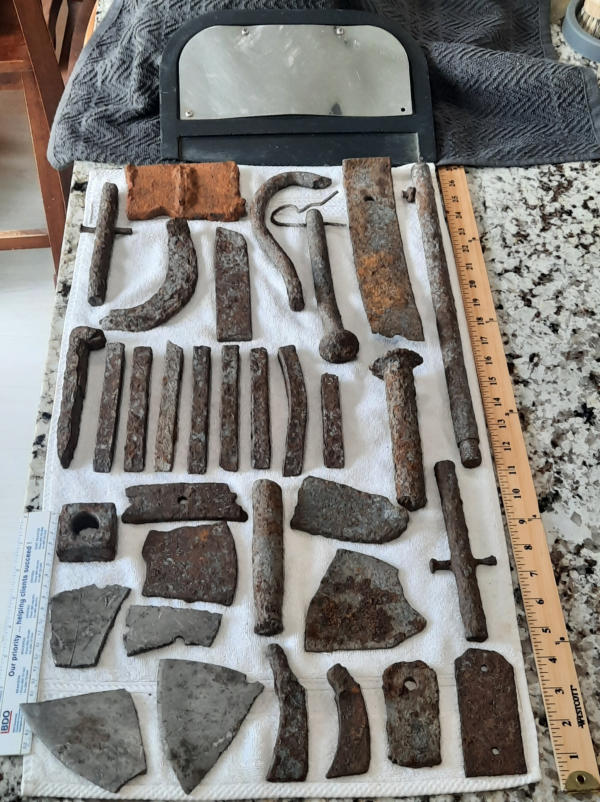
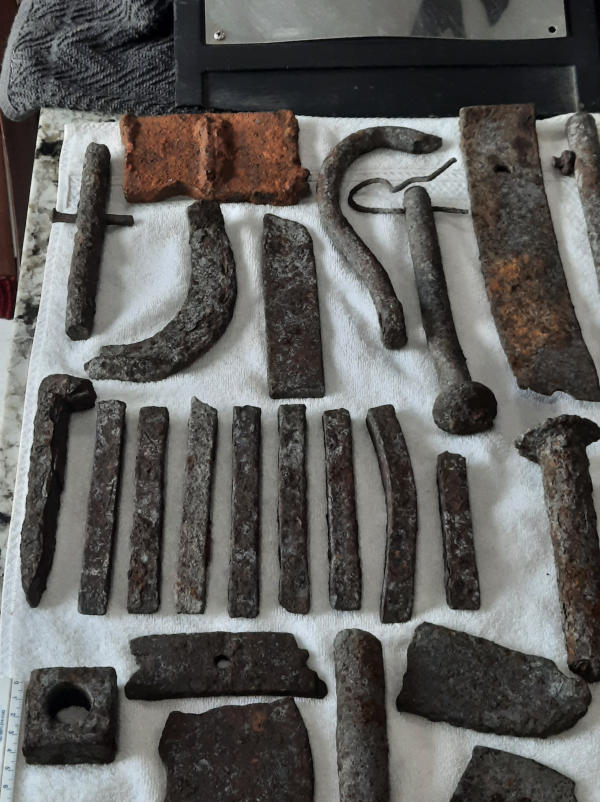
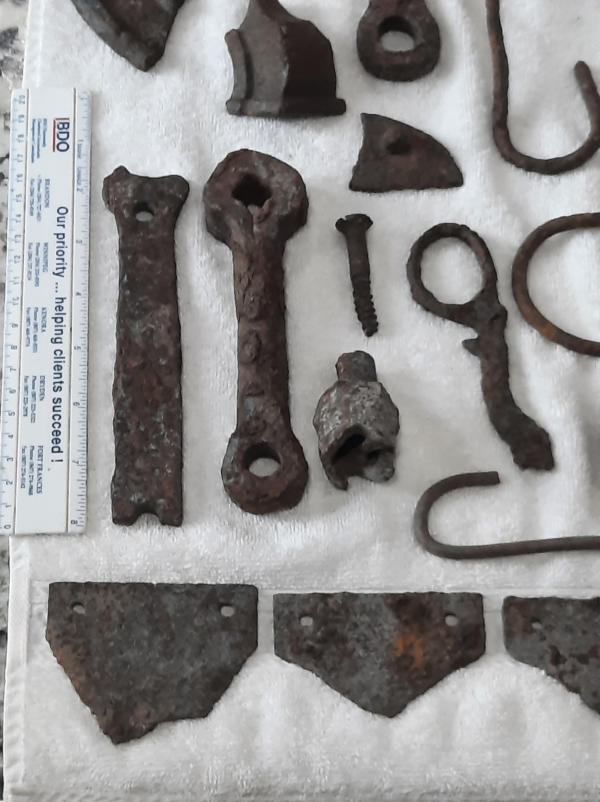
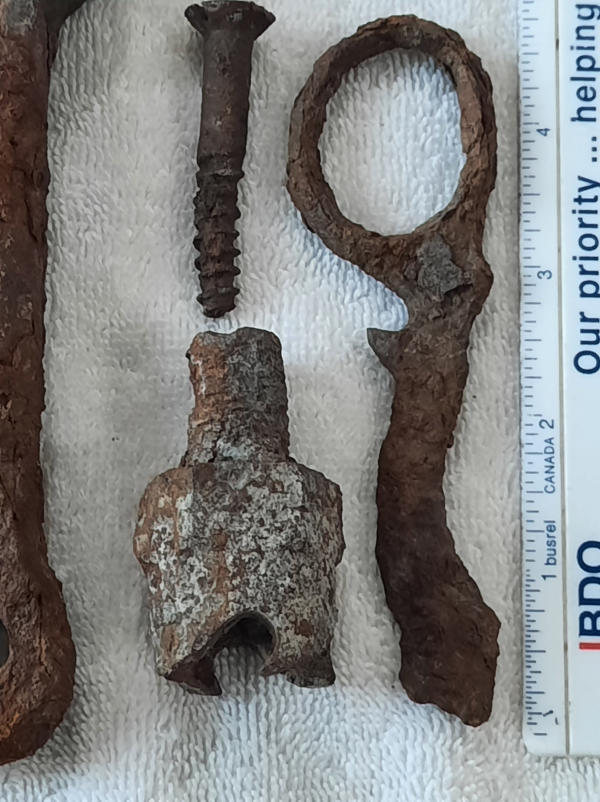
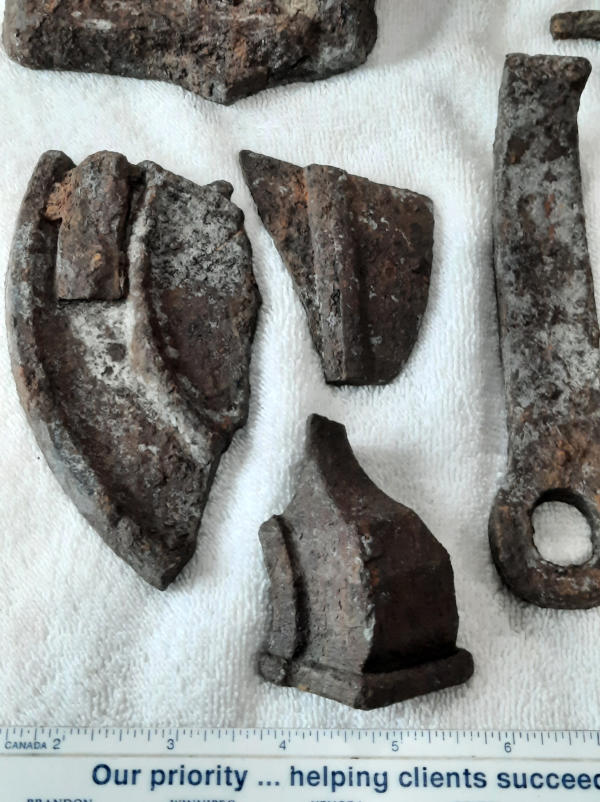
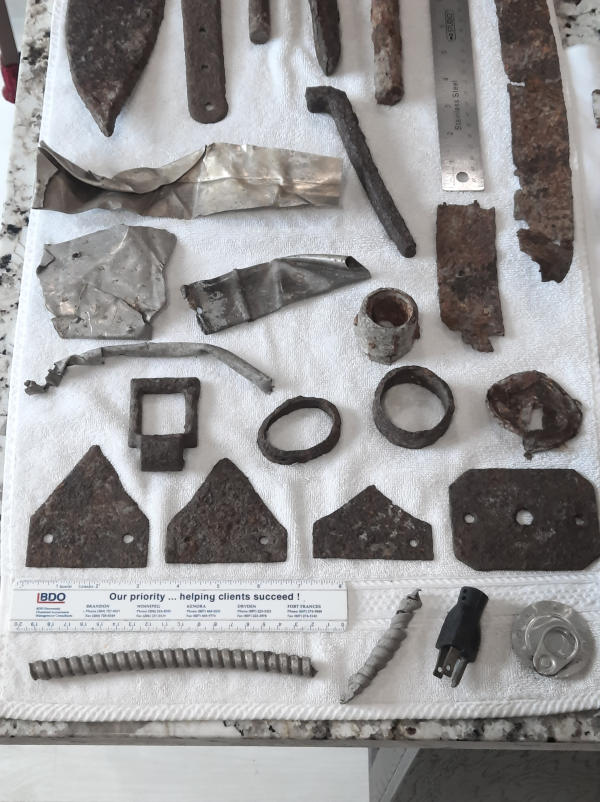
There
seems
to
be
an
awful
lot
of
big
iron
and
farm
machinery
parts.
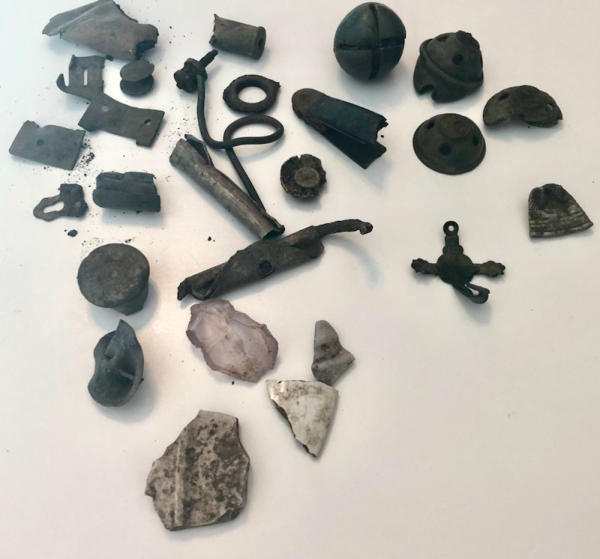
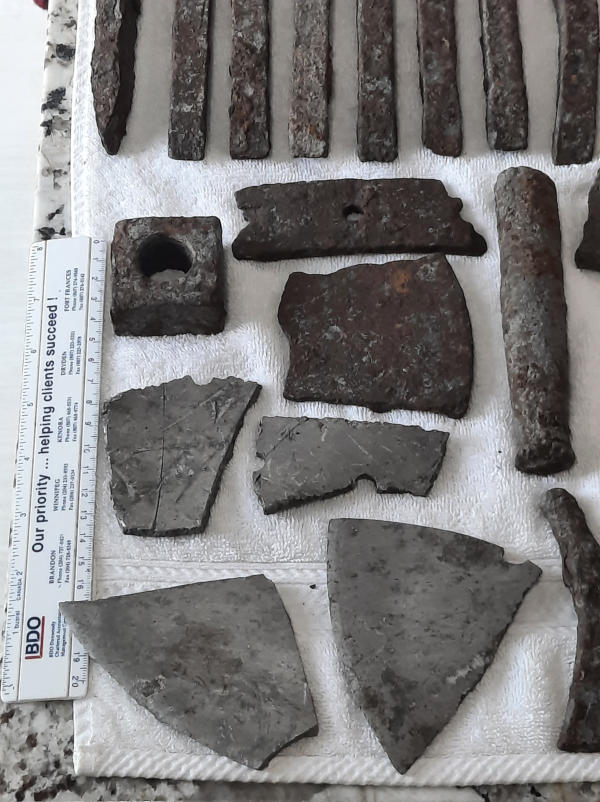
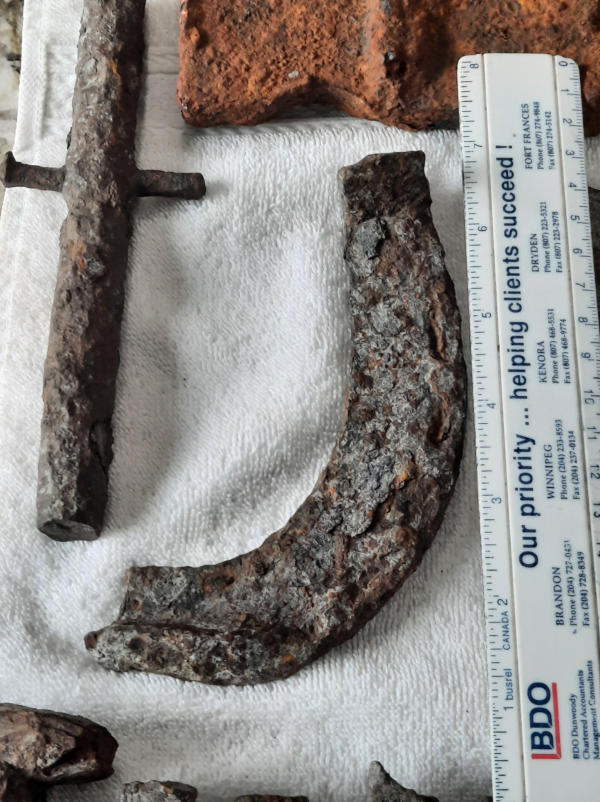
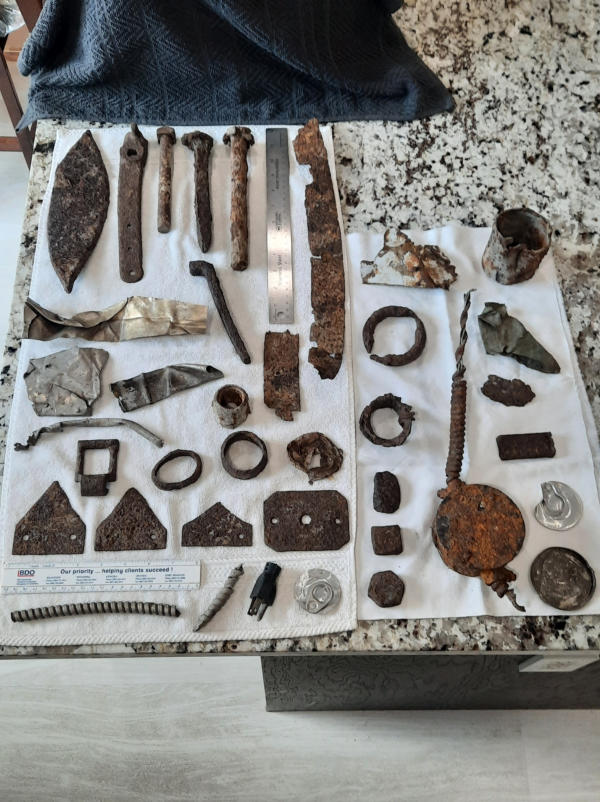
These
are
swather
cutting
blade
teeth,
iron
pins,
metal
straps,
and
tools
and
which
litter
the
place.
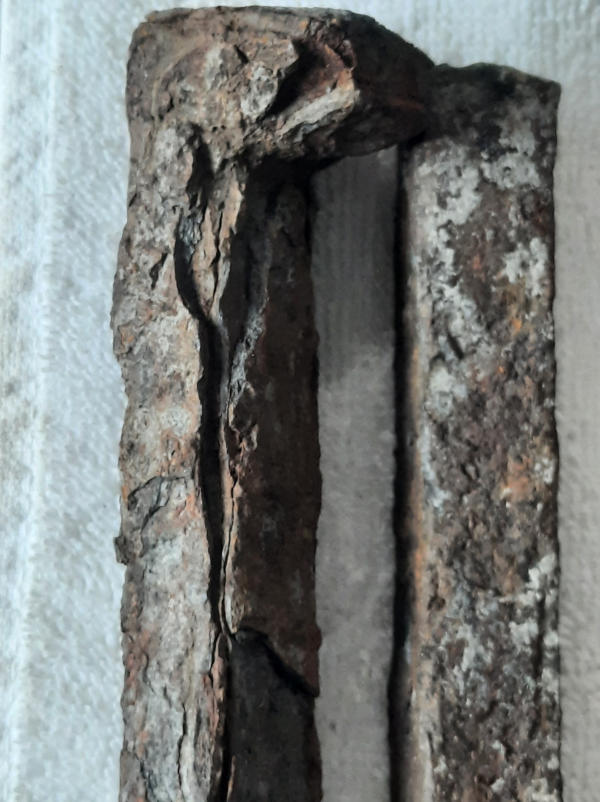
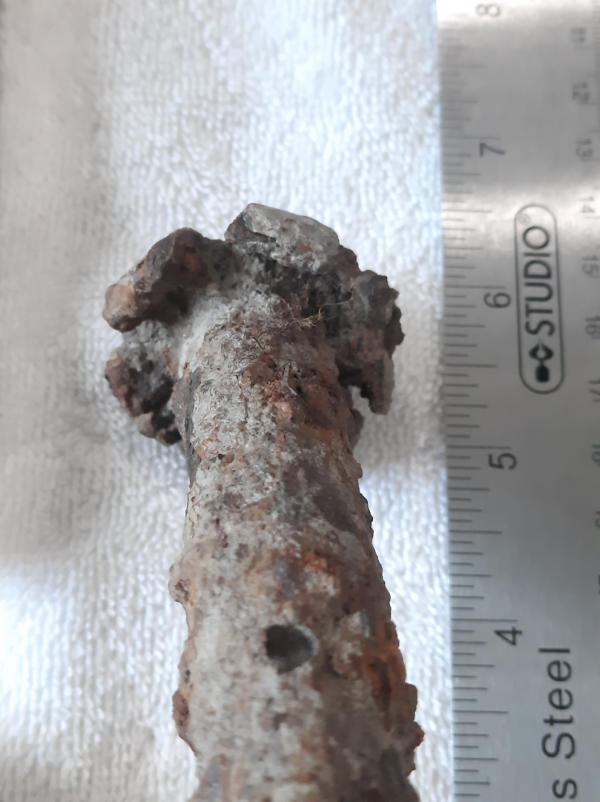
One
of
those
pins
sure
took
a
beating.
Although
in
fairness,
a
lot
of
copper
and
brass
pieces
were
also
uncovered.
The
long
pointy
thing
is
the
top
part
of
a
lightning
rod
that
would
have
sat
atop
of
a
roof.
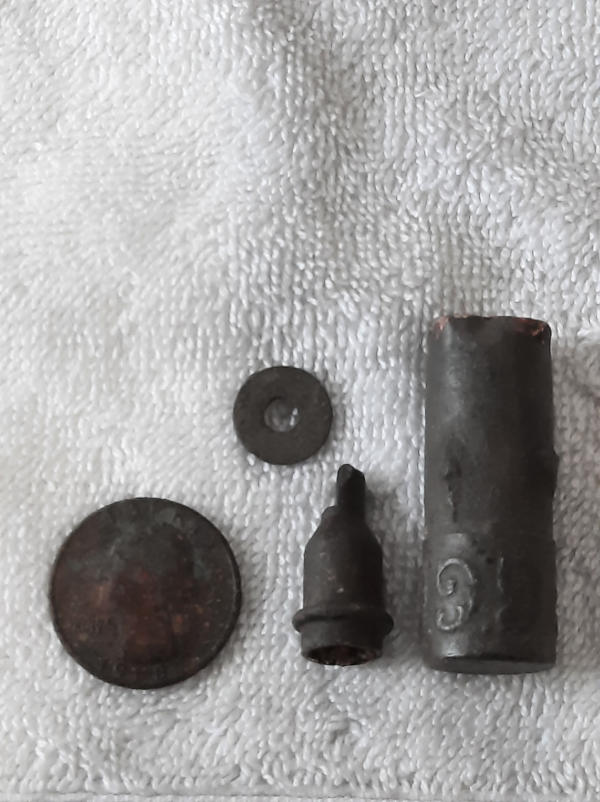
Canning
jar
lids
contain
a
lot
of
zinc
and
man,
do
they
ever
ring
up
hard
on
metal
detectors.
It’s
almost
impossible
to
walk
away
from a solid signal like that.
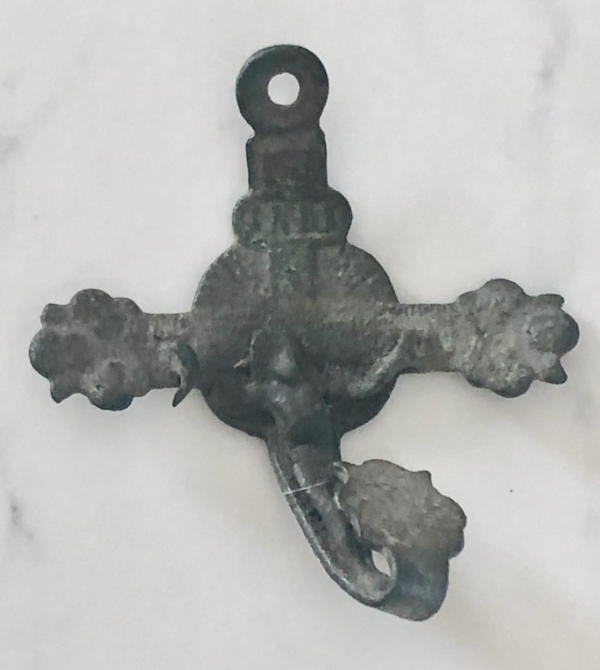
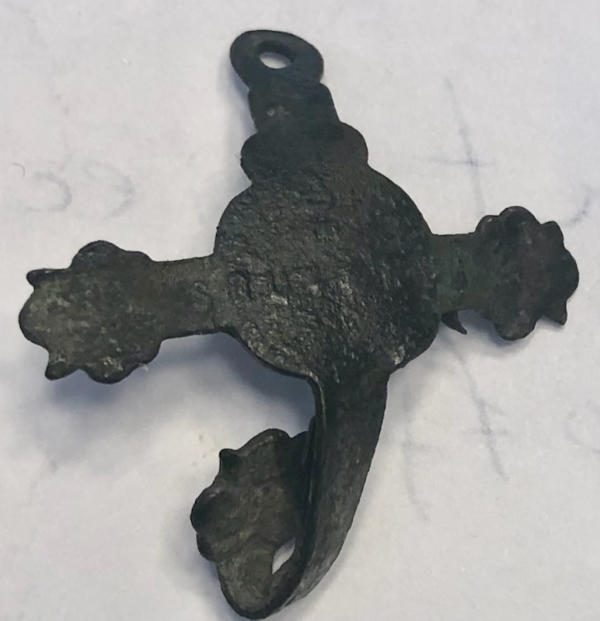
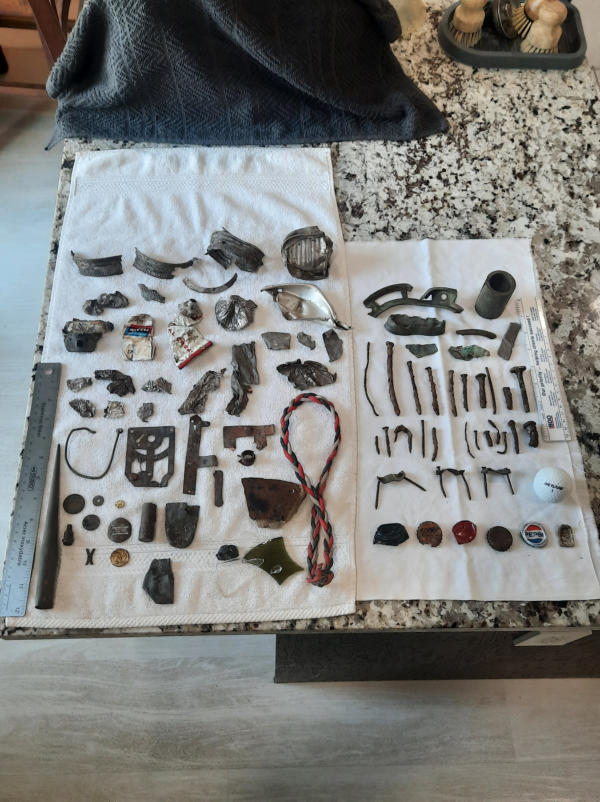
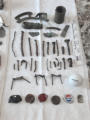
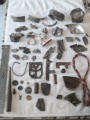
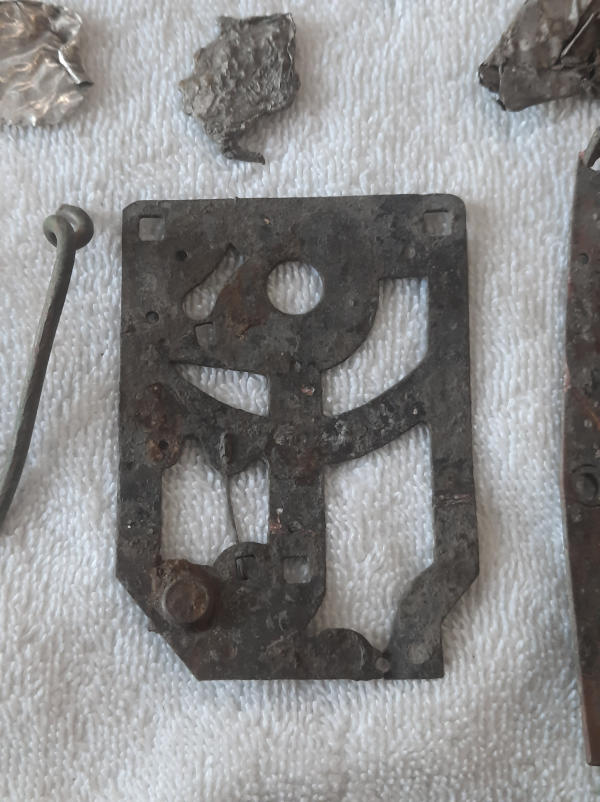
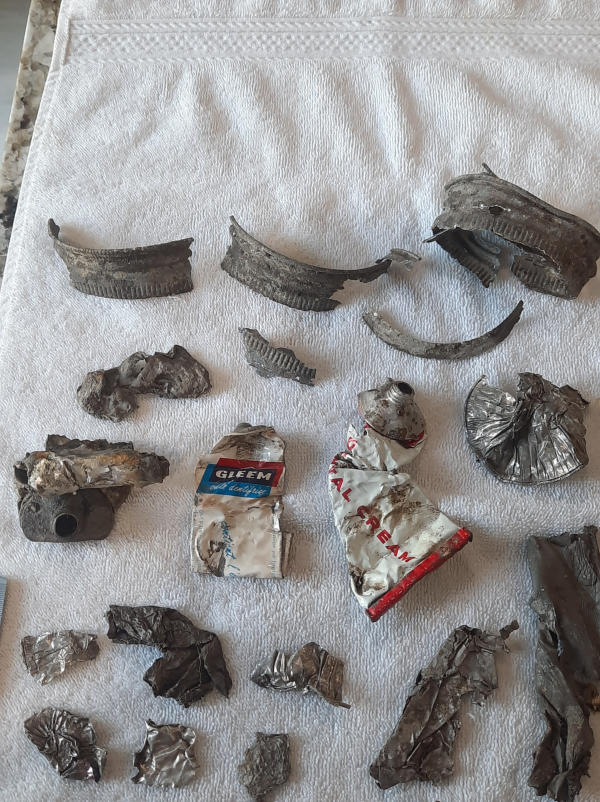
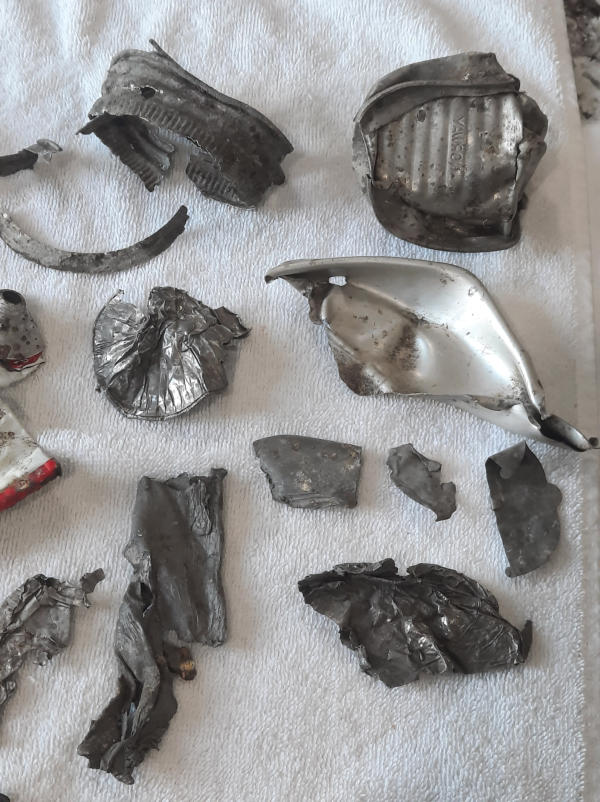
The
pictures
in
this
post
are
sequenced
showing
the
“big
stuff”
first,
then
the
more
interesting
smaller
finds
next.
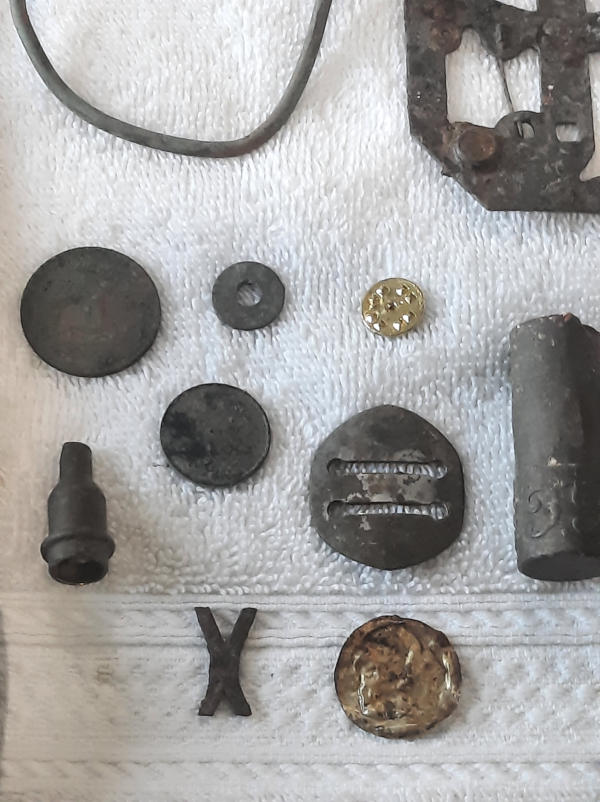
Included
with
the
small
finds
is
one
horseshoe
nail…
can
you
spot
it?
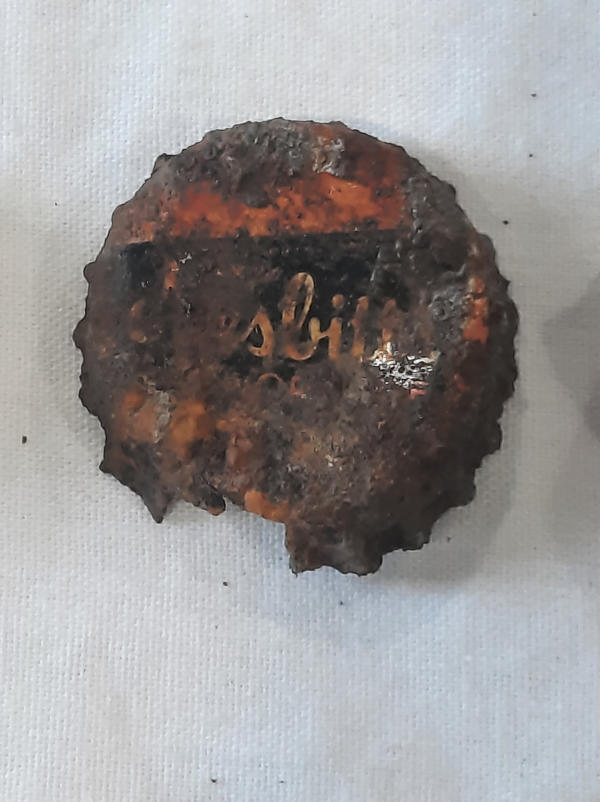
Do
you
remember
the
old
Nesbitt
pop
bottles?
The
bottle
cap
dates
between
the
1940’s
and
50’s.
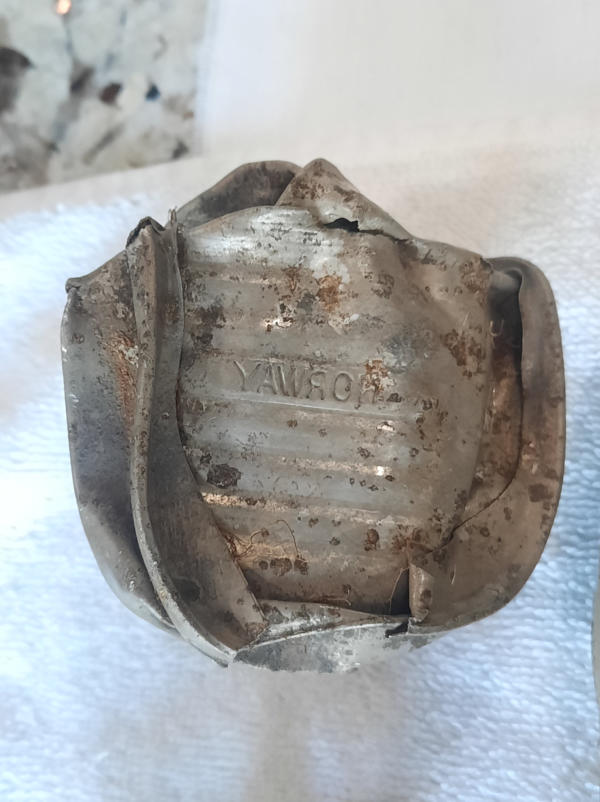
How
about
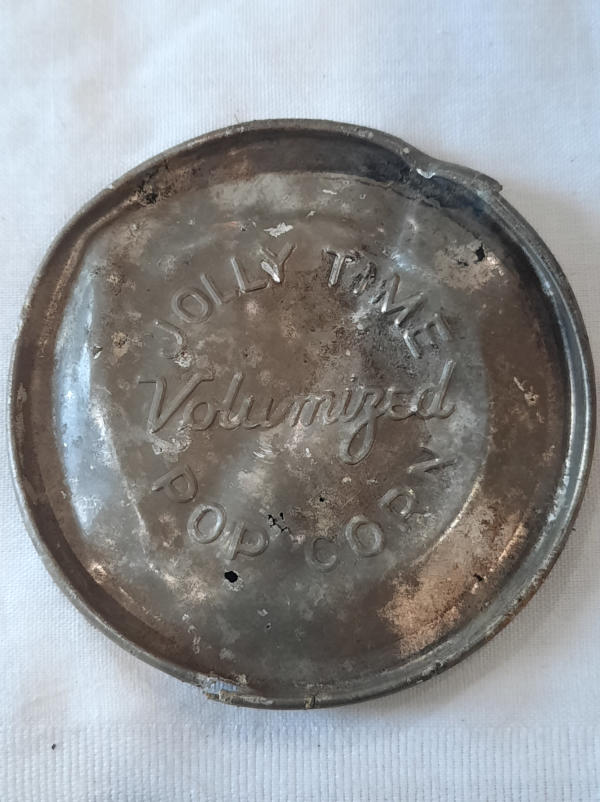
Jolly
Time
“Volumized”
Pop
Corn,
now
that’s
a
serious
container
top.
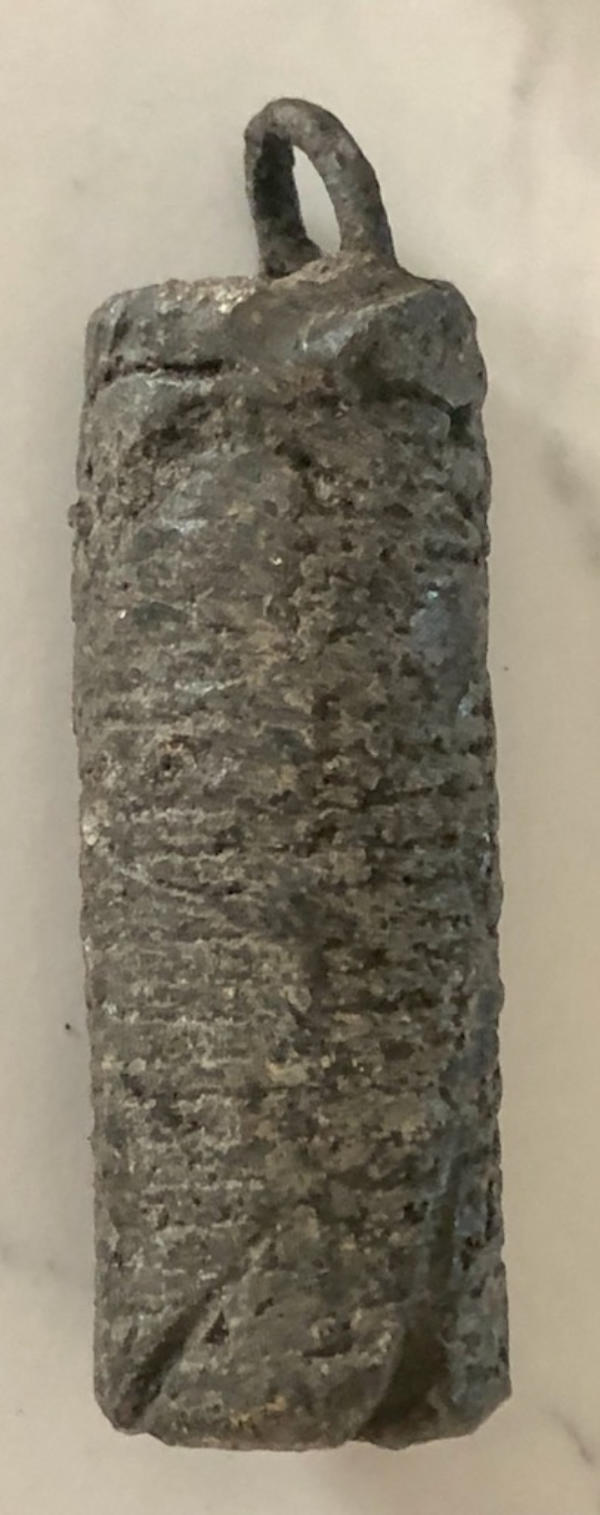
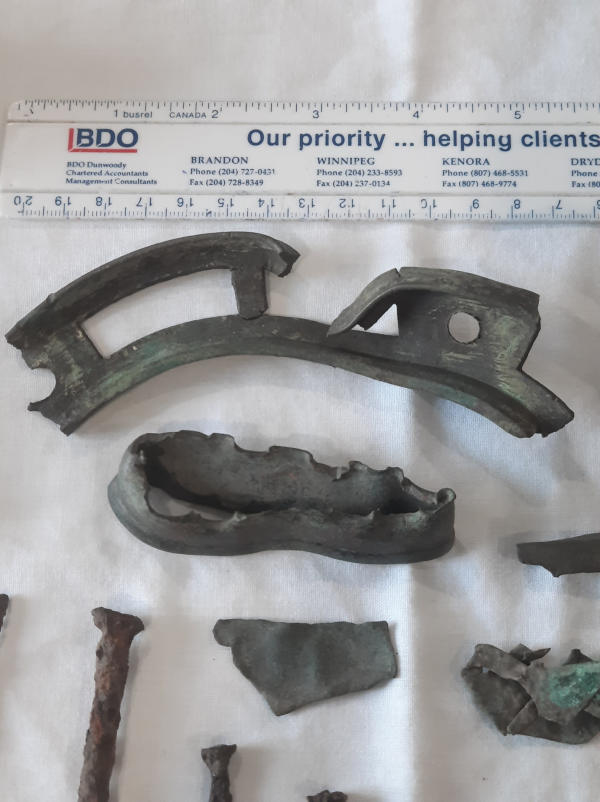
Also
found
is
one
copper
tube
with
a
nice
pattern
around
the
base.
I’m
thinking
it
might be the bottom of a lipstick tube.
The
US
quarter
dates
1968.
The
penny
(clad)
is
from
2022
and
is
almost impossible to read.
Roger
References: https://en.wikipedia.org/wiki/Nesbitt%27s
https://www.mhs.mb.ca/docs/sites/stpieromancatholiccemetery.s
html
August 29 - A Shot in the Dark, River Lot 173

August 29, 2026
A Shot in the Dark. River Lot 173.
Every
once
in
a
while
you
have
to
take
a
leap
of
faith.
I’ve
often
mentioned
that
you
can’t
judge
a
book
by
its
cover,
in
this
case,
a
field
by
its
appearance.
There
used
to
be
a
house
here
once.
When
field
conditions
are
right,
like
in
a
dry
spring,
you
can
actually
see
the
outline
of
the
house’s
foundation
on
the
field.
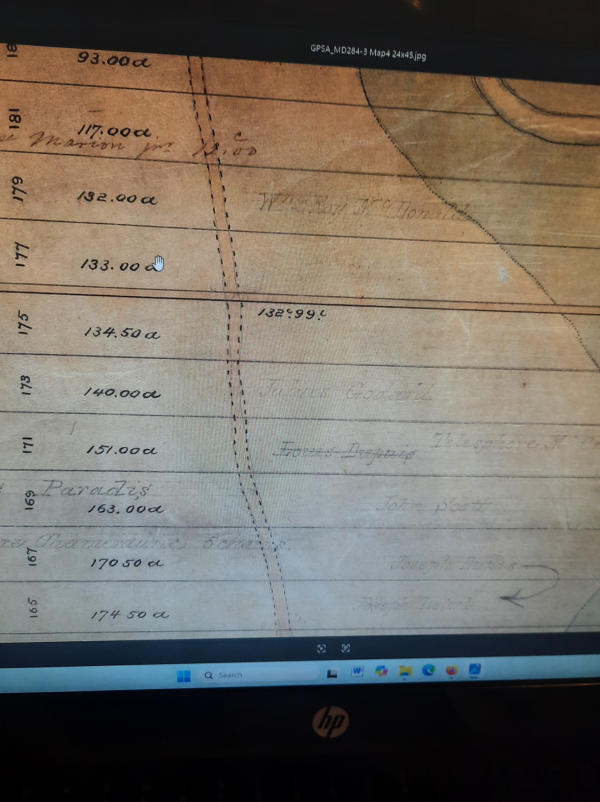
I
verified
on
my
copy
of
the
1870
River
Lot
Survey
and
no
homestead
buildings
are
indicated
although
the
land
was
spoken
for
by
a
name
written
on
the
map.
An
aerial
photo
dated
12
April
1945
shows
the
house
and
yard.
I
do
not
have
the
date
of
construction,
but
the
house
itself
was
moved
to
St.
Jean
Baptiste
in the early 1960’s.
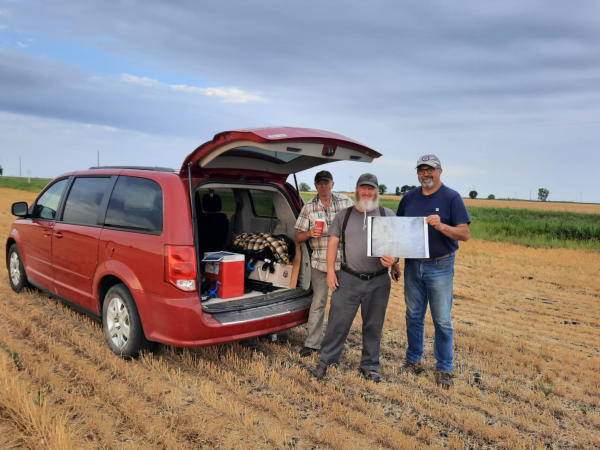
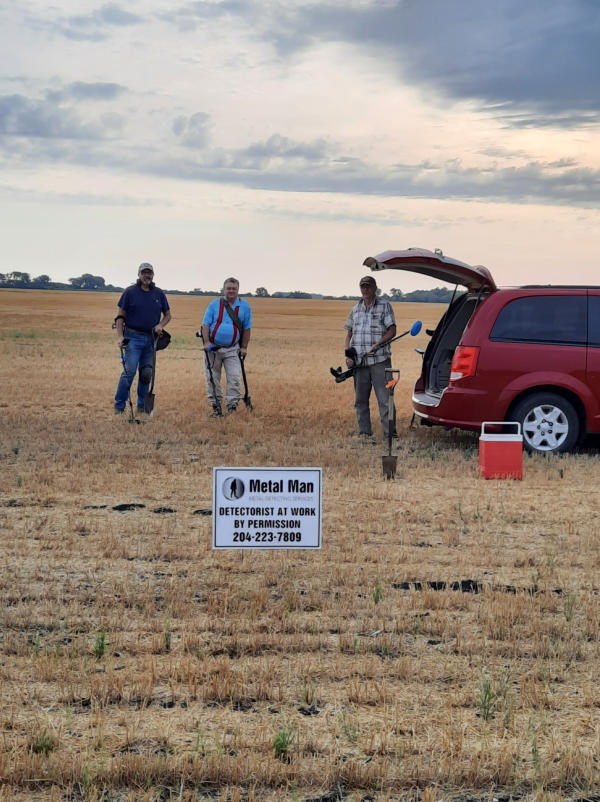
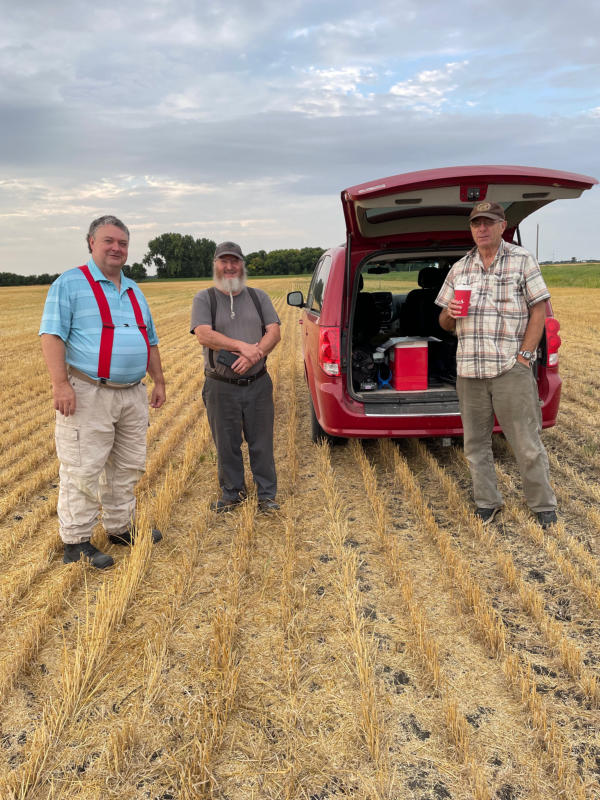
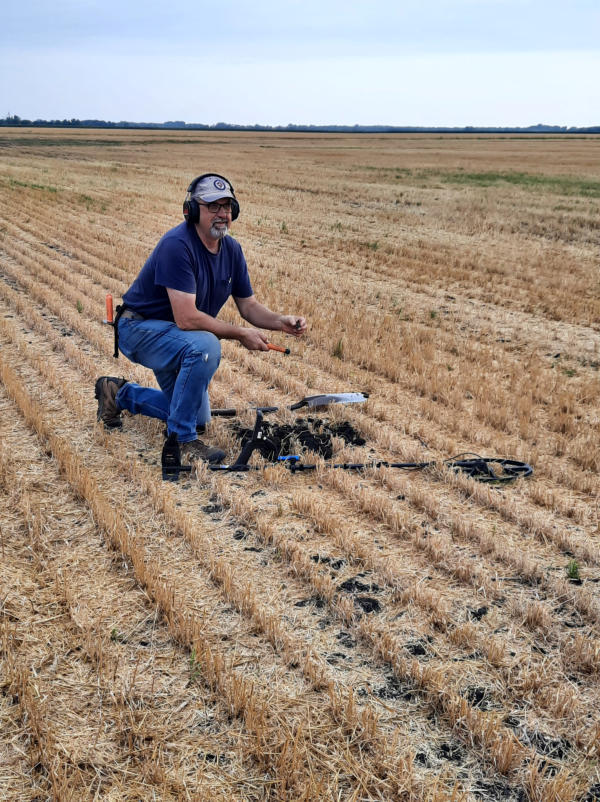
Today the site is an open field. That makes it an open slate as to
what us four detectorists might discover with our metal detectors.
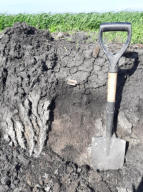
I did a random archeological shovel test pit (STP) in that area; see
references below, and it revealed about 8 clinkers from a coal fire,
probably from a furnace in the home. Over the years, furnace
residue, like clinkers and ash gets dumped out in “the back of the
yard” and it eventually gets spread out and about through normal
tiling and field work. The clinkers are proof of human habitation.
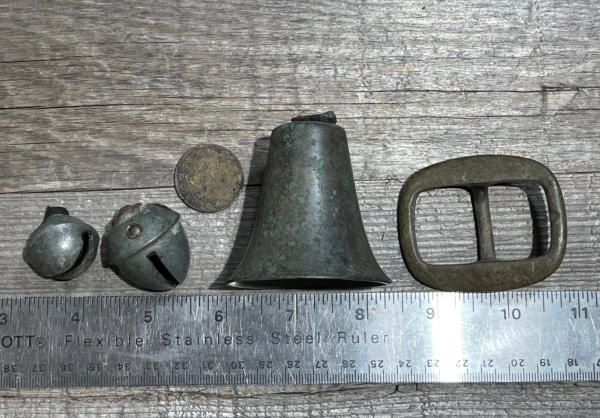
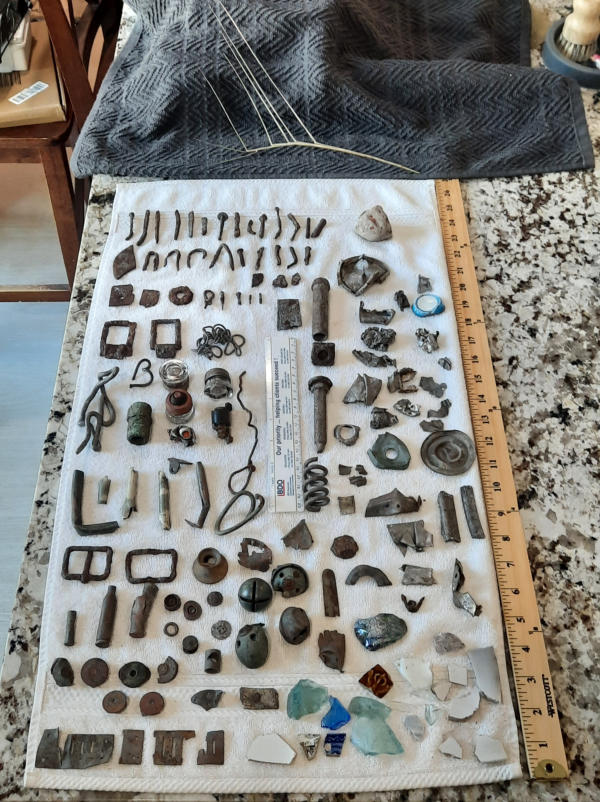
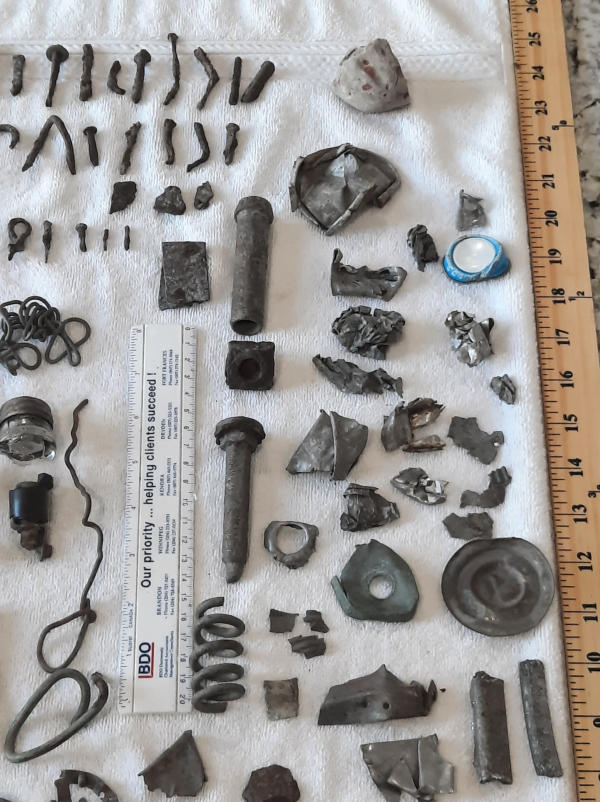
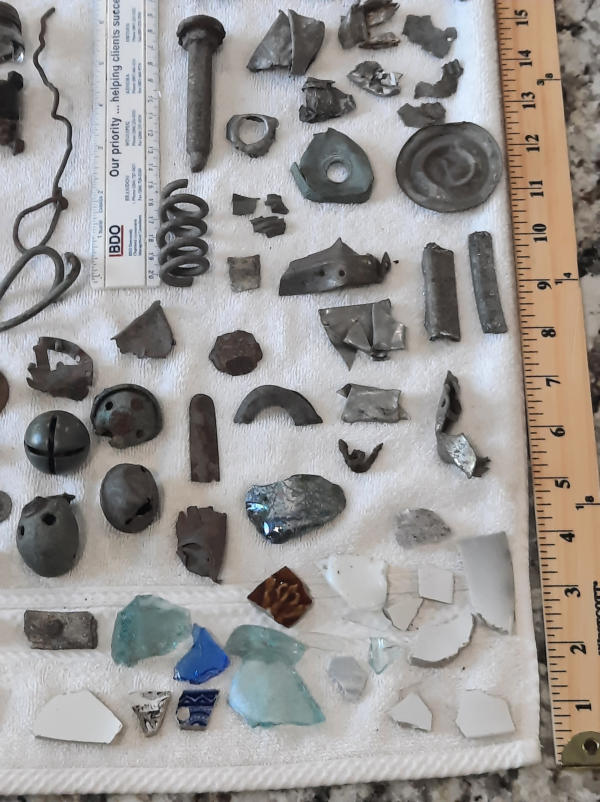
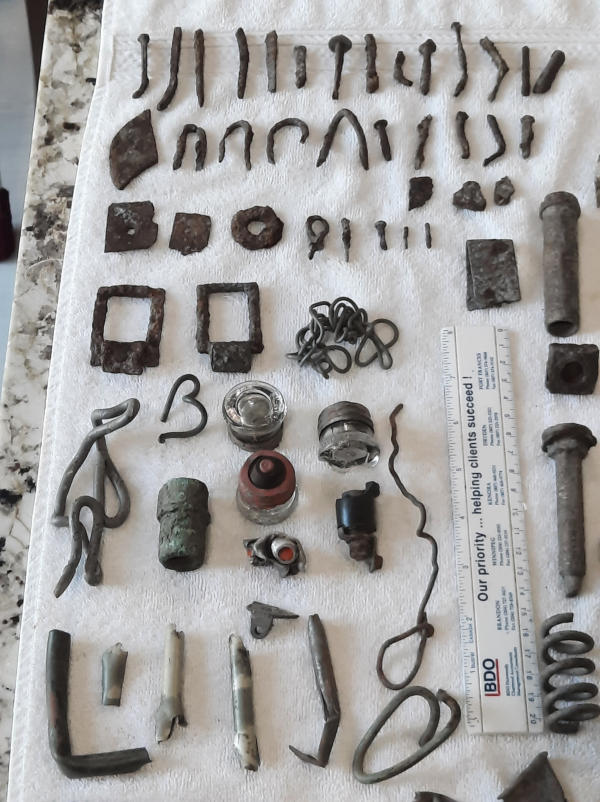
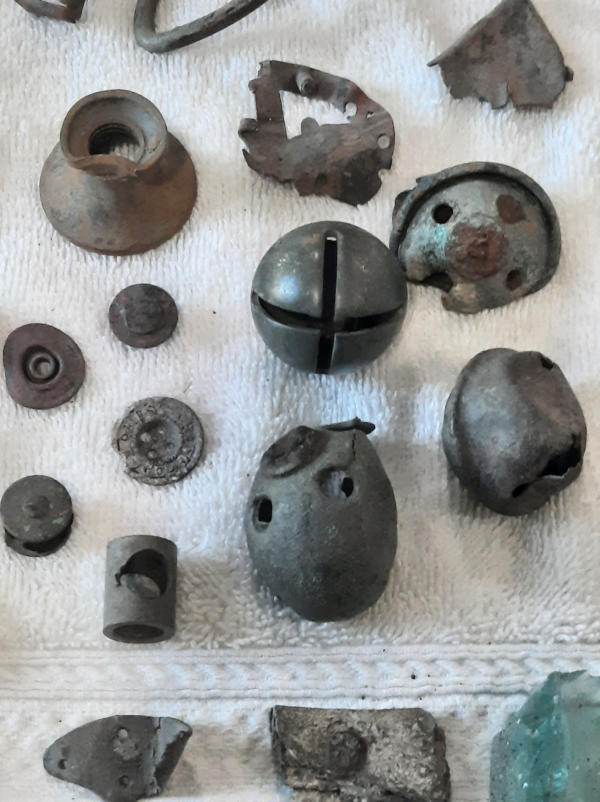
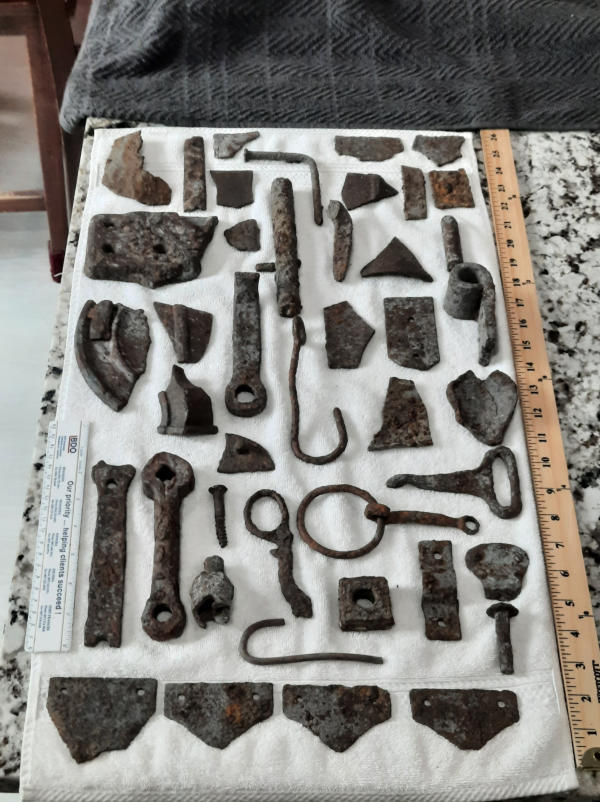
In total, the four of us managed to collect 32.4 lbs. of material,
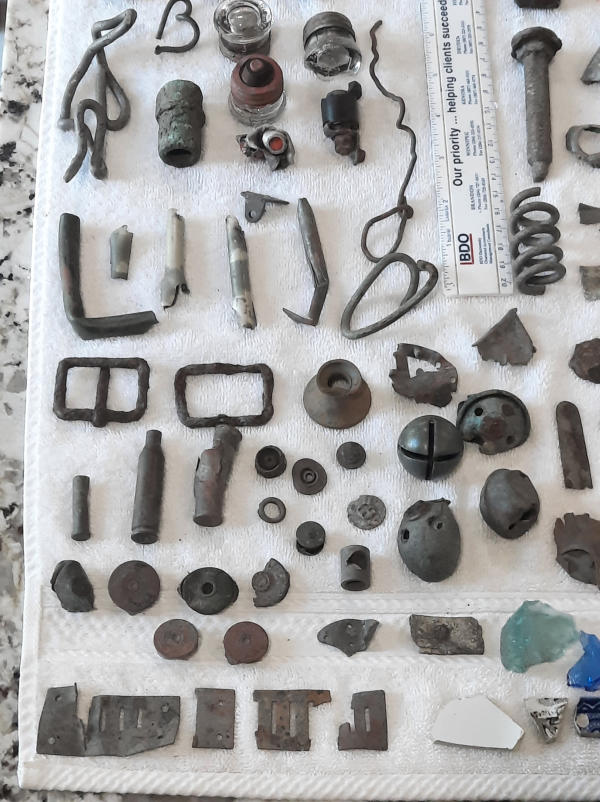
mostly big iron. One big draw-pin weighed in at 1.5 lbs. We had a
real winning streak happening with horse collar and harness bells
plus one beautiful cow bell.
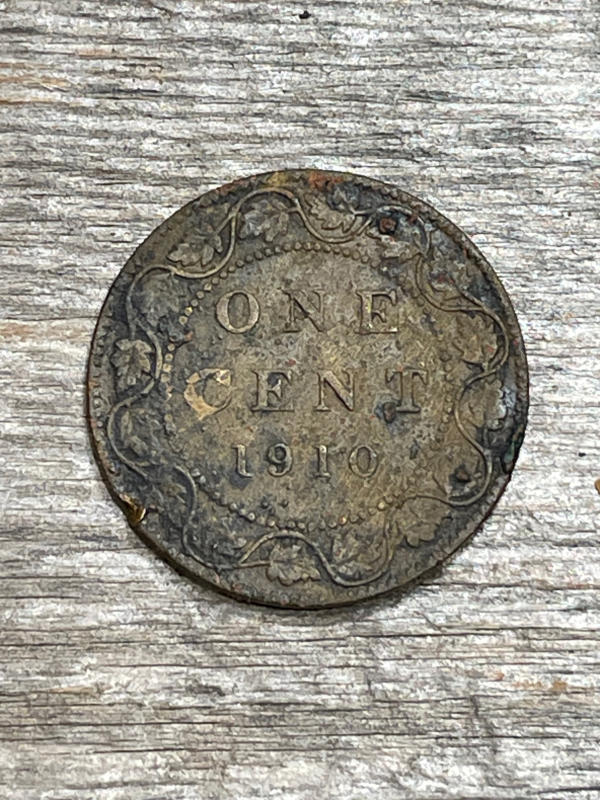
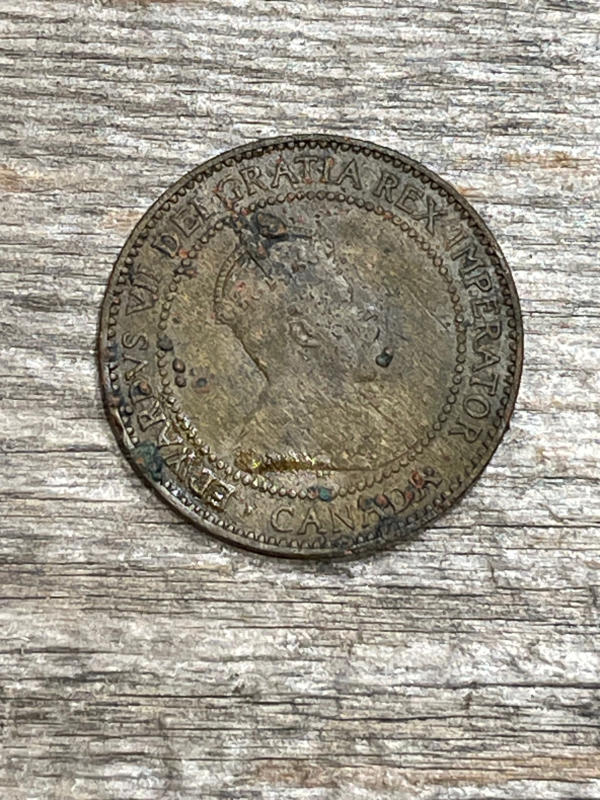
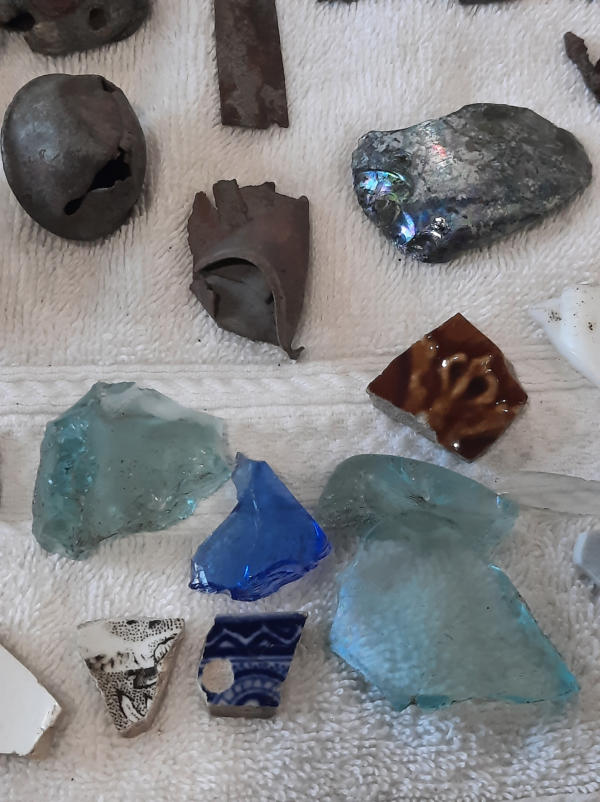
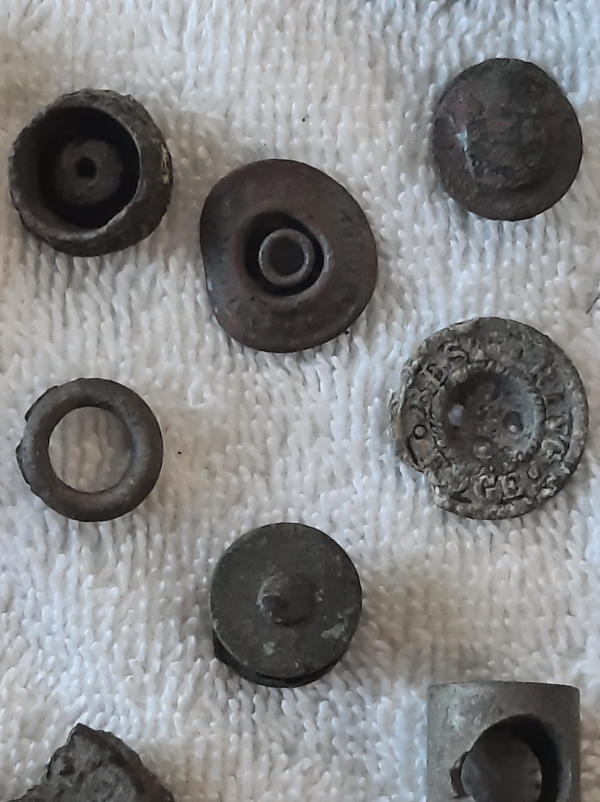
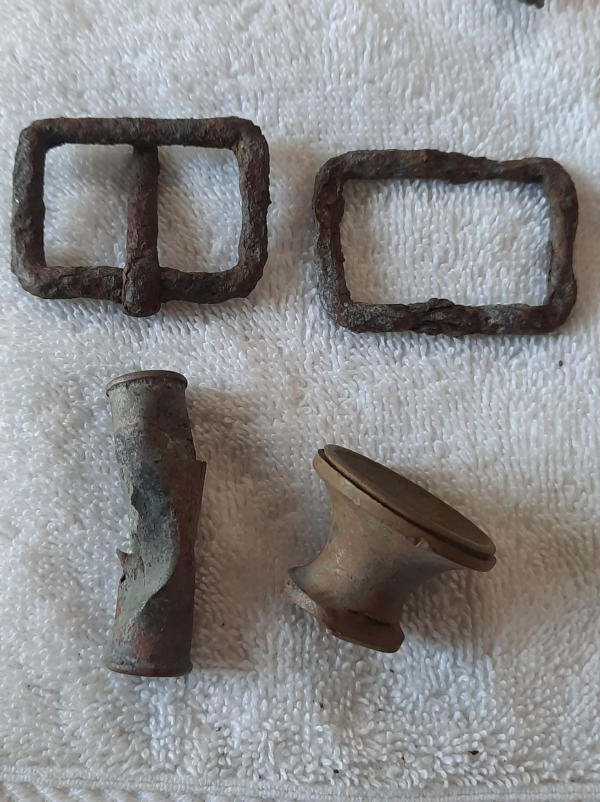
The fun of metal detecting is that you never know what you’ll find.
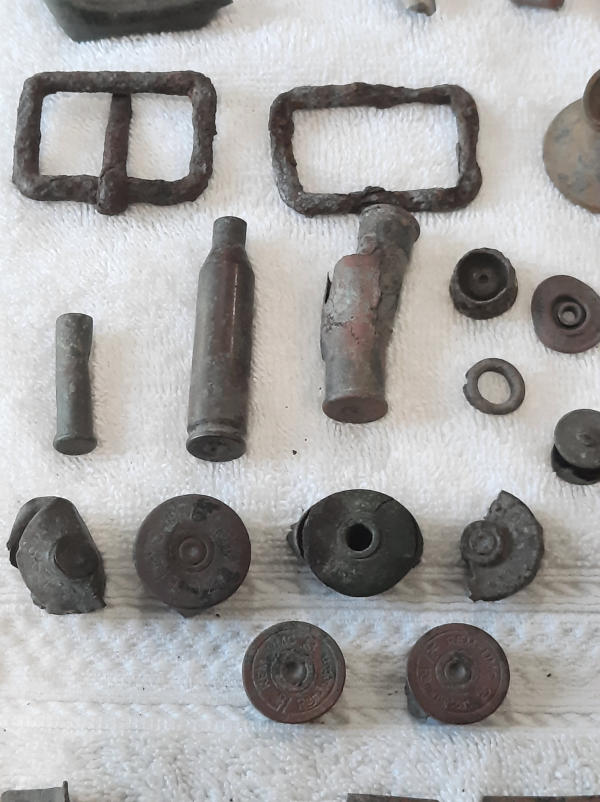
I’ll let the pictures speak for themselves. Featured are 3 different
panels of finds. Remember that you never really know what is
buried under ground you walk on. Don’t overlook plain looking
open fields.
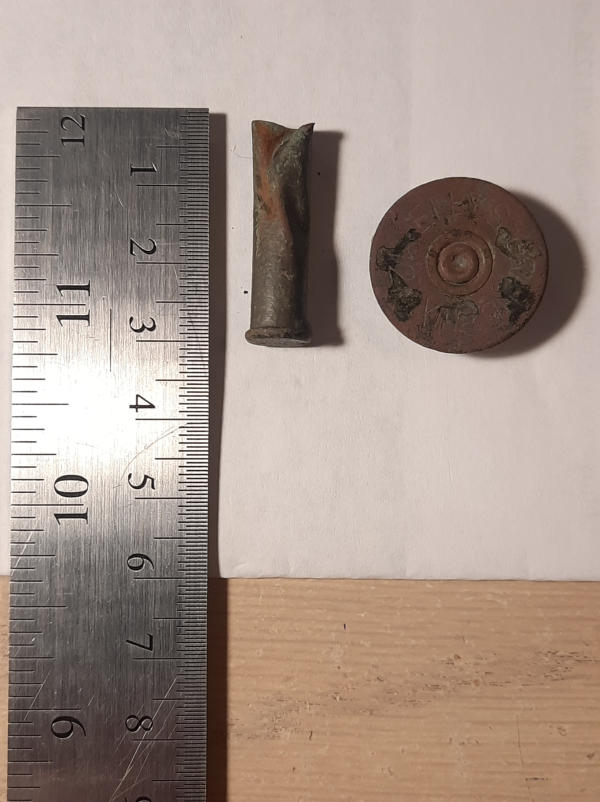
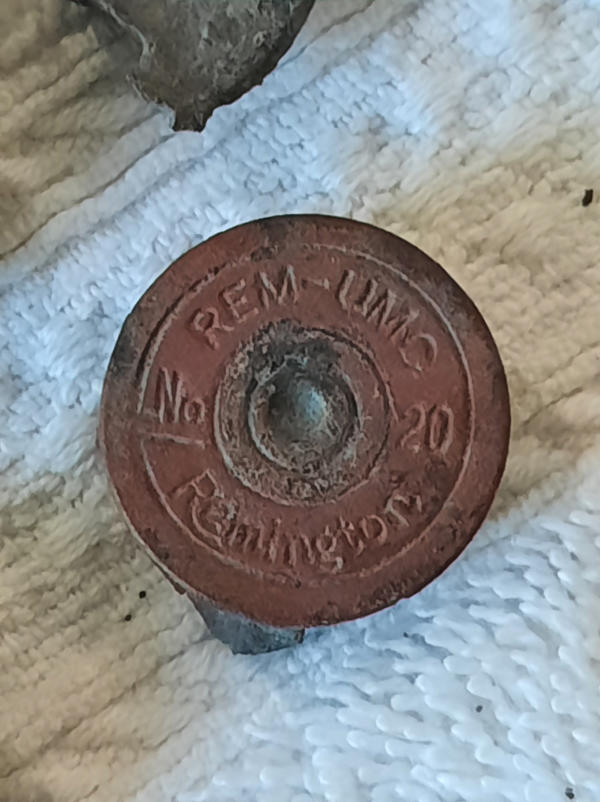
Shotgun Shell Casings :
Rem – UMC No 20 Remington (x 2) 1915 – 1942 issue
Eley’s Grand Prix 12 1906 – 1920’s issue
Eley’s London No 12 1896 – 1920’s issue
Eley’s Express 10 1906 – 1920’s issue
Rifle Shell Casings :
Barnes Win 243
Button :
Best * Ring * Edge See reference
Roger
Reference: https://en.wikipedia.org/wiki/Shovel_test_pit
https://en.wikipedia.org/wiki/Clinker_(waste)
https://oldsmithfield.com/omeka/items/show/34